
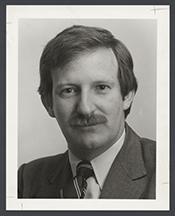
Historical · U.S. House · Connecticut · District 3
Bruce Morrison
Former U.S. Representative · Connecticut District 3 · 1983–1991 · Democratic
Bruce Morrison represented Connecticut's District 3 in the United States House of Representatives (1983–1991) for the Democratic party. The page below collects sourced biographical facts, term history, committee roles, and provenance for Morrison.
Bioguide ID: M000992
Key facts
- Full name
- Bruce Morrison
- State
- Connecticut
- District
- District 3
- Party
- Democratic
- House service
- 1983–1991
- First House term
- 1983
- Status
- Left office
- Current term ends
- —
- Born
- 1944
- Bioguide ID
- M000992
- Committee assignments
- —
- Dataset version
- 1.20260605
Biographical narrative
908 words · sourced from the Wikipedia REST extract
Bruce A. Morrison is a former American attorney and politician who served as a U.S. Representative for Connecticut's 3rd congressional district from 1983 until 1991. A member of the Democratic Party, Morrison was notable for his role in immigration reform and his advocacy for various social issues. He is recognized for his leadership as chair of the House Subcommittee on Immigration and Citizenship, where he was a primary author of the Immigration Act of 1990, a significant piece of legislation that increased legal immigration to the United States. In addition to his congressional career, Morrison made an unsuccessful bid for the governorship of Connecticut in 1990 and has been involved in various legal and advocacy efforts throughout his career.
Early life and career
Bruce A. Morrison was born on October 8, 1944, in New York City. He was adopted at a young age by George and Dorothea Morrison, who raised him in Northport, Long Island. Morrison attended public schools in the area and graduated from Northport High School in 1962. He pursued higher education at the Massachusetts Institute of Technology (MIT), where he completed a degree in chemistry in just three years, graduating in 1965.
Following his undergraduate studies, Morrison continued his education at the University of Illinois at Urbana-Champaign, earning a master's degree in organic chemistry in 1970. During his time at Illinois, he demonstrated leadership by founding the Graduate Student Association, which advocated for the interests of graduate students on campus. He served as the first chairman of this organization and was actively involved in student governance, working as a special assistant to the dean of students.
Morrison furthered his academic pursuits by attending Yale Law School, where he received his Juris Doctor (J.D.) in 1973. His time at Yale coincided with the studies of several notable individuals, including future President Bill Clinton and future Secretary of State Hillary Clinton. While at Yale, Morrison gained practical experience by working with various legal organizations, including Greater Boston Legal Services and the Natural Resources Defense Council.
After graduating from law school, Morrison began his legal career as a staff attorney with the New Haven Legal Assistance Association (LAA) in June 1973. He quickly rose through the ranks, becoming managing attorney within a year and then executive director in 1976. In this role, he was instrumental in providing civil legal services to low-income individuals and families, mentoring many future legal professionals. Morrison successfully led numerous class action lawsuits and was active in lobbying for legal reforms in Connecticut, particularly in landlord-tenant law. He also played a significant role in advocating for legal services programs at the national level, successfully opposing efforts to defund these services during the Reagan administration.
House tenure
In 1982, Morrison launched a grassroots campaign to represent Connecticut's 3rd congressional district in the U.S. House of Representatives. He won the Democratic primary against the party-endorsed candidate and subsequently defeated the incumbent Republican, Larry DeNardis, in the general election by a narrow margin. Morrison was re-elected in 1984, again defeating DeNardis, and subsequently won more comfortable victories in 1986 and 1988.
During his time in Congress, Morrison was the first chairman of the Freshman Democratic Caucus of the 98th Congress. He served on several important committees, including the House Banking Committee, the House Judiciary Committee, the Veterans Affairs Committee, and the Select Committee on Children, Youth, and Families. His expertise in housing issues led him to author numerous amendments aimed at improving housing opportunities for disadvantaged populations. Additionally, Morrison was actively involved in international human rights advocacy, participating in missions to various countries to address issues such as political repression and human rights abuses.
Morrison's commitment to fiscal responsibility was evident in his efforts to reduce the federal deficit. He sponsored amendments to freeze federal spending during the mid-1980s, reflecting his focus on balancing the federal budget.
Legislative focus and committees
Morrison's most significant legislative achievement came during his tenure as chairman of the House Subcommittee on Immigration and Citizenship from 1989 to 1991. He was the principal author of the Immigration Act of 1990, a landmark piece of legislation that marked one of the few instances in U.S. history where legal immigration was increased. The act shifted the focus of immigration policy towards attracting high-skilled workers through the H-1B visa program. Additionally, the legislation included a provision that became known as the Morrison visa program, which allocated a specific number of visas for immigrants from countries that had been disadvantaged by previous immigration laws, particularly benefiting individuals from Ireland.
In 1990, Morrison sought to expand his political career by running for governor of Connecticut. After winning the Democratic primary, he faced challenges in the general election, ultimately finishing behind Republican John G. Rowland and independent Lowell Weicker. His defeat was attributed to widespread dissatisfaction with the Democratic Party at the time, particularly regarding state budget issues.
Following his congressional career, Morrison established his own law firm in New Haven, specializing in immigration law. He continued to engage in advocacy work, notably supporting Bill Clinton's presidential campaign in 1992 by forming Irish Americans for Clinton-Gore, which aimed to strengthen ties between the Irish-American community and the Democratic Party.
Morrison's career reflects a commitment to public service, legal advocacy, and legislative reform, particularly in the areas of immigration and social justice. His contributions to U.S. immigration policy and his efforts to address human rights issues have left a lasting impact on the communities he served.
Notable legislation
Sponsored and co-sponsored legislation for Bruce Morrison is pending operator curation. The biographical narrative above carries the same provenance trail until per-bill rows are written.
Sources
- [1]https://en.wikipedia.org/wiki/Bruce_MorrisonWikipedia · retrieved 2026-06-05
Notable quotes
Sourced quotes for Bruce Morrison are pending operator curation. Narrative-scope provenance remains attached below.
Sources
- [1]https://en.wikipedia.org/wiki/Bruce_MorrisonWikipedia · retrieved 2026-06-05
Key positions
Curated policy positions for Bruce Morrison are pending operator review. The biographical narrative above carries the same provenance trail until per-topic positions are written.
Sources
- [1]https://en.wikipedia.org/wiki/Bruce_MorrisonWikipedia · retrieved 2026-06-05
Terms served
- 1983–1985U.S. House · Term 1 · Democratic
- 1985–1987U.S. House · Term 2 · Democratic
- 1987–1989U.S. House · Term 3 · Democratic
- 1989–1991U.S. House · Term 4 · Democratic
Sources & provenance
Every attributable claim above carries a per-section [N] marker that resolves to the corresponding URL below. Each entry records the upstream provider, the canonical URL, and the timestamp at which the source was retrieved by the ingest pipeline.
Key facts
- https://bioguide.congress.gov/search/bio/M000992bioguide · retrieved 2026-06-05
- https://www.govtrack.us/congress/members/407960govtrack · retrieved 2026-06-05
Biographical narrative
- https://en.wikipedia.org/wiki/Bruce_Morrisonwikipedia · retrieved 2026-06-05
Find your representative
Every U.S. state elects representatives by district. Browse Connecticut’s delegation, the full former-representative roster, or explore the role and term length.
Related on The Candidate
- Preceded by Lawrence DeNardisEarlier holder of the Connecticut District 3 House seat · Republican.Open
- Barbara KennellyFormer U.S. Representative · Connecticut District 1 · DemocraticOpen
- Charles ChapmanFormer U.S. Representative · Connecticut District 1 · WhigOpen
- Dwight LoomisFormer U.S. Representative · Connecticut District 1 · RepublicanOpen
- Edward FennFormer U.S. Representative · Connecticut District 1 · RepublicanOpen
- Democratic PartyFederal candidates and office holders on the Democratic line.Open