
Historical · U.S. House · Connecticut · District 3
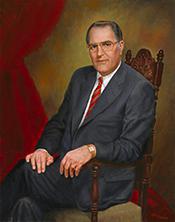
Robert Giaimo
Former U.S. Representative · Connecticut District 3 · 1959–1981 · Democratic
Robert Giaimo represented Connecticut's District 3 in the United States House of Representatives (1959–1981) for the Democratic party. The page below collects sourced biographical facts, term history, committee roles, and provenance for Giaimo.
Bioguide ID: G000151
Key facts
- Full name
- Robert Giaimo
- State
- Connecticut
- District
- District 3
- Party
- Democratic
- House service
- 1959–1981
- First House term
- 1959
- Status
- Left office
- Current term ends
- —
- Born
- 1919
- Bioguide ID
- G000151
- Committee assignments
- —
- Dataset version
- 1.20260605
Biographical narrative
1,060 words · sourced from the Wikipedia REST extract
Robert N. Giaimo was a Democratic U.S. Representative from Connecticut, serving in the House of Representatives for over two decades. His tenure spanned from 1959 to 1981, during which he participated in significant legislative initiatives and held various leadership roles. Giaimo was instrumental in the establishment of key cultural institutions, including the National Endowment for the Arts and the National Endowment for the Humanities, and he contributed to infrastructure projects such as the Washington Metro.
Early life and career
Robert Nicholas Giaimo was born on October 15, 1919, in New Haven, Connecticut. He was the son of an immigrant from Sicily, who played a pivotal role in the local community by founding the Community Bank and Trust Company. This institution was significant for providing financial assistance to many immigrants, helping them to establish their lives in the United States. Giaimo attended public schools in North Haven, Connecticut, where he laid the foundation for his future educational pursuits.
Giaimo's academic journey began at Fordham University, where he graduated in 1941. He continued his education at the University of Connecticut, earning a law degree in 1943. Following his graduation, he served in the United States Army during World War II, enlisting in 1943 and achieving the rank of first lieutenant by the time he was separated from active duty in 1946. He continued his military service in the Army Reserve, where he held the rank of captain in the Judge Advocate General Corps.
After completing his military service, Giaimo was admitted to the bar in 1947 and began practicing law in New Haven. His legal career was complemented by his involvement in local governance and education. He served on the North Haven Board of Education from 1949 to 1955, contributing to the development of educational policies and initiatives in the area. Additionally, he worked as an assistant clerk to the Probate Court in New Haven between 1952 and 1954, gaining valuable experience in the legal system.
Giaimo's political career began to take shape in the mid-1950s. He was appointed chairman of the Connecticut Personnel Appeals Board, a position he held from 1955 to 1958. During this time, he also served as the third selectman of North Haven from 1955 to 1957, further solidifying his reputation as a dedicated public servant. Despite his early political aspirations, Giaimo faced challenges in his initial attempts to secure a congressional seat. He ran unsuccessfully as a Democratic candidate for the Eighty-fifth United States Congress in 1956.
House tenure
Giaimo's political fortunes changed when he successfully ran for the Eighty-sixth United States Congress, beginning his first term on January 3, 1959. He was re-elected to ten consecutive terms, serving until January 3, 1981. Throughout his congressional career, Giaimo was known for his commitment to various legislative initiatives and his active participation in committee work.
During the Ninety-fifth and Ninety-sixth United States Congresses, Giaimo held the position of chairman of the House Committee on the Budget. In this role, he was responsible for overseeing the federal budget process and played a critical part in shaping fiscal policy during a time of significant economic change in the United States. His leadership on the committee allowed him to influence budgetary decisions that affected a wide range of governmental programs and initiatives.
Giaimo's legislative contributions extended beyond budgetary matters. He was a co-sponsor of the legislation that established the National Endowment for the Arts and the National Endowment for the Humanities, two vital institutions that support cultural and educational initiatives across the country. His advocacy for the arts and humanities reflected his belief in the importance of cultural enrichment and education in American society.
In addition to his work on cultural institutions, Giaimo was involved in infrastructure development, notably contributing to the creation of the Washington Metro system. This project represented a significant advancement in public transportation, facilitating travel and connectivity in the Washington, D.C. metropolitan area.
Giaimo's legislative efforts also included sponsoring legislation aimed at eliminating the loyalty oath requirement for college students applying for federal grants. This initiative was part of a broader movement to ensure that educational opportunities were accessible to all students without unnecessary barriers.
Despite his long and impactful tenure in Congress, Giaimo chose not to seek re-election for the Ninety-seventh United States Congress in 1980. His decision marked the end of an era in Connecticut politics, as he had become a well-known figure in the state's Democratic Party and a respected member of the House.
Legislative focus and committees
Throughout his time in Congress, Robert Giaimo's legislative focus encompassed a range of issues, reflecting his commitment to public service and the needs of his constituents. His work on the House Committee on the Budget was particularly notable, as he played a key role in shaping fiscal policies during a period marked by economic challenges and changes in government spending priorities.
In addition to his budgetary responsibilities, Giaimo's co-sponsorship of the National Endowment for the Arts and the National Endowment for the Humanities highlighted his dedication to promoting cultural and educational initiatives. These institutions have had a lasting impact on the arts and humanities in the United States, providing funding and support for various projects that enrich the cultural fabric of the nation.
Giaimo's involvement in infrastructure projects, such as the Washington Metro, demonstrated his understanding of the importance of transportation in facilitating economic growth and improving the quality of life for residents. His legislative efforts aimed at enhancing public transportation systems were part of a broader vision for urban development and accessibility.
Moreover, his advocacy for educational equity, evidenced by his sponsorship of legislation to eliminate loyalty oaths for federal grant applicants, underscored his commitment to ensuring that all students had access to educational resources without unnecessary restrictions. This initiative was part of a larger movement to promote civil liberties and protect the rights of individuals in the educational sphere.
In summary, Robert N. Giaimo's congressional career was marked by significant legislative contributions and a focus on issues that impacted the lives of his constituents and the broader American public. His work in the House of Representatives reflected a dedication to public service, cultural enrichment, and the advancement of educational opportunities, leaving a lasting legacy in Connecticut and beyond. After concluding his congressional service, Giaimo passed away on May 24, 2006, in Arlington, Virginia, due to complications from heart and lung disease.
Notable legislation
Sponsored and co-sponsored legislation for Robert Giaimo is pending operator curation. The biographical narrative above carries the same provenance trail until per-bill rows are written.
Sources
- [1]https://en.wikipedia.org/wiki/Robert_GiaimoWikipedia · retrieved 2026-06-05
Notable quotes
Sourced quotes for Robert Giaimo are pending operator curation. Narrative-scope provenance remains attached below.
Sources
- [1]https://en.wikipedia.org/wiki/Robert_GiaimoWikipedia · retrieved 2026-06-05
Key positions
Curated policy positions for Robert Giaimo are pending operator review. The biographical narrative above carries the same provenance trail until per-topic positions are written.
Sources
- [1]https://en.wikipedia.org/wiki/Robert_GiaimoWikipedia · retrieved 2026-06-05
Terms served
- 1959–1961U.S. House · Term 1 · Democratic
- 1961–1963U.S. House · Term 2 · Democratic
- 1963–1965U.S. House · Term 3 · Democratic
- 1965–1967U.S. House · Term 4 · Democratic
- 1967–1969U.S. House · Term 5 · Democratic
- 1969–1971U.S. House · Term 6 · Democratic
- 1971–1973U.S. House · Term 7 · Democratic
- 1973–1975U.S. House · Term 8 · Democratic
- 1975–1977U.S. House · Term 9 · Democratic
- 1977–1979U.S. House · Term 10 · Democratic
- 1979–1981U.S. House · Term 11 · Democratic
Sources & provenance
Every attributable claim above carries a per-section [N] marker that resolves to the corresponding URL below. Each entry records the upstream provider, the canonical URL, and the timestamp at which the source was retrieved by the ingest pipeline.
Key facts
- https://bioguide.congress.gov/search/bio/G000151bioguide · retrieved 2026-06-05
- https://www.govtrack.us/congress/members/404519govtrack · retrieved 2026-06-05
Biographical narrative
- https://en.wikipedia.org/wiki/Robert_Giaimowikipedia · retrieved 2026-06-05
Find your representative
Every U.S. state elects representatives by district. Browse Connecticut’s delegation, the full former-representative roster, or explore the role and term length.
Related on The Candidate
- Preceded by Albert CretellaEarlier holder of the Connecticut District 3 House seat · Republican.Open
- Succeeded by Lawrence DeNardisLater holder of the Connecticut District 3 House seat · Republican.Open
- Barbara KennellyFormer U.S. Representative · Connecticut District 1 · DemocraticOpen
- Charles ChapmanFormer U.S. Representative · Connecticut District 1 · WhigOpen
- Dwight LoomisFormer U.S. Representative · Connecticut District 1 · RepublicanOpen
- Edward FennFormer U.S. Representative · Connecticut District 1 · RepublicanOpen