
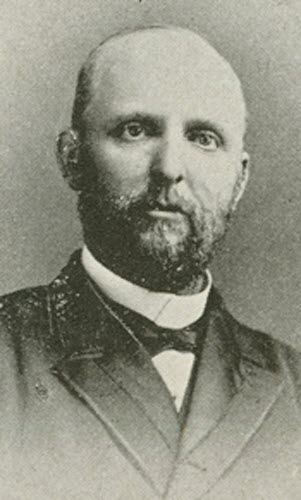
Historical · U.S. House · Connecticut · District 4
Ebenezer Hill
Former U.S. Representative · Connecticut District 4 · 1895–1919 · Republican
Ebenezer Hill represented Connecticut's District 4 in the United States House of Representatives (1895–1919) for the Republican party. The page below collects sourced biographical facts, term history, committee roles, and provenance for Hill.
Bioguide ID: H000591
Key facts
- Full name
- Ebenezer Hill
- State
- Connecticut
- District
- District 4
- Party
- Republican
- House service
- 1895–1919
- First House term
- 1895
- Status
- Left office
- Current term ends
- —
- Born
- 1845
- Bioguide ID
- H000591
- Committee assignments
- —
- Dataset version
- 1.20260606
Biographical narrative
806 words · sourced from the Wikipedia REST extract
Ebenezer Hill was an American politician who served as a U.S. Representative for Connecticut's 4th congressional district. His tenure in the House of Representatives spanned from 1895 to 1913 and again from 1915 until his death in 1917. A member of the Republican Party, Hill was known for his involvement in banking and finance, as well as his advocacy for women's suffrage. His political career was marked by a commitment to the gold standard and protectionist policies.
Early life and career
Ebenezer Hill was born on August 4, 1845, in Redding, Connecticut, to Reverend Moses Hill and Charlotte Ilsley McLellan. His early education took place in local public schools, followed by attendance at the Center Academy. In 1863, during the Civil War, Hill enlisted in the Union Army, serving as an assistant in the Quartermaster Department under his brother, who held the rank of Major. His military service concluded with the war's end.
After the war, Hill pursued higher education at Yale College from 1865 to 1866. Although he did not complete a degree, he was later awarded an honorary degree from Yale in 1895, recognizing his contributions and achievements. Following his time at Yale, Hill engaged in business and banking in Norwalk, Connecticut. His involvement in local governance included serving as a Burgess of Norwalk and as chairman of the board of school visitors, reflecting his commitment to public service and community development.
Hill's political career began to take shape in the mid-1880s. In 1884, he was a delegate to the Republican National Convention, which marked his increasing engagement with the national political landscape. He was elected to the Connecticut State Senate in 1886, where he served a single term. Additionally, he was involved with the Republican State Central Committee, further establishing his presence within the party.
House tenure
Ebenezer Hill's congressional career began when he was elected as a Republican to the 54th United States Congress in 1894. He served in the House of Representatives from March 4, 1895, until March 3, 1913, completing a total of eight consecutive terms. His legislative work during this period included significant roles on various congressional committees. Hill was a member of the Committee on Banking and Currency for eight years and served on the Ways and Means Committee for fourteen years. His expertise in banking and finance was recognized by his peers, and he developed a reputation as an authority on these subjects.
During the 61st Congress, Hill held the position of chairman of the Committee on Expenditures in the Department of the Treasury. His leadership in this role underscored his influence on fiscal matters and government spending. Throughout his tenure, Hill was known for his strong advocacy of the gold standard, which was a contentious issue in American economic policy at the time. He was also identified as a protectionist, supporting tariffs that favored American industries.
In 1912, Hill faced a setback when he was an unsuccessful candidate for reelection to the 63rd Congress. However, he returned to Congress after being elected to the 64th and 65th Congresses, serving from March 4, 1915, until his death on September 27, 1917. His return to the House demonstrated his continued relevance in Connecticut politics and the support he maintained among his constituents.
Legislative focus and committees
Throughout his congressional career, Ebenezer Hill focused on several key issues, particularly in the realms of banking, finance, and women's rights. His long-standing involvement with the Committee on Banking and Currency allowed him to influence legislation related to financial institutions and economic policy. Hill's advocacy for the gold standard reflected his belief in a stable monetary system, which he argued was essential for economic growth and stability.
In addition to his work on banking issues, Hill was a member of the Ways and Means Committee, where he contributed to discussions and decisions regarding taxation and revenue generation. His role on this committee was significant, as it dealt with the financial underpinnings of government policy and the economic framework of the nation.
Hill's support for women's suffrage distinguished him as a progressive figure within the Republican Party during a time when the movement was gaining momentum. His advocacy for women's rights was part of a broader social change occurring in the United States, and he was recognized as an outspoken supporter of this cause.
Ebenezer Hill's legislative contributions and committee work reflected his commitment to addressing the economic and social issues of his time. His expertise in banking and finance, combined with his advocacy for women's suffrage, positioned him as a notable figure in early 20th-century American politics. Hill's career in the U.S. House of Representatives concluded with his death in 1917, after which he was interred in Riverside Cemetery in Norwalk, Connecticut. His legacy as a public servant continues to be remembered in the context of Connecticut's political history.
Notable legislation
Sponsored and co-sponsored legislation for Ebenezer Hill is pending operator curation. The biographical narrative above carries the same provenance trail until per-bill rows are written.
Sources
- [1]https://en.wikipedia.org/wiki/Ebenezer_J._HillWikipedia · retrieved 2026-06-06
Notable quotes
Sourced quotes for Ebenezer Hill are pending operator curation. Narrative-scope provenance remains attached below.
Sources
- [1]https://en.wikipedia.org/wiki/Ebenezer_J._HillWikipedia · retrieved 2026-06-06
Key positions
Curated policy positions for Ebenezer Hill are pending operator review. The biographical narrative above carries the same provenance trail until per-topic positions are written.
Sources
- [1]https://en.wikipedia.org/wiki/Ebenezer_J._HillWikipedia · retrieved 2026-06-06
Terms served
- 1895–1897U.S. House · Term 1 · Republican
- 1897–1899U.S. House · Term 2 · Republican
- 1899–1901U.S. House · Term 3 · Republican
- 1901–1903U.S. House · Term 4 · Republican
- 1903–1905U.S. House · Term 5 · Republican
- 1905–1907U.S. House · Term 6 · Republican
- 1907–1909U.S. House · Term 7 · Republican
- 1909–1911U.S. House · Term 8 · Republican
- 1911–1913U.S. House · Term 9 · Republican
- 1915–1917U.S. House · Term 10 · Republican
- 1917–1919U.S. House · Term 11 · Republican
Sources & provenance
Every attributable claim above carries a per-section [N] marker that resolves to the corresponding URL below. Each entry records the upstream provider, the canonical URL, and the timestamp at which the source was retrieved by the ingest pipeline.
Key facts
- https://bioguide.congress.gov/search/bio/H000591bioguide · retrieved 2026-06-06
- https://www.govtrack.us/congress/members/405453govtrack · retrieved 2026-06-06
Biographical narrative
- https://en.wikipedia.org/wiki/Ebenezer_J._Hillwikipedia · retrieved 2026-06-06
Find your representative
Every U.S. state elects representatives by district. Browse Connecticut’s delegation, the full former-representative roster, or explore the role and term length.
Related on The Candidate
- Preceded by Robert De ForestEarlier holder of the Connecticut District 4 House seat · Democratic.Open
- Succeeded by William TierneyLater holder of the Connecticut District 4 House seat · Democratic.Open
- Barbara KennellyFormer U.S. Representative · Connecticut District 1 · DemocraticOpen
- Charles ChapmanFormer U.S. Representative · Connecticut District 1 · WhigOpen
- Dwight LoomisFormer U.S. Representative · Connecticut District 1 · RepublicanOpen
- Edward FennFormer U.S. Representative · Connecticut District 1 · RepublicanOpen