
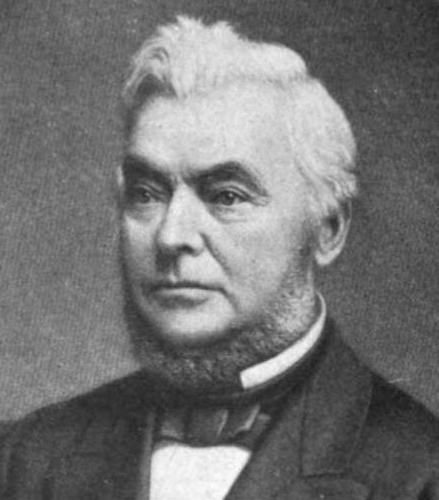
Historical · U.S. House · Connecticut · District 4
George Woodruff
Former U.S. Representative · Connecticut District 4 · 1861–1863 · Democratic
George Woodruff represented Connecticut's District 4 in the United States House of Representatives (1861–1863) for the Democratic party. The page below collects sourced biographical facts, term history, committee roles, and provenance for Woodruff.
Bioguide ID: W000716
Key facts
- Full name
- George Woodruff
- State
- Connecticut
- District
- District 4
- Party
- Democratic
- House service
- 1861–1863
- First House term
- 1861
- Status
- Left office
- Current term ends
- —
- Born
- 1805
- Bioguide ID
- W000716
- Committee assignments
- —
- Dataset version
- 1.20260606
Biographical narrative
942 words · sourced from the Wikipedia REST extract
George Woodruff was a prominent figure in Connecticut's political landscape during the mid-19th century, serving as a Democratic member of the United States House of Representatives for Connecticut's 4th congressional district from 1861 to 1863. His career spanned various roles in public service, law, and local governance, reflecting a commitment to civic duty and community involvement. Woodruff's contributions to both state and national politics were marked by his legal background and extensive experience in various public offices.
Early life and career
George Catlin Woodruff was born on December 1, 1805, in Litchfield, Connecticut. He was the son of Major General Morris Woodruff and Candace Catlin, which likely influenced his early exposure to leadership and public service. Woodruff pursued higher education at Yale College, where he graduated in 1825. Following his graduation, he furthered his education in law at the Litchfield Law School, a well-respected institution known for training many prominent lawyers of the time. He was admitted to the bar in 1827 and began his legal practice in his hometown of Litchfield.
Woodruff's early career was characterized by a series of public service roles that laid the foundation for his later political career. He served as the Postmaster of Litchfield for two non-consecutive terms, first from January 4, 1832, to January 27, 1842, and then from September 2, 1842, to September 28, 1846. This role not only provided him with administrative experience but also allowed him to engage with the community on a daily basis, enhancing his reputation as a dedicated public servant.
In addition to his work as Postmaster, Woodruff held various local offices, including serving as a justice of the peace, grand juror, and probate judge. His involvement in these roles demonstrated his commitment to the legal system and community governance. Furthermore, he was active in the financial sector, serving as president and director of a bank, which showcased his understanding of economic matters and fiscal responsibility. His military service as a colonel in the militia also reflects his dedication to public service and community defense.
Woodruff's political career began to take shape as he was elected to the Connecticut House of Representatives in 1851. This position marked his entry into formal politics, allowing him to influence state legislation and policy. He would later return to the Connecticut House in 1866 and 1874, further solidifying his role in state governance. His early experiences in various public offices equipped him with the skills and knowledge necessary for his later role in the U.S. Congress.
House tenure
George Woodruff's tenure in the U.S. House of Representatives began with his election to the Thirty-seventh Congress, which convened on March 4, 1861. He represented Connecticut's 4th congressional district during a tumultuous period in American history, marked by the Civil War. His election to Congress was a significant achievement, reflecting the trust and support of his constituents in Litchfield and the surrounding areas.
During his time in the House, Woodruff was involved in the legislative process during a critical time for the nation. The Civil War had profound implications for the United States, and Congress was tasked with addressing numerous issues related to the conflict, including military funding, civil rights, and the preservation of the Union. While specific details of his legislative actions are not documented, it can be inferred that Woodruff participated in discussions and decisions that shaped the course of the war and its aftermath.
Despite his contributions, Woodruff faced challenges in securing re-election. He ran for a second term in the Thirty-eighth Congress but was unsuccessful in his bid. His single term in the House concluded on March 3, 1863, marking the end of his direct involvement in federal legislative affairs. However, his experience in Congress would have lasting effects on his understanding of national issues and governance.
Legislative focus and committees
While specific legislative initiatives and committee assignments during Woodruff's time in the House are not detailed in the available records, it is important to contextualize his role within the broader framework of the Democratic Party and the political climate of the era. As a member of the Democratic Party during the Civil War, Woodruff would have been part of a faction that often found itself at odds with the prevailing Republican majority. This dynamic likely influenced his legislative priorities and the issues he championed during his time in office.
Woodruff's background in law and his extensive experience in local governance would have informed his approach to legislation. His legal training may have led him to focus on issues related to justice, civil rights, and the rule of law, particularly in the context of a nation grappling with the consequences of war. Additionally, his roles in local government and financial institutions may have shaped his perspectives on economic policies and the importance of fiscal responsibility.
After his congressional term, Woodruff continued to engage in public service at the state level, returning to the Connecticut House of Representatives in 1866 and again in 1874. These later terms allowed him to remain active in state politics and contribute to the legislative process in Connecticut. His ongoing involvement in public service reflects a lifelong commitment to the community and the principles of governance.
George Woodruff passed away on November 21, 1885, in Litchfield, Connecticut. His legacy as a public servant is marked by his diverse roles in law, local governance, and national politics. He was interred in East Cemetery, leaving behind a history of civic engagement and dedication to the principles of democracy and public service. Through his various positions, Woodruff exemplified the interconnectedness of local and national governance, contributing to the fabric of American political life during a pivotal era.
Notable legislation
Sponsored and co-sponsored legislation for George Woodruff is pending operator curation. The biographical narrative above carries the same provenance trail until per-bill rows are written.
Sources
- [1]https://en.wikipedia.org/wiki/George_Catlin_WoodruffWikipedia · retrieved 2026-06-06
Notable quotes
Sourced quotes for George Woodruff are pending operator curation. Narrative-scope provenance remains attached below.
Sources
- [1]https://en.wikipedia.org/wiki/George_Catlin_WoodruffWikipedia · retrieved 2026-06-06
Key positions
Curated policy positions for George Woodruff are pending operator review. The biographical narrative above carries the same provenance trail until per-topic positions are written.
Sources
- [1]https://en.wikipedia.org/wiki/George_Catlin_WoodruffWikipedia · retrieved 2026-06-06
Terms served
- 1861–1863U.S. House · Term 1 · Democratic
Sources & provenance
Every attributable claim above carries a per-section [N] marker that resolves to the corresponding URL below. Each entry records the upstream provider, the canonical URL, and the timestamp at which the source was retrieved by the ingest pipeline.
Key facts
- https://bioguide.congress.gov/search/bio/W000716bioguide · retrieved 2026-06-06
- https://www.govtrack.us/congress/members/411868govtrack · retrieved 2026-06-06
Biographical narrative
- https://en.wikipedia.org/wiki/George_Catlin_Woodruffwikipedia · retrieved 2026-06-06
Find your representative
Every U.S. state elects representatives by district. Browse Connecticut’s delegation, the full former-representative roster, or explore the role and term length.
Related on The Candidate
- Preceded by William BishopEarlier holder of the Connecticut District 4 House seat · Democratic.Open
- Succeeded by John HubbardLater holder of the Connecticut District 4 House seat · Republican.Open
- Barbara KennellyFormer U.S. Representative · Connecticut District 1 · DemocraticOpen
- Charles ChapmanFormer U.S. Representative · Connecticut District 1 · WhigOpen
- Dwight LoomisFormer U.S. Representative · Connecticut District 1 · RepublicanOpen
- Edward FennFormer U.S. Representative · Connecticut District 1 · RepublicanOpen