
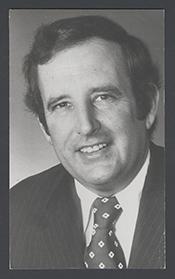
Historical · U.S. House · Connecticut · District 4
Stewart McKinney
Former U.S. Representative · Connecticut District 4 · 1971–1987 · Republican
Stewart McKinney represented Connecticut's District 4 in the United States House of Representatives (1971–1987) for the Republican party. The page below collects sourced biographical facts, term history, committee roles, and provenance for McKinney.
Bioguide ID: M000527
Key facts
- Full name
- Stewart McKinney
- State
- Connecticut
- District
- District 4
- Party
- Republican
- House service
- 1971–1987
- First House term
- 1971
- Status
- Left office
- Current term ends
- —
- Born
- 1931
- Bioguide ID
- M000527
- Committee assignments
- —
- Dataset version
- 1.20260605
Biographical narrative
949 words · sourced from the Wikipedia REST extract
Stewart B. McKinney was an American politician who served as a Republican member of the United States House of Representatives, representing Connecticut's 4th congressional district from 1971 until his death in 1987. He is recognized for his contributions to legislation addressing homelessness and for his involvement in discussions surrounding the financial sector, particularly his coining of the phrase "too big to fail." McKinney's life and career were marked by his political achievements as well as his personal struggles, culminating in his death from AIDS-related complications.
Early life and career
Stewart B. McKinney was born on January 30, 1931, in Pittsburgh, Pennsylvania. He grew up in Fairfield, Connecticut, where he was educated at Kent School. Following his high school education, McKinney attended Princeton University from 1949 to 1951. However, he left the university to enlist in the United States Air Force, where he served until 1955 and attained the rank of sergeant. After completing his military service, McKinney returned to academia and earned a Bachelor of Arts degree in history from Yale University in 1958.
In addition to his academic pursuits, McKinney was involved in various business ventures. He engaged in the automotive industry, owning and operating several car-related businesses, including Auto Interior Decorators, Inc., and Fairfield Firestone. He also served as president of a chain of tire stores known as CMF Tires and was involved in real estate development through his company, Lantern Point Real Estate Development. These entrepreneurial activities provided him with a foundation in business that would later inform his political career.
McKinney's entry into politics began in 1966 when he was elected to the Connecticut State House of Representatives. He served two terms from 1967 to 1971, during which he held the position of minority leader in his second term. His experience in state politics laid the groundwork for his subsequent campaign for the U.S. House of Representatives.
In 1970, McKinney successfully ran for a seat in the U.S. House, marking the beginning of his long tenure in Congress. His election was characterized by a reputation as an independent-minded, liberal Republican, a distinction that set him apart from many of his contemporaries.
House tenure
Stewart McKinney's congressional career spanned nine terms, beginning in 1971 and concluding with his death in 1987. Throughout his time in the House, he was known for his commitment to various social issues, particularly those affecting vulnerable populations. One of his most significant legislative achievements was the McKinney-Vento Homeless Assistance Act of 1986, which aimed to provide federal funding for shelter programs and address the growing issue of homelessness in the United States.
In addition to his work on homelessness, McKinney served on the House Banking, Finance and Urban Affairs Committee. His role on this committee allowed him to engage with critical issues related to the financial sector, where he gained recognition for coining the phrase "too big to fail." This term became a focal point in discussions regarding the stability of large financial institutions and their impact on the economy.
McKinney's congressional responsibilities also included participation in the House Select Committee on Assassinations, where he contributed to investigations into significant historical events. His involvement in these high-profile matters underscored his active engagement in national issues during a tumultuous period in American history.
Throughout his tenure, McKinney maintained a focus on issues that resonated with his constituents, advocating for policies that addressed both local and national concerns. His legislative efforts reflected a commitment to improving the lives of those he represented, particularly in the areas of housing and financial regulation.
Legislative focus and committees
During his time in the House of Representatives, Stewart McKinney's legislative focus encompassed a range of issues, with a particular emphasis on homelessness and financial regulation. The McKinney-Vento Homeless Assistance Act, which he championed, was a landmark piece of legislation that provided essential resources for homeless individuals and families. This act established a framework for federal assistance to support shelter programs and aimed to address the systemic issues contributing to homelessness.
McKinney's role on the House Banking, Finance and Urban Affairs Committee was instrumental in shaping his understanding of the financial landscape. His coining of the phrase "too big to fail" highlighted the risks associated with large financial institutions and the potential consequences of their failures on the broader economy. This concept has since become a critical part of discussions surrounding financial regulation and the responsibilities of major banks.
In addition to his work on homelessness and financial issues, McKinney's participation in the House Select Committee on Assassinations demonstrated his engagement with significant national events. This committee was tasked with investigating the assassinations of prominent figures, reflecting the political climate of the era and the public's demand for accountability.
McKinney's legislative contributions were not limited to these areas; he was involved in various other initiatives that sought to improve the welfare of his constituents and address pressing national issues. His commitment to public service was evident in his willingness to tackle complex challenges and advocate for policies that aligned with his principles.
Stewart B. McKinney's legacy is marked by his contributions to American politics, particularly in the realms of homelessness and financial regulation. His life and career serve as a reminder of the impact that dedicated public servants can have on their communities and the nation as a whole. Following his death, McKinney was honored posthumously, with the renaming of the Salt Meadow National Wildlife Refuge in Connecticut to the Stewart B. McKinney National Wildlife Refuge, as well as the naming of the Stamford Transportation Center in his memory. His family, including his son John McKinney, who served as minority leader of the Connecticut State Senate, continues to carry on his legacy in public service.
Notable legislation
Sponsored and co-sponsored legislation for Stewart McKinney is pending operator curation. The biographical narrative above carries the same provenance trail until per-bill rows are written.
Sources
- [1]https://en.wikipedia.org/wiki/Stewart_McKinney_(politician)Wikipedia · retrieved 2026-06-05
Notable quotes
Sourced quotes for Stewart McKinney are pending operator curation. Narrative-scope provenance remains attached below.
Sources
- [1]https://en.wikipedia.org/wiki/Stewart_McKinney_(politician)Wikipedia · retrieved 2026-06-05
Key positions
Curated policy positions for Stewart McKinney are pending operator review. The biographical narrative above carries the same provenance trail until per-topic positions are written.
Sources
- [1]https://en.wikipedia.org/wiki/Stewart_McKinney_(politician)Wikipedia · retrieved 2026-06-05
Terms served
- 1971–1973U.S. House · Term 1 · Republican
- 1973–1975U.S. House · Term 2 · Republican
- 1975–1977U.S. House · Term 3 · Republican
- 1977–1979U.S. House · Term 4 · Republican
- 1979–1981U.S. House · Term 5 · Republican
- 1981–1983U.S. House · Term 6 · Republican
- 1983–1985U.S. House · Term 7 · Republican
- 1985–1987U.S. House · Term 8 · Republican
- 1987–1987U.S. House · Term 9 · Republican
Sources & provenance
Every attributable claim above carries a per-section [N] marker that resolves to the corresponding URL below. Each entry records the upstream provider, the canonical URL, and the timestamp at which the source was retrieved by the ingest pipeline.
Key facts
- https://bioguide.congress.gov/search/bio/M000527bioguide · retrieved 2026-06-05
- https://www.govtrack.us/congress/members/407519govtrack · retrieved 2026-06-05
Biographical narrative
- https://en.wikipedia.org/wiki/Stewart_McKinney_(politician)wikipedia · retrieved 2026-06-05
Find your representative
Every U.S. state elects representatives by district. Browse Connecticut’s delegation, the full former-representative roster, or explore the role and term length.
Related on The Candidate
- Preceded by Donald IrwinEarlier holder of the Connecticut District 4 House seat · Democratic.Open
- Succeeded by Christopher ShaysLater holder of the Connecticut District 4 House seat · Republican.Open
- Barbara KennellyFormer U.S. Representative · Connecticut District 1 · DemocraticOpen
- Charles ChapmanFormer U.S. Representative · Connecticut District 1 · WhigOpen
- Dwight LoomisFormer U.S. Representative · Connecticut District 1 · RepublicanOpen
- Edward FennFormer U.S. Representative · Connecticut District 1 · RepublicanOpen