
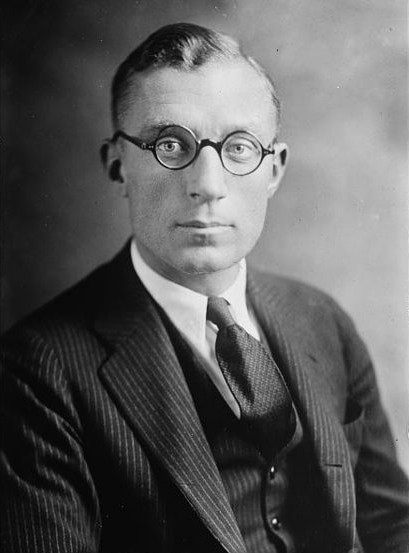
Historical · U.S. House · Connecticut · District 5
Patrick O’Sullivan
Former U.S. Representative · Connecticut District 5 · 1923–1925 · Democratic
Patrick O’Sullivan represented Connecticut's District 5 in the United States House of Representatives (1923–1925) for the Democratic party. The page below collects sourced biographical facts, term history, committee roles, and provenance for O’Sullivan.
Bioguide ID: O000123
Key facts
- Full name
- Patrick O’Sullivan
- State
- Connecticut
- District
- District 5
- Party
- Democratic
- House service
- 1923–1925
- First House term
- 1923
- Status
- Left office
- Current term ends
- —
- Born
- 1887
- Bioguide ID
- O000123
- Committee assignments
- —
- Dataset version
- 1.20260606
Biographical narrative
933 words · sourced from the Wikipedia REST extract
Patrick O’Sullivan was a prominent figure in early 20th-century American politics, serving as a U.S. Representative from Connecticut. A member of the Democratic Party, O’Sullivan held office during the Sixty-eighth Congress from 1923 to 1925. His career spanned various roles in both law and government, reflecting a deep commitment to public service and legal scholarship. After his tenure in the House of Representatives, he continued to influence the legal landscape of Connecticut through a distinguished career in the judiciary.
Early life and career
Patrick O’Sullivan was born on August 11, 1887, in Derby, Connecticut. He grew up in a community that would later shape his political and professional aspirations. O’Sullivan attended public schools in Derby, where he laid the foundation for his future academic pursuits. His educational journey took him to Yale University, where he graduated in 1908. Following his undergraduate studies, he continued his education at Georgetown University in Washington, D.C., earning a degree in 1909. O’Sullivan then returned to Yale to attend Yale Law School, where he completed his legal education in 1913.
Upon graduating from law school, O’Sullivan was admitted to the bar in the same year and began practicing law in Derby. His legal career started to take shape as he became involved in local governance. From 1914 to 1917, he served as the Corporation Counsel for Derby, a role that allowed him to gain valuable experience in municipal law and public administration. His legal expertise and commitment to public service led him to be elected as a delegate to the Democratic National Convention in 1916, where he participated in shaping the party's platform and direction.
In 1917, O’Sullivan transitioned to state politics when he was elected to the Connecticut State Senate. He quickly rose to prominence within the Senate, becoming the minority leader in the same year. His leadership role in the Senate showcased his ability to navigate the complexities of legislative processes and build coalitions among his peers. However, his political career was temporarily interrupted by the outbreak of World War I. In 1918, O’Sullivan resigned from the State Senate to enlist in the United States Navy, where he served his country during a critical period in history.
House tenure
After returning from military service, O’Sullivan’s political career took a significant turn when he was elected as a Democrat to the Sixty-eighth Congress. His term began on March 4, 1923, and lasted until March 3, 1925. During his time in the House of Representatives, O’Sullivan was involved in various legislative activities, contributing to discussions and decisions that would impact his constituents and the nation. His tenure in Congress was characterized by the challenges of the post-war era, as the country was navigating economic and social changes following the war.
Despite his efforts and contributions, O’Sullivan was not successful in his bid for re-election in 1924 to the Sixty-ninth Congress. This defeat marked the end of his congressional career, but it did not signify a retreat from public life. Instead, he returned to his legal practice, where he continued to apply his knowledge and skills in law, contributing to the legal community in Connecticut.
Legislative focus and committees
During his time in the House of Representatives, Patrick O’Sullivan focused on issues pertinent to his constituents and the broader national landscape. While specific details of his legislative initiatives and committee assignments are not extensively documented, it is clear that his background in law and governance informed his approach to policymaking. His experience as Corporation Counsel and State Senator likely provided him with insights into the needs of local communities and the importance of effective legislation.
After concluding his term in Congress, O’Sullivan resumed his legal career and took on significant roles in the judiciary. He served as an associate professor of law at Yale Law School, where he shared his expertise with the next generation of legal professionals. His academic contributions helped shape legal education in Connecticut and beyond.
In 1931, O’Sullivan was appointed as a judge of the Connecticut Superior Court, a position he held until 1950. His judicial career was marked by a commitment to justice and the rule of law. Following his tenure on the Superior Court, he was appointed as an associate justice of the Connecticut Supreme Court, serving from 1950 to 1957. In 1957, he briefly held the position of Chief Justice, serving from April 9 until August 11 of that year, when he reached the mandatory retirement age.
Even after retiring from the Supreme Court, O’Sullivan remained active in the legal community. He continued to serve as a State trial referee in New Haven, contributing his legal expertise to the resolution of cases. His involvement in the judiciary and legal education underscored his dedication to the law and his desire to foster a fair and just legal system.
In addition to his judicial roles, O’Sullivan played a significant part in the 1965 Constitutional Convention as co-chairman. This position allowed him to influence the development of Connecticut’s constitutional framework, further demonstrating his commitment to public service and governance.
Patrick O’Sullivan spent his later years residing in Orange, Connecticut, where he remained engaged in community and legal affairs until his passing on November 10, 1978. He was interred in St. Lawrence Cemetery in West Haven, Connecticut, leaving behind a legacy of public service, legal scholarship, and dedication to the principles of democracy and justice. His life and career reflect the evolving landscape of American politics and law during the early to mid-20th century, illustrating the important role that individuals like O’Sullivan played in shaping the governance of their communities and the nation.
Notable legislation
Sponsored and co-sponsored legislation for Patrick O’Sullivan is pending operator curation. The biographical narrative above carries the same provenance trail until per-bill rows are written.
Sources
- [1]https://en.wikipedia.org/wiki/Patrick_B._O'SullivanWikipedia · retrieved 2026-06-06
Notable quotes
Sourced quotes for Patrick O’Sullivan are pending operator curation. Narrative-scope provenance remains attached below.
Sources
- [1]https://en.wikipedia.org/wiki/Patrick_B._O'SullivanWikipedia · retrieved 2026-06-06
Key positions
Curated policy positions for Patrick O’Sullivan are pending operator review. The biographical narrative above carries the same provenance trail until per-topic positions are written.
Sources
- [1]https://en.wikipedia.org/wiki/Patrick_B._O'SullivanWikipedia · retrieved 2026-06-06
Terms served
- 1923–1925U.S. House · Term 1 · Democratic
Sources & provenance
Every attributable claim above carries a per-section [N] marker that resolves to the corresponding URL below. Each entry records the upstream provider, the canonical URL, and the timestamp at which the source was retrieved by the ingest pipeline.
Key facts
- https://bioguide.congress.gov/search/bio/O000123bioguide · retrieved 2026-06-06
- https://www.govtrack.us/congress/members/408311govtrack · retrieved 2026-06-06
Biographical narrative
- https://en.wikipedia.org/wiki/Patrick_B._O'Sullivanwikipedia · retrieved 2026-06-06
Find your representative
Every U.S. state elects representatives by district. Browse Connecticut’s delegation, the full former-representative roster, or explore the role and term length.
Related on The Candidate
- Preceded by William KennedyEarlier holder of the Connecticut District 5 House seat · Democratic.Open
- Succeeded by Edward GossLater holder of the Connecticut District 5 House seat · Republican.Open
- Barbara KennellyFormer U.S. Representative · Connecticut District 1 · DemocraticOpen
- Charles ChapmanFormer U.S. Representative · Connecticut District 1 · WhigOpen
- Dwight LoomisFormer U.S. Representative · Connecticut District 1 · RepublicanOpen
- Edward FennFormer U.S. Representative · Connecticut District 1 · RepublicanOpen