
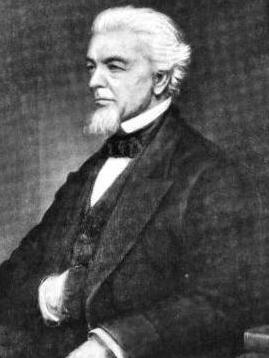
Historical · U.S. House · Connecticut · At-Large
William Ellsworth
Former U.S. Representative · Connecticut At-Large · 1829–1835
William Ellsworth represented Connecticut's At-Large in the United States House of Representatives (1829–1835). The page below collects sourced biographical facts, term history, committee roles, and provenance for Ellsworth.
Bioguide ID: E000150
Key facts
- Full name
- William Ellsworth
- State
- Connecticut
- District
- At-Large
- Party
- —
- House service
- 1829–1835
- First House term
- 1829
- Status
- Left office
- Current term ends
- —
- Born
- 1791
- Bioguide ID
- E000150
- Committee assignments
- —
- Dataset version
- 1.20260606
Biographical narrative
824 words · sourced from the Wikipedia REST extract
William Ellsworth was a prominent American politician and attorney who served as a U.S. Representative for Connecticut's at-large district during the early 19th century. He was a member of the Anti-Jacksonian Party and held office in the United States Congress for three terms from 1829 to 1834. In addition to his congressional service, Ellsworth was also the 30th governor of Connecticut and later served as a justice on the Connecticut Supreme Court. His contributions to the legal and political landscape of Connecticut were significant, and he was closely associated with several notable figures of his time, including his father, Oliver Ellsworth, a Founding Father, and Noah Webster, the renowned lexicographer.
Early life and career
William Ellsworth was born on November 10, 1791, in Windsor, Connecticut. He was the son of Oliver Ellsworth, who played a crucial role in the founding of the United States, and he was also the son-in-law of Noah Webster, the famous dictionary publisher. Ellsworth had a twin brother, Henry Leavitt Ellsworth, who became the first Commissioner of the United States Patent Office. Growing up in a family deeply engaged in public service and education, Ellsworth was well-prepared for a career in law and politics.
Ellsworth completed his preparatory studies and graduated from Yale College in 1810. Following his graduation, he pursued legal studies at Tapping Reeve's Litchfield Law School, a prestigious institution for legal education at the time. He was admitted to the bar in 1811, marking the beginning of his legal career. Shortly thereafter, he entered into a law partnership with his brother-in-law, Thomas Scott Williams, who was the Chief Justice of the Connecticut Supreme Court. This partnership allowed Ellsworth to manage a prominent law practice while Williams served in Congress.
In 1827, Ellsworth was appointed as a professor of law at Trinity College, a position he held until his death. His academic role complemented his legal practice and provided him with a platform to influence the next generation of lawyers and public servants.
House tenure
William Ellsworth's political career in the U.S. House of Representatives began when he was elected as an Anti-Jacksonian to the Twenty-first Congress. He took office on March 4, 1829, and subsequently served in the Twenty-second and Twenty-third Congresses. His tenure in the House was marked by a commitment to the principles of his party, which opposed the policies of President Andrew Jackson. Ellsworth's legislative work during this period contributed to the political discourse of the time, particularly regarding issues such as governance and the role of the federal government.
Ellsworth's congressional service lasted until July 8, 1834, when he resigned from his position. His decision to step down from Congress was influenced by various factors, including his growing responsibilities in state politics and his legal career. Following his resignation from the House, Ellsworth continued to be active in public service, further shaping the political landscape of Connecticut.
Legislative focus and committees
During his time in Congress, William Ellsworth was involved in various legislative matters that reflected the interests and concerns of his constituents. While specific details regarding the bills he sponsored or the committees he served on are not documented, it can be inferred that his legal background and political affiliations guided his legislative priorities. As an Anti-Jacksonian, Ellsworth likely focused on issues that aligned with his party's platform, which included a commitment to limited government and a cautious approach to federal authority.
After his congressional tenure, Ellsworth's political career continued to evolve. He served in the Connecticut State Senate from 1836 to 1837, representing the 1st District, which included Hartford and its surrounding areas. His experience in the state legislature further solidified his reputation as a dedicated public servant.
In 1838, Ellsworth was elected as the governor of Connecticut, a position he held until 1842. His governorship was characterized by progressive initiatives, including the establishment of a new voter registration system and the founding of a school commission aimed at improving education in the state. These reforms demonstrated his commitment to enhancing civic engagement and educational opportunities for the citizens of Connecticut.
Following his governorship, Ellsworth continued to serve the state as a judge on the Connecticut Supreme Court from 1847 until 1861. His judicial career further exemplified his dedication to public service and the rule of law. Ellsworth's legal expertise and experience in governance made him a respected figure in Connecticut's judicial system.
In summary, William Ellsworth's career spanned several important roles in public service, including his time as a U.S. Representative, governor, and state supreme court justice. His contributions to the legal and political spheres in Connecticut were significant, and his legacy is reflected in the reforms and initiatives he championed throughout his life. Ellsworth passed away on January 15, 1868, in Hartford, Connecticut, and is interred at the Old North Cemetery in the city. His life and career remain a testament to the impact of dedicated public service on the development of state and national governance.
Notable legislation
Sponsored and co-sponsored legislation for William Ellsworth is pending operator curation. The biographical narrative above carries the same provenance trail until per-bill rows are written.
Sources
- [1]https://en.wikipedia.org/wiki/William_W._EllsworthWikipedia · retrieved 2026-06-06
Notable quotes
Sourced quotes for William Ellsworth are pending operator curation. Narrative-scope provenance remains attached below.
Sources
- [1]https://en.wikipedia.org/wiki/William_W._EllsworthWikipedia · retrieved 2026-06-06
Key positions
Curated policy positions for William Ellsworth are pending operator review. The biographical narrative above carries the same provenance trail until per-topic positions are written.
Sources
- [1]https://en.wikipedia.org/wiki/William_W._EllsworthWikipedia · retrieved 2026-06-06
Terms served
- 1829–1831U.S. House · Term 1
- 1831–1833U.S. House · Term 2
- 1833–1835U.S. House · Term 3
Sources & provenance
Every attributable claim above carries a per-section [N] marker that resolves to the corresponding URL below. Each entry records the upstream provider, the canonical URL, and the timestamp at which the source was retrieved by the ingest pipeline.
Key facts
- https://bioguide.congress.gov/search/bio/E000150bioguide · retrieved 2026-06-06
- https://www.govtrack.us/congress/members/403841govtrack · retrieved 2026-06-06
Biographical narrative
- https://en.wikipedia.org/wiki/William_W._Ellsworthwikipedia · retrieved 2026-06-06
Find your representative
Every U.S. state elects representatives by district. Browse Connecticut’s delegation, the full former-representative roster, or explore the role and term length.
Related on The Candidate
- Preceded by David PlantEarlier holder of the Connecticut At-Large House seat · Adams.Open
- Succeeded by Andrew JudsonLater holder of the Connecticut At-Large House seat · Jackson.Open
- Barbara KennellyFormer U.S. Representative · Connecticut District 1 · DemocraticOpen
- Charles ChapmanFormer U.S. Representative · Connecticut District 1 · WhigOpen
- Dwight LoomisFormer U.S. Representative · Connecticut District 1 · RepublicanOpen
- Edward FennFormer U.S. Representative · Connecticut District 1 · RepublicanOpen