
Historical · U.S. House · Delaware · At-Large
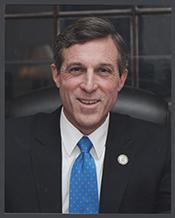
John Carney
Former U.S. Representative · Delaware At-Large · 2011–2017 · Democratic
John Carney represented Delaware's At-Large in the United States House of Representatives (2011–2017) for the Democratic party. The page below collects sourced biographical facts, term history, committee roles, and provenance for Carney.
Bioguide ID: C001083
Key facts
- Full name
- John Carney
- State
- Delaware
- District
- At-Large
- Party
- Democratic
- House service
- 2011–2017
- First House term
- 2011
- Status
- Left office
- Current term ends
- —
- Born
- 1956
- Bioguide ID
- C001083
- Committee assignments
- —
- Dataset version
- 1.20260605
Biographical narrative
1,018 words · sourced from the Wikipedia REST extract
John C. Carney, Jr. is a former U.S. Representative who served Delaware's at-large congressional district from 2011 to 2017. A member of the Democratic Party, Carney has held various significant political positions throughout his career, including serving as the 74th governor of Delaware from 2017 to 2025 and the 24th lieutenant governor of Delaware from 2001 to 2009. His political journey has been marked by a focus on education, health care, and bipartisan cooperation.
Early life and career
John Charles Carney Jr. was born on May 20, 1956, in Wilmington, Delaware. He grew up in Claymont, Delaware, as the second of nine children in a family where both parents were educators. His educational background is rooted in a strong academic tradition, which was influenced by his family's commitment to education. Carney attended St. Mark's High School, where he was a standout athlete, serving as the quarterback for the school's football team that won the state championship in 1973. He furthered his education at Dartmouth College, graduating in 1978 with a degree in economics. During his time at Dartmouth, he was recognized for his athletic achievements, earning All-Ivy League honors and being named the Most Valuable Player in football. He was also involved in campus life as a member of the Beta Alpha Omega fraternity.
After completing his undergraduate studies, Carney began his career in public service. He initially worked as the Deputy Chief Administrative Officer of New Castle County, where he gained valuable experience in local government operations. He then served as Secretary of Finance and Deputy Chief of Staff for Governor Tom Carper, which further solidified his understanding of state governance and fiscal management. His political career took a significant step forward when he was elected as the lieutenant governor of Delaware in 2000. During his tenure from January 16, 2001, to January 20, 2009, Carney presided over the Delaware State Senate and chaired various councils and commissions, including the Delaware Health Care Commission and the Criminal Justice Council. He was instrumental in launching initiatives aimed at improving education and health outcomes in the state, such as the "Models of Excellence in Education" program, which sought to identify and promote effective educational practices.
In addition to his work in education, Carney was a strong advocate for public health initiatives in Delaware. He sponsored programs like "BeHealthy Delaware" and "The Lt. Governor's Challenge," which aimed to encourage healthier lifestyles among residents and address chronic disease rates in the state. His commitment to public health also led him to support legislation for a public smoking ban, aimed at reducing cancer rates and preventing youth from starting to smoke. After completing his term as lieutenant governor, Carney transitioned to the private sector, serving as president and chief operating officer of Transformative Technologies, a company focused on renewable energy projects, particularly in offshore wind turbine construction. However, he decided to step down from this position in early 2010 to focus on his campaign for the U.S. House of Representatives.
House tenure
Carney entered the race for Delaware's at-large congressional seat in 2010, following the decision of Republican incumbent Michael Castle not to seek re-election as he pursued a U.S. Senate seat. Carney emerged as the Democratic nominee and faced a competitive field that included Republican Glen Urquhart, Independent Earl R. Lofland, Libertarian Brent A. Wangen, and Blue Enigma Party nominee Jeffrey Brown. Throughout the campaign, Carney maintained a lead in the polls, with various surveys indicating a significant advantage over his opponents. He ultimately won the election by a margin of 16 points, taking office on January 3, 2011. His victory was notable as it contributed to the Democratic Party gaining seats in a year characterized by significant losses for the party.
During his time in the House, Carney was re-elected twice, in 2012 and 2014. In his 2012 campaign, he faced Republican Tom Kovach and emphasized his commitment to bipartisan cooperation, stating that he would continue to work across party lines to achieve legislative goals. Carney's re-election was marked by a substantial victory, receiving 64% of the vote against Kovach's 33%. In 2014, he again secured re-election, defeating Republican Rose Izzo with 59% of the vote. Throughout his tenure, Carney focused on various legislative issues, including infrastructure and health care.
Carney's legislative work included co-sponsoring a bill with Republican Aaron Schock in 2011 aimed at utilizing U.S. oil exploration to fund a federal highway construction project. Additionally, in 2014, he introduced the Expatriate Health Coverage Clarification Act, which sought to exempt expatriate health care plans from certain requirements of the Affordable Care Act. Carney argued that expatriates often have specialized health care needs and that imposing ACA requirements could disadvantage American expatriate health care providers compared to foreign companies.
Legislative focus and committees
During his time in the U.S. House of Representatives, Carney served on several committees, where he contributed to discussions and decisions on a range of issues pertinent to his constituents and the nation. His legislative focus included education, health care, and infrastructure, reflecting his background and interests developed during his earlier political career. Carney's experience as lieutenant governor and his advocacy for education and health initiatives informed his approach to policymaking in Congress.
Carney's work on education was particularly influenced by his previous initiatives in Delaware, where he had championed programs aimed at improving student achievement. He continued to advocate for educational reforms and funding during his time in the House, emphasizing the importance of quality education as a cornerstone of community development. His commitment to health care reform was also evident in his legislative efforts, particularly in relation to the Affordable Care Act and the unique needs of expatriates.
Overall, Carney's tenure in the U.S. House of Representatives was characterized by a focus on bipartisan collaboration and a commitment to addressing the needs of Delawareans. His legislative efforts reflected his long-standing dedication to public service and his belief in the importance of effective governance. After serving three terms, Carney concluded his congressional career on January 3, 2017, leaving behind a legacy of public service that continued with his subsequent roles in state government.
Notable legislation
Sponsored and co-sponsored legislation for John Carney is pending operator curation. The biographical narrative above carries the same provenance trail until per-bill rows are written.
Sources
- [1]https://en.wikipedia.org/wiki/John_Carney_(Delaware_politician)Wikipedia · retrieved 2026-06-05
Notable quotes
Sourced quotes for John Carney are pending operator curation. Narrative-scope provenance remains attached below.
Sources
- [1]https://en.wikipedia.org/wiki/John_Carney_(Delaware_politician)Wikipedia · retrieved 2026-06-05
Key positions
Curated policy positions for John Carney are pending operator review. The biographical narrative above carries the same provenance trail until per-topic positions are written.
Sources
- [1]https://en.wikipedia.org/wiki/John_Carney_(Delaware_politician)Wikipedia · retrieved 2026-06-05
Terms served
- 2011–2013U.S. House · Term 1 · Democratic
- 2013–2015U.S. House · Term 2 · Democratic
- 2015–2017U.S. House · Term 3 · Democratic
Sources & provenance
Every attributable claim above carries a per-section [N] marker that resolves to the corresponding URL below. Each entry records the upstream provider, the canonical URL, and the timestamp at which the source was retrieved by the ingest pipeline.
Key facts
- https://bioguide.congress.gov/search/bio/C001083bioguide · retrieved 2026-06-05
- http://johncarney.house.govhouse.gov · retrieved 2026-06-05
Biographical narrative
- https://en.wikipedia.org/wiki/John_Carney_(Delaware_politician)wikipedia · retrieved 2026-06-05
Find your representative
Every U.S. state elects representatives by district. Browse Delaware’s delegation, the full former-representative roster, or explore the role and term length.
Related on The Candidate
- Preceded by Michael CastleEarlier holder of the Delaware At-Large House seat · Republican.Open
- Albert PolkFormer U.S. Representative · Delaware At-Large · DemocraticOpen
- Benjamin BiggsFormer U.S. Representative · Delaware At-Large · DemocraticOpen
- Caleb LaytonFormer U.S. Representative · Delaware At-Large · RepublicanOpen
- Charles LoreFormer U.S. Representative · Delaware At-Large · DemocraticOpen
- Democratic PartyFederal candidates and office holders on the Democratic line.Open