
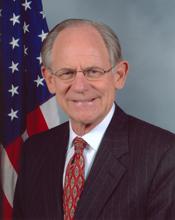
Historical · U.S. House · Delaware · At-Large
Michael Castle
Former U.S. Representative · Delaware At-Large · 1993–2011 · Republican
Michael Castle represented Delaware's At-Large in the United States House of Representatives (1993–2011) for the Republican party. The page below collects sourced biographical facts, term history, committee roles, and provenance for Castle.
Bioguide ID: C000243
Key facts
- Full name
- Michael Castle
- State
- Delaware
- District
- At-Large
- Party
- Republican
- House service
- 1993–2011
- First House term
- 1993
- Status
- Left office
- Current term ends
- —
- Born
- 1939
- Bioguide ID
- C000243
- Committee assignments
- —
- Dataset version
- 1.20260605
Biographical narrative
976 words · sourced from the Wikipedia REST extract
Michael N. Castle was an American politician and lawyer who served as the U.S. Representative for Delaware's at-large congressional district from 1993 until 2011. A member of the Republican Party, Castle had a long and varied political career, including previous roles as the Governor of Delaware and Lieutenant Governor. He is notable for being the longest-serving U.S. Representative in Delaware's history and the last Republican to hold a congressional seat in the state as of 2025. His tenure in the House of Representatives was marked by a focus on education, financial services, and various health-related issues.
Early life and career
Michael Newbold Castle was born on July 2, 1939, in Wilmington, Delaware. He was the son of Louisa Johnston Bache and James Manderson Castle Jr. His family had deep roots in American history; one of his maternal great-great-grandfathers was John W. Johnston, a U.S. Senator from Virginia, while his fifth great-grandfathers included notable figures such as Benjamin Franklin and Daniel Carroll. Castle's father worked as a patent lawyer for DuPont, a major company in Wilmington that significantly influenced the local economy.
Castle attended Tower Hill School, graduating in 1957 before pursuing higher education at Hamilton College in Clinton, New York. He earned a Bachelor of Science degree in economics in 1961 and was a member of the Alpha Delta Phi fraternity during his college years. Following his undergraduate education, Castle attended Georgetown University Law Center in Washington, D.C., where he received his Juris Doctor degree in 1964. He was subsequently admitted to the bar in both Delaware and Washington, D.C., that same year.
After completing his legal education, Castle returned to Wilmington and began his career in law at the firm Connolly, Bove and Lodge, initially serving as an associate and later becoming a partner. His political career began in earnest when he was appointed as Deputy Attorney General of Delaware from 1965 to 1966. In 1966, he was elected to the Delaware House of Representatives, where he served for two years before moving to the Delaware Senate. During his time in the state legislature, he held the position of minority leader from 1975 to 1976.
In 1976, Castle left the state legislature to focus on his law practice, establishing his own firm with Carl Schnee. However, he returned to politics in 1980 when he was recruited to run for the office of Lieutenant Governor of Delaware. He won the election against Democratic state senator Thomas B. Sharp and served in that capacity from 1981 to 1985.
House tenure
Castle's political ascent continued when he was elected as the 69th Governor of Delaware in 1984, a position he held until 1992. His governorship was marked by significant initiatives, including welfare reform and infrastructure development. He was re-elected in 1988, making him the last Republican to win a gubernatorial election in Delaware as of 2025. Due to term limits, Castle could not seek a third consecutive term as governor, leading to a strategic political arrangement known as "the Swap," where he ran for the U.S. House of Representatives while Tom Carper, then the sitting U.S. Representative, ran for governor.
Castle was first elected to the U.S. House of Representatives in 1992, defeating former Lieutenant Governor Shien Biau Woo. He subsequently won re-election eight times, consistently defeating Democratic challengers by significant margins. His elections included victories over candidates such as Carol Ann DeSantis, Dennis E. Williams, Michael C. Miller, Paul Donnelly, and Karen Hartley-Nagle. Notably, during the 2006 campaign, Castle experienced two minor strokes but made a full recovery.
Throughout his nine terms in the House, Castle became known for his bipartisan approach and willingness to collaborate across party lines. He was involved in various legislative efforts and was a member of several Congressional caucuses, including the Diabetes Caucus, the Community College Caucus, the Biomedical Research Caucus, and the Passenger Rail Caucus. His legislative work often focused on issues related to education, healthcare, and financial services.
Legislative focus and committees
During his tenure in the House of Representatives, Castle served on several important committees that shaped his legislative priorities. He was a member of the Committee on Education and Labor, where he held the position of Ranking Member on the Subcommittee on Early Childhood, Elementary and Secondary Education. He also served on the Subcommittee on Higher Education, Lifelong Learning, and Competitiveness, reflecting his commitment to improving educational opportunities at all levels.
In addition to his work on education, Castle was active on the Committee on Financial Services. Within this committee, he participated in multiple subcommittees, including those focused on Capital Markets, Insurance, and Government-Sponsored Enterprises, as well as Financial Institutions and Consumer Credit. His involvement in these areas underscored his interest in economic issues and consumer protection.
Castle's legislative focus was characterized by a pragmatic approach to governance, often seeking to find common ground on contentious issues. His experience as a former governor and lieutenant governor provided him with a unique perspective on the challenges facing both state and federal governments. He was known for advocating policies that aimed to balance the needs of his constituents with broader national interests.
In 2010, Castle announced his candidacy for the U.S. Senate, seeking to fill the seat vacated by Democrat Ted Kaufman. However, he lost in the Republican primary to Christine O'Donnell, a surprising outcome that ended his political career in the House. Castle's tenure in Congress concluded on January 3, 2011, marking the end of a significant chapter in Delaware's political history.
Castle's legacy includes his role as a prominent figure in Delaware politics, having served in various capacities over several decades. His contributions to the state and the nation reflect a commitment to public service and a focus on issues that impacted the lives of many. As of 2025, he remains a notable figure in Delaware's political landscape, remembered for his long-standing service and influence.
Notable legislation
Sponsored and co-sponsored legislation for Michael Castle is pending operator curation. The biographical narrative above carries the same provenance trail until per-bill rows are written.
Sources
- [1]https://en.wikipedia.org/wiki/Mike_CastleWikipedia · retrieved 2026-06-05
Notable quotes
Sourced quotes for Michael Castle are pending operator curation. Narrative-scope provenance remains attached below.
Sources
- [1]https://en.wikipedia.org/wiki/Mike_CastleWikipedia · retrieved 2026-06-05
Key positions
Curated policy positions for Michael Castle are pending operator review. The biographical narrative above carries the same provenance trail until per-topic positions are written.
Sources
- [1]https://en.wikipedia.org/wiki/Mike_CastleWikipedia · retrieved 2026-06-05
Terms served
- 1993–1995U.S. House · Term 1 · Republican
- 1995–1997U.S. House · Term 2 · Republican
- 1997–1999U.S. House · Term 3 · Republican
- 1999–2001U.S. House · Term 4 · Republican
- 2001–2003U.S. House · Term 5 · Republican
- 2003–2005U.S. House · Term 6 · Republican
- 2005–2007U.S. House · Term 7 · Republican
- 2007–2009U.S. House · Term 8 · Republican
- 2009–2011U.S. House · Term 9 · Republican
Sources & provenance
Every attributable claim above carries a per-section [N] marker that resolves to the corresponding URL below. Each entry records the upstream provider, the canonical URL, and the timestamp at which the source was retrieved by the ingest pipeline.
Key facts
- https://bioguide.congress.gov/search/bio/C000243bioguide · retrieved 2026-06-05
- http://www.house.gov/castlehouse.gov · retrieved 2026-06-05
Biographical narrative
- https://en.wikipedia.org/wiki/Mike_Castlewikipedia · retrieved 2026-06-05
Find your representative
Every U.S. state elects representatives by district. Browse Delaware’s delegation, the full former-representative roster, or explore the role and term length.
Related on The Candidate
- Preceded by Thomas Evans Jr.Earlier holder of the Delaware At-Large House seat · Republican.Open
- Succeeded by John CarneyLater holder of the Delaware At-Large House seat · Democratic.Open
- Albert PolkFormer U.S. Representative · Delaware At-Large · DemocraticOpen
- Benjamin BiggsFormer U.S. Representative · Delaware At-Large · DemocraticOpen
- Caleb LaytonFormer U.S. Representative · Delaware At-Large · RepublicanOpen
- Charles LoreFormer U.S. Representative · Delaware At-Large · DemocraticOpen