
Historical · U.S. House · Florida · District 2
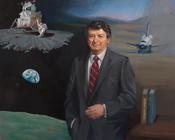
Don Fuqua
Former U.S. Representative · Florida District 2 · 1963–1987 · Democratic
Don Fuqua represented Florida's District 2 in the United States House of Representatives (1963–1987) for the Democratic party. The page below collects sourced biographical facts, term history, committee roles, and provenance for Fuqua.
Bioguide ID: F000430
Key facts
- Full name
- Don Fuqua
- State
- Florida
- District
- District 2
- Party
- Democratic
- House service
- 1963–1987
- First House term
- 1963
- Status
- Left office
- Current term ends
- —
- Born
- 1933
- Bioguide ID
- F000430
- Committee assignments
- —
- Dataset version
- 1.20260605
Biographical narrative
997 words · sourced from the Wikipedia REST extract
John Donald "Don" Fuqua is a former American politician who served as a member of the United States House of Representatives, representing Florida's 2nd congressional district from 1963 until 1987. A member of the Democratic Party, Fuqua's lengthy congressional career spanned 12 terms, during which he held significant positions, including chairmanship of the House Committee on Science, Space, and Technology. His political journey reflects a time of considerable change in American society, and he remains notable for his historical role in the legislative processes of the 1960s and 1970s.
Early life and career
Don Fuqua was born on August 20, 1933, in Jacksonville, Florida, specifically in Duval County. He was raised in a family with two brothers, which provided him with a supportive environment during his formative years. Fuqua's educational journey began at the University of Florida in Gainesville, where he enrolled in 1951. His studies were interrupted by his service in the United States Army during the Korean War, where he served in the Medical Corps. This experience in the military would later influence his perspectives on public service and governance.
After completing his military service, Fuqua returned to the University of Florida and graduated in 1957. His academic background laid the groundwork for his entry into politics. Fuqua's political career commenced at the state level when he was elected to the Florida House of Representatives, where he served from 1958 until 1962. This position allowed him to gain valuable experience in legislative processes and state governance, setting the stage for his subsequent election to the U.S. Congress.
House tenure
Fuqua's tenure in the U.S. House of Representatives began on January 3, 1963, after he won election as a Democrat to represent Florida's 2nd congressional district. He was elected during a period marked by significant national and international events, including the Civil Rights Movement and the Cold War. Over the course of his 12 terms, Fuqua became known for his involvement in various legislative initiatives and his commitment to representing the interests of his constituents in Florida.
Throughout his time in Congress, Fuqua was an active participant in numerous debates and discussions that shaped American policy. He served during a transformative era in U.S. history, witnessing and participating in the passage of landmark legislation. One of the more controversial moments in his career came with his vote against the Civil Rights Act of 1964. This decision was influenced by the political climate of the time, as Fuqua anticipated facing a challenge from a segregationist candidate in the upcoming election. His vote has been a point of discussion in analyses of his political legacy.
In addition to his legislative responsibilities, Fuqua held leadership roles within the House. Notably, he served as the chairman of the House Committee on Science, Space, and Technology. In this capacity, he played a crucial role in overseeing legislation related to scientific research, technological advancement, and space exploration. His leadership in this committee reflected his commitment to fostering innovation and supporting the scientific community, which was particularly important during the era of the Space Race.
Fuqua's congressional career concluded on January 3, 1987, after serving a total of 12 terms. His long tenure in the House was characterized by a dedication to public service and a focus on the needs of his constituents in Florida. Following his departure from Congress, Fuqua transitioned to a leadership role in the private sector, furthering his influence in areas related to aerospace and technology.
Legislative focus and committees
During his time in Congress, Fuqua's legislative focus encompassed a range of issues, particularly those related to science, technology, and agriculture. His role as chairman of the House Committee on Science, Space, and Technology allowed him to influence significant policy decisions that shaped the future of American scientific endeavors. Under his leadership, the committee addressed critical issues such as funding for research and development, space exploration initiatives, and the promotion of technological innovation.
Fuqua's commitment to science and technology was evident in his efforts to support federal funding for research institutions and initiatives that aimed to advance the United States' position in global scientific leadership. His tenure coincided with a period of rapid technological advancement, and he was an advocate for policies that encouraged collaboration between government, academia, and the private sector.
In addition to his focus on science and technology, Fuqua was also attentive to agricultural issues, reflecting his background as a dairy farmer. His legal residence during much of his congressional career was a farm near Altha in Calhoun County, Florida. This connection to agriculture informed his legislative priorities, as he sought to support policies that benefited farmers and rural communities. His understanding of the challenges faced by agricultural producers allowed him to advocate effectively for their interests in Congress.
Fuqua's legislative record reflects a complex interplay of political considerations and personal convictions. While he faced criticism for his vote against the Civil Rights Act, his overall contributions to legislative processes and his leadership in key committees demonstrate a commitment to addressing the pressing issues of his time. His ability to navigate the complexities of governance during a period of significant social change is a notable aspect of his career.
After leaving Congress, Fuqua continued to engage in public service and leadership roles. He became president of the Aerospace Industries Association, where he applied his experience and knowledge to advocate for the aerospace sector. His post-congressional career further illustrates his ongoing commitment to issues related to science, technology, and industry.
In summary, Don Fuqua's career as a U.S. Representative is marked by a lengthy tenure characterized by significant legislative involvement and leadership in key areas. His experiences in early life, military service, and state politics shaped his approach to governance, while his focus on science, technology, and agriculture reflects the diverse interests of his constituents. Fuqua's legacy is intertwined with a pivotal era in American history, and he remains a figure of interest for those studying the evolution of U.S. legislative practices and policies.
Notable legislation
Sponsored and co-sponsored legislation for Don Fuqua is pending operator curation. The biographical narrative above carries the same provenance trail until per-bill rows are written.
Sources
- [1]https://en.wikipedia.org/wiki/Don_FuquaWikipedia · retrieved 2026-06-05
Notable quotes
Sourced quotes for Don Fuqua are pending operator curation. Narrative-scope provenance remains attached below.
Sources
- [1]https://en.wikipedia.org/wiki/Don_FuquaWikipedia · retrieved 2026-06-05
Key positions
Curated policy positions for Don Fuqua are pending operator review. The biographical narrative above carries the same provenance trail until per-topic positions are written.
Sources
- [1]https://en.wikipedia.org/wiki/Don_FuquaWikipedia · retrieved 2026-06-05
Terms served
- 1963–1965U.S. House · Term 1 · Democratic
- 1965–1967U.S. House · Term 2 · Democratic
- 1967–1969U.S. House · Term 3 · Democratic
- 1969–1971U.S. House · Term 4 · Democratic
- 1971–1973U.S. House · Term 5 · Democratic
- 1973–1975U.S. House · Term 6 · Democratic
- 1975–1977U.S. House · Term 7 · Democratic
- 1977–1979U.S. House · Term 8 · Democratic
- 1979–1981U.S. House · Term 9 · Democratic
- 1981–1983U.S. House · Term 10 · Democratic
- 1983–1985U.S. House · Term 11 · Democratic
- 1985–1987U.S. House · Term 12 · Democratic
Sources & provenance
Every attributable claim above carries a per-section [N] marker that resolves to the corresponding URL below. Each entry records the upstream provider, the canonical URL, and the timestamp at which the source was retrieved by the ingest pipeline.
Key facts
- https://bioguide.congress.gov/search/bio/F000430bioguide · retrieved 2026-06-05
- https://www.govtrack.us/congress/members/404371govtrack · retrieved 2026-06-05
Biographical narrative
- https://en.wikipedia.org/wiki/Don_Fuquawikipedia · retrieved 2026-06-05
Find your representative
Every U.S. state elects representatives by district. Browse Florida’s delegation, the full former-representative roster, or explore the role and term length.
Related on The Candidate
- Preceded by Emory PriceEarlier holder of the Florida District 2 House seat · Democratic.Open
- Succeeded by James GrantLater holder of the Florida District 2 House seat · Republican.Open
- Augustus MaxwellFormer U.S. Representative · Florida District 1 · DemocraticOpen
- Charles HamiltonFormer U.S. Representative · Florida District 1 · RepublicanOpen
- Chester McMullenFormer U.S. Representative · Florida District 1 · DemocraticOpen
- Courtney CampbellFormer U.S. Representative · Florida District 1 · DemocraticOpen