
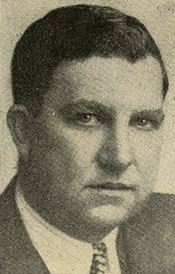
Historical · U.S. House · Florida · District 2
Emory Price
Former U.S. Representative · Florida District 2 · 1943–1949 · Democratic
Emory Price represented Florida's District 2 in the United States House of Representatives (1943–1949) for the Democratic party. The page below collects sourced biographical facts, term history, committee roles, and provenance for Price.
Bioguide ID: P000524
Key facts
- Full name
- Emory Price
- State
- Florida
- District
- District 2
- Party
- Democratic
- House service
- 1943–1949
- First House term
- 1943
- Status
- Left office
- Current term ends
- —
- Born
- 1899
- Bioguide ID
- P000524
- Committee assignments
- —
- Dataset version
- 1.20260605
Biographical narrative
861 words · sourced from the Wikipedia REST extract
Emory Price was a prominent figure in Florida's political landscape during the mid-20th century, serving as a U.S. Representative for the state’s second congressional district. A member of the Democratic Party, Price's congressional career spanned three terms from 1943 to 1949. His background in law and local governance provided him with a foundation for his legislative work, and he played a role in the political developments of his time. After leaving Congress, he continued his professional pursuits in law and real estate until his passing in 1976.
Early life and career
Emory Hilliard Price was born on December 3, 1899, in Bostwick, Florida. His early education took place in the public schools of Duval County, which is located in northeastern Florida. The educational environment of Duval County, particularly in Jacksonville, would later influence his professional trajectory. After completing his secondary education, Price pursued higher education at Jacksonville Law College, where he graduated in 1936. This academic achievement marked the beginning of his legal career, as he was admitted to the bar the same year and began practicing law in Jacksonville.
Before entering the United States Congress, Price was actively involved in local politics. He served on the city council of Jacksonville from 1929 to 1932, a position that allowed him to gain valuable experience in governance and public service. His tenure on the city council provided him with insights into the challenges faced by local communities and the workings of municipal government. Following his time on the council, Price was appointed as the Supervisor of Registration for Duval County, a role he held from 1932 until 1942. In this capacity, he was responsible for overseeing the voter registration process, which was a critical function in ensuring the integrity and accessibility of elections during a time when voter participation was becoming increasingly important.
House tenure
Emory Price's congressional career began when he was elected as a Democrat to the Seventy-eighth Congress. His first term commenced on January 3, 1943, during a period marked by significant national challenges, including World War II. Price was re-elected to two subsequent Congresses, serving a total of three terms in the House of Representatives until January 3, 1949. His tenure coincided with a transformative era in American politics, as the nation grappled with the aftermath of the war and the beginning of the post-war period.
During his time in Congress, Price participated in various legislative discussions and initiatives that were pertinent to his constituents in Florida and the broader national context. While specific details regarding the legislation he supported or sponsored are not provided, it is understood that members of Congress during this period were often engaged in issues related to economic recovery, veterans' affairs, and civil rights, among other pressing matters. Price's background in law and local governance likely informed his approach to these issues, as he sought to represent the interests of his district effectively.
Despite his efforts and contributions, Price faced challenges in maintaining his congressional seat. In 1948, he sought renomination for the Eighty-first Congress but was unsuccessful. This defeat marked the end of his formal legislative career, prompting him to return to his previous professional endeavors.
Legislative focus and committees
While specific details regarding Emory Price's legislative focus and committee assignments during his time in Congress are not available, it is common for representatives to align their efforts with the interests and needs of their constituents. Given Price's background in law and local governance, it is likely that he engaged with issues pertinent to legal affairs, public policy, and community development. Members of Congress often serve on committees that reflect their interests and expertise, and Price's legal training may have positioned him to contribute meaningfully to discussions surrounding legal reform, economic development, and social issues.
In the context of the 1940s, the legislative landscape was characterized by significant changes as the country transitioned from wartime to peacetime. Issues such as veterans' benefits, housing, and economic recovery were at the forefront of congressional discussions. Representatives were tasked with addressing the needs of returning servicemen and women, as well as the broader population that was adjusting to the post-war economy. Price's role as a U.S. Representative would have involved navigating these complex issues, advocating for policies that aligned with the interests of his constituents in Florida's second congressional district.
After concluding his congressional service, Price returned to Jacksonville, where he resumed his legal practice and also engaged in real estate pursuits. This transition reflects a common path for former legislators who leverage their experience and networks to continue contributing to their communities in different capacities. Price's involvement in law and real estate allowed him to remain active in the civic and economic life of Jacksonville, further solidifying his connection to the region.
Emory Price passed away on February 11, 1976, in Jacksonville, Florida. His contributions to public service, both at the local and national levels, are remembered as part of the broader narrative of Florida's political history during the mid-20th century. He was laid to rest in Greenlawn Cemetery, leaving behind a legacy as a dedicated public servant who navigated the complexities of governance during a transformative period in American history.
Notable legislation
Sponsored and co-sponsored legislation for Emory Price is pending operator curation. The biographical narrative above carries the same provenance trail until per-bill rows are written.
Sources
- [1]https://en.wikipedia.org/wiki/Emory_H._PriceWikipedia · retrieved 2026-06-05
Notable quotes
Sourced quotes for Emory Price are pending operator curation. Narrative-scope provenance remains attached below.
Sources
- [1]https://en.wikipedia.org/wiki/Emory_H._PriceWikipedia · retrieved 2026-06-05
Key positions
Curated policy positions for Emory Price are pending operator review. The biographical narrative above carries the same provenance trail until per-topic positions are written.
Sources
- [1]https://en.wikipedia.org/wiki/Emory_H._PriceWikipedia · retrieved 2026-06-05
Terms served
- 1943–1945U.S. House · Term 1 · Democratic
- 1945–1947U.S. House · Term 2 · Democratic
- 1947–1949U.S. House · Term 3 · Democratic
Sources & provenance
Every attributable claim above carries a per-section [N] marker that resolves to the corresponding URL below. Each entry records the upstream provider, the canonical URL, and the timestamp at which the source was retrieved by the ingest pipeline.
Key facts
- https://bioguide.congress.gov/search/bio/P000524bioguide · retrieved 2026-06-05
- https://www.govtrack.us/congress/members/408908govtrack · retrieved 2026-06-05
Biographical narrative
- https://en.wikipedia.org/wiki/Emory_H._Pricewikipedia · retrieved 2026-06-05
Find your representative
Every U.S. state elects representatives by district. Browse Florida’s delegation, the full former-representative roster, or explore the role and term length.
Related on The Candidate
- Preceded by Frank ClarkEarlier holder of the Florida District 2 House seat · Democratic.Open
- Succeeded by Don FuquaLater holder of the Florida District 2 House seat · Democratic.Open
- Augustus MaxwellFormer U.S. Representative · Florida District 1 · DemocraticOpen
- Charles HamiltonFormer U.S. Representative · Florida District 1 · RepublicanOpen
- Chester McMullenFormer U.S. Representative · Florida District 1 · DemocraticOpen
- Courtney CampbellFormer U.S. Representative · Florida District 1 · DemocraticOpen