
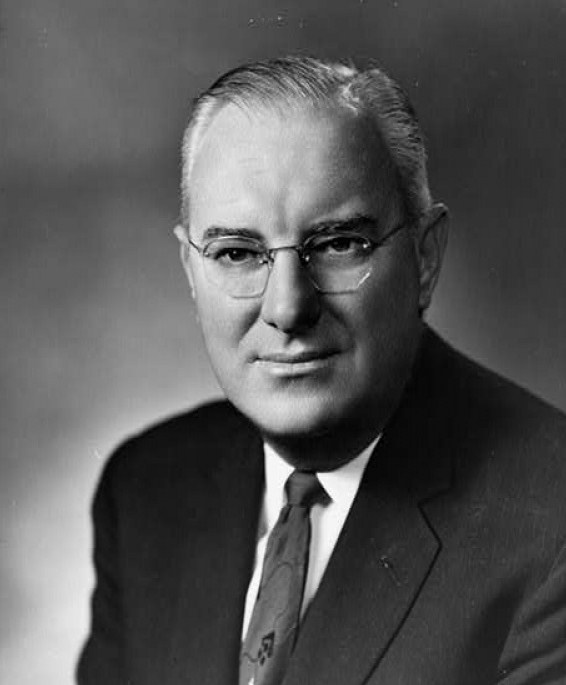
Historical · U.S. House · Florida · District 4
Albert Herlong Jr.
Former U.S. Representative · Florida District 4 · 1949–1969 · Democratic
Albert Herlong Jr. represented Florida's District 4 in the United States House of Representatives (1949–1969) for the Democratic party. The page below collects sourced biographical facts, term history, committee roles, and provenance for Jr..
Bioguide ID: H000530
Key facts
- Full name
- Albert Herlong Jr.
- State
- Florida
- District
- District 4
- Party
- Democratic
- House service
- 1949–1969
- First House term
- 1949
- Status
- Left office
- Current term ends
- —
- Born
- 1909
- Bioguide ID
- H000530
- Committee assignments
- —
- Dataset version
- 1.20260605
Biographical narrative
812 words · sourced from the Wikipedia REST extract
Albert Herlong Jr. was an American lawyer and politician who served as a U.S. Representative for Florida's 4th congressional district from 1949 until 1969. A member of the Democratic Party, Herlong's congressional career spanned ten terms, during which he became known for his strong anti-communist stance and his opposition to civil rights legislation. After leaving Congress, he continued his legal career and served on the Securities and Exchange Commission.
Early life and career
Albert Sydney Herlong Jr. was born on February 14, 1909, in Manistee, Alabama. His family relocated to Marion County, Florida, in 1912, where he spent much of his childhood. Herlong attended public schools in Sumter and Lake counties and graduated from Leesburg High School in Leesburg, Florida. He pursued higher education at the University of Florida in Gainesville, where he became a member of the Pi Kappa Phi fraternity, specifically the Alpha Epsilon Chapter. He graduated from the university in 1930 and was subsequently admitted to The Florida Bar the same year, marking the beginning of his legal career in Leesburg.
Herlong's early political career began when he was elected as the county judge of Lake County, Florida, a position he held from 1937 until 1949. In addition to his judicial role, he served as the city attorney for Leesburg from 1946 to 1948. His commitment to public service extended beyond law; he held a reserve commission as a captain in the U.S. Army and was called to active duty in the Judge Advocate General's Department in August 1941. However, he was discharged in 1942 due to physical disability. Herlong also participated in the Florida State Guard during two enlistments and took on a leadership role as president of the Florida State Baseball League in 1947 and 1948.
House tenure
Herlong's congressional career began when he was elected as a Democrat to the Eighty-first Congress, taking office on January 3, 1949. He was subsequently re-elected to nine additional terms, serving in the House of Representatives until January 3, 1969. Throughout his time in Congress, Herlong was recognized for his vocal opposition to communism. In 1959, he introduced legislation aimed at establishing a federally funded Freedom Academy, which was intended to counteract communist propaganda from foreign nations. His anti-communist advocacy was further highlighted in 1963 when he read a list of 45 goals of communism into the Congressional Record at the request of a constituent.
Herlong's political positions also included a notable opposition to civil rights initiatives. He was a signatory of the 1956 Southern Manifesto, which opposed the Supreme Court's decision in Brown v. Board of Education that mandated the desegregation of public schools. Throughout his congressional career, he voted against several significant civil rights measures, including the Civil Rights Acts of 1957, 1960, 1964, and 1968, as well as the 24th Amendment to the U.S. Constitution and the Voting Rights Act of 1965. His legislative actions reflected a commitment to maintaining the status quo regarding racial segregation and civil rights during a time of significant social change in the United States.
In 1968, Herlong chose not to seek re-election for the Ninety-first Congress. Following his departure from Congress, he publicly supported Richard Nixon's campaign for the presidency that same year.
Legislative focus and committees
During his tenure in the House of Representatives, Herlong's legislative focus was primarily characterized by his anti-communist stance and his opposition to civil rights legislation. His introduction of the Freedom Academy bill exemplified his commitment to combating what he perceived as the threats posed by communism. This focus aligned with the broader political climate of the time, which was marked by heightened tensions during the Cold War.
Herlong's involvement in various congressional committees is not detailed in the available records, but his legislative actions indicate a strong alignment with the interests of his constituents who shared his views on communism and civil rights. His voting record and public statements suggest that he prioritized issues that resonated with the conservative elements of his district, particularly concerning the preservation of traditional social structures.
After leaving Congress, Herlong returned to his legal practice and was appointed by President Richard Nixon to serve on the Securities and Exchange Commission, a role he held until 1973. This position allowed him to continue his involvement in public service and regulatory affairs, albeit in a different capacity than his legislative work.
In 1985, Herlong formally changed his party affiliation from Democrat to Republican, reflecting a shift in his political alignment that mirrored broader trends within American politics during that period.
Herlong passed away on December 27, 1995, at his home in Leesburg, Florida. He was survived by his wife and four daughters, leaving behind a legacy marked by his long tenure in Congress and his contributions to Florida's political landscape. His life and career encapsulate a significant era in American history, characterized by complex social and political dynamics.
Notable legislation
Sponsored and co-sponsored legislation for Albert Herlong Jr. is pending operator curation. The biographical narrative above carries the same provenance trail until per-bill rows are written.
Sources
- [1]https://en.wikipedia.org/wiki/Syd_HerlongWikipedia · retrieved 2026-06-05
Notable quotes
Sourced quotes for Albert Herlong Jr. are pending operator curation. Narrative-scope provenance remains attached below.
Sources
- [1]https://en.wikipedia.org/wiki/Syd_HerlongWikipedia · retrieved 2026-06-05
Key positions
Curated policy positions for Albert Herlong Jr. are pending operator review. The biographical narrative above carries the same provenance trail until per-topic positions are written.
Sources
- [1]https://en.wikipedia.org/wiki/Syd_HerlongWikipedia · retrieved 2026-06-05
Terms served
- 1949–1951U.S. House · Term 1 · Democratic
- 1951–1953U.S. House · Term 2 · Democratic
- 1953–1955U.S. House · Term 3 · Democratic
- 1955–1957U.S. House · Term 4 · Democratic
- 1957–1959U.S. House · Term 5 · Democratic
- 1959–1961U.S. House · Term 6 · Democratic
- 1961–1963U.S. House · Term 7 · Democratic
- 1963–1965U.S. House · Term 8 · Democratic
- 1965–1967U.S. House · Term 9 · Democratic
- 1967–1969U.S. House · Term 10 · Democratic
Sources & provenance
Every attributable claim above carries a per-section [N] marker that resolves to the corresponding URL below. Each entry records the upstream provider, the canonical URL, and the timestamp at which the source was retrieved by the ingest pipeline.
Key facts
- https://bioguide.congress.gov/search/bio/H000530bioguide · retrieved 2026-06-05
- https://www.govtrack.us/congress/members/405392govtrack · retrieved 2026-06-05
Biographical narrative
- https://en.wikipedia.org/wiki/Syd_Herlongwikipedia · retrieved 2026-06-05
Find your representative
Every U.S. state elects representatives by district. Browse Florida’s delegation, the full former-representative roster, or explore the role and term length.
Related on The Candidate
- Preceded by Pat CannonEarlier holder of the Florida District 4 House seat · Democratic.Open
- Succeeded by William Chappell Jr.Later holder of the Florida District 4 House seat · Democratic.Open
- Augustus MaxwellFormer U.S. Representative · Florida District 1 · DemocraticOpen
- Charles HamiltonFormer U.S. Representative · Florida District 1 · RepublicanOpen
- Chester McMullenFormer U.S. Representative · Florida District 1 · DemocraticOpen
- Courtney CampbellFormer U.S. Representative · Florida District 1 · DemocraticOpen