
Historical · U.S. House · Florida · District 4
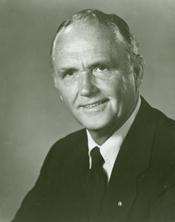
William Chappell Jr.
Former U.S. Representative · Florida District 4 · 1969–1989 · Democratic
William Chappell Jr. represented Florida's District 4 in the United States House of Representatives (1969–1989) for the Democratic party. The page below collects sourced biographical facts, term history, committee roles, and provenance for Jr..
Bioguide ID: C000321
Key facts
- Full name
- William Chappell Jr.
- State
- Florida
- District
- District 4
- Party
- Democratic
- House service
- 1969–1989
- First House term
- 1969
- Status
- Left office
- Current term ends
- —
- Born
- 1922
- Bioguide ID
- C000321
- Committee assignments
- —
- Dataset version
- 1.20260605
Biographical narrative
953 words · sourced from the Wikipedia REST extract
William Venroe Chappell Jr. was a prominent American politician and World War II veteran who served as a Democratic U.S. Representative for Florida's 4th congressional district from 1969 until 1989. His lengthy tenure in Congress was marked by his involvement in various legislative initiatives and his role on significant committees, particularly in the realm of defense appropriations. Chappell's political career was preceded by a solid foundation in law and public service, reflecting his commitment to both his constituents and his country.
Early life and career
Bill Chappell was born on February 3, 1922, in Kendrick, Florida. He pursued higher education at the University of Florida, where he earned a Bachelor of Arts degree in 1947, followed by a Bachelor of Laws in 1949. This degree later transitioned into a Juris Doctor, which he received in 1967, marking his formal qualification as a lawyer.
Chappell's early career was significantly shaped by his military service. He enlisted in the United States Navy during World War II, serving as an aviator from 1942 until 1946. His dedication to military service continued beyond the war, as he retired as a captain from the United States Navy Reserve in 1983. This military background not only influenced his personal values but also played a role in his political career, particularly in matters related to defense and veterans' affairs.
After his military service, Chappell began his legal career as a prosecuting attorney in Marion County, Florida, from 1950 to 1954. He then became a partner in the law firm of Chappell and Rowland, based in Ocala. His legal expertise and community involvement led him to enter politics, where he represented Marion County in the Florida House of Representatives from 1954 to 1964. During his time in the state legislature, Chappell was elected Speaker of the House from 1961 to 1963, a position that underscored his leadership abilities and political acumen.
Chappell did not seek reelection in 1964 but returned to the political arena in 1966, winning a seat in the Florida House of Representatives from a district that included Marion, Citrus, Hernando, and Sumter Counties. His experience in state politics laid the groundwork for his subsequent congressional campaign.
House tenure
In 1968, Bill Chappell ran for the U.S. House of Representatives after the retirement of incumbent Congressman Syd Herlong. He successfully won the election and began his first term in Congress in 1969. Over the course of his political career, Chappell was re-elected nine times, demonstrating a consistent level of support from his constituents in Florida's 4th congressional district.
Chappell's political ideology was characterized as moderate to conservative within the Democratic Party. His legislative priorities often reflected a pragmatic approach, focusing on issues that resonated with his constituents and the broader national interest. Throughout his tenure, he served on the United States House Appropriations Committee, a critical role that allowed him to influence federal spending and budgetary decisions.
During his time on the Appropriations Committee, Chappell was appointed as chairman of the United States House Appropriations Subcommittee on Defense, where he played a pivotal role in shaping defense policy and funding. His leadership in this capacity was significant, particularly during a period marked by various military engagements and defense budget considerations.
Chappell's legislative record includes his support for the Abandoned Shipwrecks Act of 1987, which aimed to assert U.S. title to certain abandoned shipwrecks and empower states to manage these cultural and historical resources. This legislation was signed into law by President Ronald Reagan in April 1988, reflecting Chappell's engagement with issues beyond his immediate constituency.
Despite his long-standing service and contributions to Congress, Chappell faced electoral challenges. In the 1988 general election, he was narrowly defeated by Republican candidate Craig James, losing by a small margin. This defeat marked the end of his ten terms in the House of Representatives, concluding a significant chapter in his political career.
Legislative focus and committees
Throughout his congressional career, Bill Chappell's legislative focus was shaped by his background in law, military service, and his commitment to his constituents. As a member of the House Appropriations Committee, he was deeply involved in budgetary matters, particularly those related to defense and veterans' affairs. His role as chairman of the Defense Subcommittee allowed him to advocate for military funding and resources, which were critical during a time of heightened national security concerns.
Chappell's moderate to conservative stance within the Democratic Party positioned him as a pragmatic legislator who often sought bipartisan solutions to complex issues. His voting record reflected a blend of traditional Democratic values with a recognition of fiscal responsibility and national security needs. This approach enabled him to navigate the political landscape effectively, fostering relationships across party lines.
In addition to his work on defense appropriations, Chappell's legislative initiatives often addressed local and regional concerns, reflecting the diverse needs of his constituents in Florida. His support for the Abandoned Shipwrecks Act exemplified his commitment to preserving cultural heritage while balancing economic interests, showcasing his ability to engage with multifaceted issues.
Chappell's contributions to Congress extended beyond his legislative achievements; he also played a role in shaping the political landscape of his district and the state of Florida. His tenure in the House of Representatives left a lasting impact, as evidenced by the posthumous honors he received, including the naming of the Port Orange Causeway as the Congressman William V. Chappell Jr. Memorial Bridge and the U.S. Department of Veterans Affairs Outpatient Clinic in Daytona Beach after him.
Bill Chappell passed away on March 30, 1989, in Bethesda, Maryland, after a battle with bone cancer. His legacy as a dedicated public servant and veteran continues to be recognized in Florida, where his contributions to both state and national politics are remembered.
Notable legislation
Sponsored and co-sponsored legislation for William Chappell Jr. is pending operator curation. The biographical narrative above carries the same provenance trail until per-bill rows are written.
Sources
- [1]https://en.wikipedia.org/wiki/Bill_ChappellWikipedia · retrieved 2026-06-05
Notable quotes
Sourced quotes for William Chappell Jr. are pending operator curation. Narrative-scope provenance remains attached below.
Sources
- [1]https://en.wikipedia.org/wiki/Bill_ChappellWikipedia · retrieved 2026-06-05
Key positions
Curated policy positions for William Chappell Jr. are pending operator review. The biographical narrative above carries the same provenance trail until per-topic positions are written.
Sources
- [1]https://en.wikipedia.org/wiki/Bill_ChappellWikipedia · retrieved 2026-06-05
Terms served
- 1969–1971U.S. House · Term 1 · Democratic
- 1971–1973U.S. House · Term 2 · Democratic
- 1973–1975U.S. House · Term 3 · Democratic
- 1975–1977U.S. House · Term 4 · Democratic
- 1977–1979U.S. House · Term 5 · Democratic
- 1979–1981U.S. House · Term 6 · Democratic
- 1981–1983U.S. House · Term 7 · Democratic
- 1983–1985U.S. House · Term 8 · Democratic
- 1985–1987U.S. House · Term 9 · Democratic
- 1987–1989U.S. House · Term 10 · Democratic
Sources & provenance
Every attributable claim above carries a per-section [N] marker that resolves to the corresponding URL below. Each entry records the upstream provider, the canonical URL, and the timestamp at which the source was retrieved by the ingest pipeline.
Key facts
- https://bioguide.congress.gov/search/bio/C000321bioguide · retrieved 2026-06-05
- https://www.govtrack.us/congress/members/402463govtrack · retrieved 2026-06-05
Biographical narrative
- https://en.wikipedia.org/wiki/Bill_Chappellwikipedia · retrieved 2026-06-05
Find your representative
Every U.S. state elects representatives by district. Browse Florida’s delegation, the full former-representative roster, or explore the role and term length.
Related on The Candidate
- Preceded by Albert Herlong Jr.Earlier holder of the Florida District 4 House seat · Democratic.Open
- Succeeded by Craig JamesLater holder of the Florida District 4 House seat · Republican.Open
- Augustus MaxwellFormer U.S. Representative · Florida District 1 · DemocraticOpen
- Charles HamiltonFormer U.S. Representative · Florida District 1 · RepublicanOpen
- Chester McMullenFormer U.S. Representative · Florida District 1 · DemocraticOpen
- Courtney CampbellFormer U.S. Representative · Florida District 1 · DemocraticOpen