
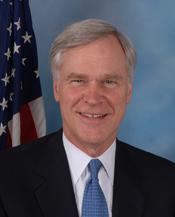
Historical · U.S. House · Florida · District 4
Ander Crenshaw
Former U.S. Representative · Florida District 4 · 2001–2017 · Republican
Ander Crenshaw represented Florida's District 4 in the United States House of Representatives (2001–2017) for the Republican party. The page below collects sourced biographical facts, term history, committee roles, and provenance for Crenshaw.
Bioguide ID: C001045
Key facts
- Full name
- Ander Crenshaw
- State
- Florida
- District
- District 4
- Party
- Republican
- House service
- 2001–2017
- First House term
- 2001
- Status
- Left office
- Current term ends
- —
- Born
- 1944
- Bioguide ID
- C001045
- Committee assignments
- —
- Dataset version
- 1.20260605
Biographical narrative
939 words · sourced from the Wikipedia REST extract
Ander Crenshaw is a former American politician, banker, and attorney who served as the U.S. Representative for Florida's 4th congressional district from 2001 until 2017. A member of the Republican Party, Crenshaw's political career spanned several decades, during which he held various positions in both state and federal government. His tenure in the U.S. House of Representatives was marked by his involvement in several committees and caucuses, as well as his participation in significant legislative actions.
Early life and career
Ander Crenshaw was born on September 1, 1944, in Jacksonville, Florida. He pursued higher education at the University of Georgia, where he earned a Bachelor of Arts degree in 1966. Following his undergraduate studies, Crenshaw attended the University of Florida, where he obtained his Juris Doctor degree. His professional background includes work as an investment banker and attorney, which provided him with a foundation for his later political endeavors.
Crenshaw's political career began in the early 1970s when he was elected to the Florida House of Representatives, serving from 1972 to 1978. His involvement in state politics continued when he was elected to the Florida Senate in 1986, where he served until 1994. During his time in the Senate, he made history by becoming the first Republican to hold the position of Senate president in 118 years. This role was significant, as it represented a shift in the political landscape of Florida at the time. However, he agreed to serve only a one-year term as president, a decision made to maintain a balance of power between the evenly divided Republican and Democratic parties in the Senate.
Crenshaw's early political aspirations included statewide runs for office. In 1978, he won the Republican primary for Florida Secretary of State but was defeated in the general election by Democrat George Firestone. He also sought the Republican nomination for the U.S. Senate in 1980, finishing third in a competitive primary. Additionally, in 1994, he ran for the Republican nomination for governor but lost to Jeb Bush, who would go on to win the general election.
House tenure
Crenshaw's congressional career began when he was elected to the U.S. House of Representatives in 2000, succeeding Tillie Fowler, who retired after serving four terms. Crenshaw won the Republican nomination for Florida's 4th congressional district, which encompasses a significant portion of Jacksonville and its suburbs. He was elected to the House in November 2000 and subsequently reelected multiple times, often without facing significant opposition. His district became known for its strong Republican leanings, and he ran unopposed in several elections, including those in 2002 and 2004.
During his time in the House, Crenshaw served on several important committees, including the Committee on Appropriations, where he was involved in funding decisions for various government programs. He held leadership roles within the committee, chairing the Subcommittee on Financial Services and General Government and the Subcommittee on the Legislative Branch during the 112th Congress. His committee assignments allowed him to influence budgetary matters and appropriations for federal agencies, including the Department of the Treasury and the federal courts.
Crenshaw's legislative record included key votes on significant legislation. Notably, he voted in favor of the Emergency Economic Stabilization Act of 2008, which established the Troubled Assets Relief Program (TARP) in response to the financial crisis. His support for this legislation was somewhat controversial, as it aligned him with a broader Republican leadership that faced criticism from some party members and constituents. Despite this, he also expressed support for grassroots movements, such as the Tea Party, which emerged in response to government bailouts and fiscal policies.
In April 2016, Crenshaw announced his decision to retire from Congress, concluding his tenure after 16 years of service. His retirement marked the end of a long and varied political career, during which he had established himself as a prominent figure in Florida politics.
Legislative focus and committees
Throughout his time in Congress, Crenshaw was involved in various legislative initiatives and was a member of several caucuses that reflected his interests and priorities. He co-chaired the Crohn's and Colitis Caucus, which aimed to raise awareness and promote research for inflammatory bowel diseases. Additionally, he was involved in the Effective Foreign Assistance Caucus and the International Conservation Caucus, indicating a focus on both domestic and international issues.
Crenshaw's work on the Appropriations Committee allowed him to play a significant role in shaping federal funding priorities. He was particularly active in matters related to defense, financial services, and foreign operations. His leadership as chair of the Subcommittee on Financial Services and General Government enabled him to influence budget allocations for key government functions.
Crenshaw's legislative activities also included introducing appropriations bills, such as the Financial Services and General Government Appropriations Act for fiscal year 2015. This legislation aimed to provide funding for various federal entities, including the Executive Office of the President and the federal courts.
In recognition of his efforts in public health, Crenshaw received the Malaria Action Award in 2013 for his work against malaria, highlighting his commitment to addressing global health issues.
Crenshaw's congressional career was characterized by his low-profile approach, focusing on legislative responsibilities rather than seeking the spotlight. By the end of his tenure, he held the position of Deputy Majority Whip, reflecting his involvement in the Republican leadership and his influence within the party.
In summary, Ander Crenshaw's political career spanned several decades, beginning in state politics and culminating in his service in the U.S. House of Representatives. His contributions to legislative processes and committee work, along with his involvement in various caucuses, underscored his commitment to addressing both local and national issues during his time in office.
Notable legislation
Sponsored and co-sponsored legislation for Ander Crenshaw is pending operator curation. The biographical narrative above carries the same provenance trail until per-bill rows are written.
Sources
- [1]https://en.wikipedia.org/wiki/Ander_CrenshawWikipedia · retrieved 2026-06-05
Notable quotes
Sourced quotes for Ander Crenshaw are pending operator curation. Narrative-scope provenance remains attached below.
Sources
- [1]https://en.wikipedia.org/wiki/Ander_CrenshawWikipedia · retrieved 2026-06-05
Key positions
Curated policy positions for Ander Crenshaw are pending operator review. The biographical narrative above carries the same provenance trail until per-topic positions are written.
Sources
- [1]https://en.wikipedia.org/wiki/Ander_CrenshawWikipedia · retrieved 2026-06-05
Terms served
- 2001–2003U.S. House · Term 1 · Republican
- 2003–2005U.S. House · Term 2 · Republican
- 2005–2007U.S. House · Term 3 · Republican
- 2007–2009U.S. House · Term 4 · Republican
- 2009–2011U.S. House · Term 5 · Republican
- 2011–2013U.S. House · Term 6 · Republican
- 2013–2015U.S. House · Term 7 · Republican
- 2015–2017U.S. House · Term 8 · Republican
Sources & provenance
Every attributable claim above carries a per-section [N] marker that resolves to the corresponding URL below. Each entry records the upstream provider, the canonical URL, and the timestamp at which the source was retrieved by the ingest pipeline.
Key facts
- https://bioguide.congress.gov/search/bio/C001045bioguide · retrieved 2026-06-05
- https://crenshaw.house.govhouse.gov · retrieved 2026-06-05
Biographical narrative
- https://en.wikipedia.org/wiki/Ander_Crenshawwikipedia · retrieved 2026-06-05
Find your representative
Every U.S. state elects representatives by district. Browse Florida’s delegation, the full former-representative roster, or explore the role and term length.
Related on The Candidate
- Preceded by Tillie FowlerEarlier holder of the Florida District 4 House seat · Republican.Open
- Augustus MaxwellFormer U.S. Representative · Florida District 1 · DemocraticOpen
- Charles HamiltonFormer U.S. Representative · Florida District 1 · RepublicanOpen
- Chester McMullenFormer U.S. Representative · Florida District 1 · DemocraticOpen
- Courtney CampbellFormer U.S. Representative · Florida District 1 · DemocraticOpen
- Republican PartyFederal candidates and office holders on the Republican line.Open