
Historical · U.S. House · Florida · District 4
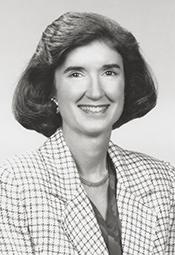
Tillie Fowler
Former U.S. Representative · Florida District 4 · 1993–2001 · Republican
Tillie Fowler represented Florida's District 4 in the United States House of Representatives (1993–2001) for the Republican party. The page below collects sourced biographical facts, term history, committee roles, and provenance for Fowler.
Bioguide ID: F000328
Key facts
- Full name
- Tillie Fowler
- State
- Florida
- District
- District 4
- Party
- Republican
- House service
- 1993–2001
- First House term
- 1993
- Status
- Left office
- Current term ends
- —
- Born
- 1942
- Bioguide ID
- F000328
- Committee assignments
- —
- Dataset version
- 1.20260605
Biographical narrative
1,054 words · sourced from the Wikipedia REST extract
Tillie Fowler was an American lawyer and politician who served as a U.S. Representative for Florida's 4th congressional district from 1993 until 2001. A member of the Republican Party, Fowler was notable for her moderate stance on various issues and her strong advocacy for defense spending, reflecting the military significance of her district. Throughout her political career, she was recognized for her ability to build bipartisan relationships and her commitment to public service.
Early life and career
Tillie Kidd Fowler was born on December 23, 1942, in Milledgeville, Georgia. She was raised in a politically active family; her father, Culver Kidd Jr., served in the Georgia General Assembly for an extensive 46 years, including 16 years in the state house and 30 years in the state senate. Her brother, Rusty Kidd, also followed in the family tradition of public service, serving in the Georgia House of Representatives from 2009 to 2017. Fowler graduated from Salem Academy in Winston-Salem, North Carolina, in 1960 and went on to earn her undergraduate degree from Emory University in 1964, where she was a member of the Kappa Alpha Theta sorority. She continued her education at Emory University School of Law, obtaining her Juris Doctor degree in 1967.
Fowler's legal career began shortly after she was admitted to the bar. At that time, few law firms in the Atlanta area were willing to hire women, but she secured a position as a legislative assistant to U.S. Representative Robert G. Stephens Jr. of Georgia, where she worked for three years. Following this role, she served as general counsel in the White House Office of Consumer Affairs until 1971. In 1968, she married L. Buck Fowler and relocated to Jacksonville, Florida. Upon moving, she changed her political affiliation from Democrat to Republican, a decision that caused some disappointment for her father. In Jacksonville, Fowler became actively involved in community service and local organizations, including serving as president of the Jacksonville chapter of the Junior League from 1982 to 1983. Her political career at the local level began when she was elected to the Jacksonville City Council in 1985, eventually becoming the council's president in 1989.
House tenure
Fowler's entry into national politics came in 1992 when she won the Republican nomination for Florida's 4th Congressional District. This district had previously been represented by long-serving Democrat Charlie Bennett, who announced his retirement shortly after Fowler began her campaign. Bennett's departure opened the door for Fowler, who campaigned on a platform that emphasized the need for new leadership and a limit on congressional terms. Her slogan, "eight (years) is enough," resonated with voters, and she successfully defeated her Democratic opponent, Mattox Hair, by a significant margin.
Fowler's election marked a historic moment as she became the first Republican woman elected to the House from Florida in her own right. Over the course of her four terms in Congress, she was reelected three times, often unopposed, and became known for her moderate voting record, which was somewhat atypical for a Southern Republican. She maintained a pro-choice stance on abortion and declined to accept contributions from the National Rifle Association, reflecting her willingness to break from party norms on certain issues.
During her tenure, Fowler served on the House Armed Services Committee, where she focused on defense issues that were particularly relevant to her district, which housed several naval bases. She was vocal in her opposition to cuts in defense spending proposed by the Clinton administration and advocated for increased funding for military operations. Her commitment to defense matters earned her the nickname "Steel Magnolia," a testament to her strength and femininity in a predominantly male environment.
Fowler's approach to politics was characterized by her ability to foster relationships across party lines. She was one of the few Republicans who participated actively in the Congressional Women's Caucus and was known for her refusal to campaign against fellow incumbents with whom she had developed friendly relations. Her advocacy for women's issues extended beyond her party affiliation, as she publicly protested media portrayals of women in politics that she deemed disrespectful.
As her congressional career progressed, Fowler rose to the position of vice-chairwoman of the House Republican Conference, making her one of the highest-ranking women in the Republican Party at that time. Despite pressure from term limits advocates and criticism from some quarters, she chose to honor her original commitment to serve no more than four terms and did not seek reelection in 2000.
Legislative focus and committees
Throughout her time in Congress, Fowler's legislative focus was primarily centered on defense and military issues, reflecting the strategic importance of her district. Jacksonville's significant military presence made defense spending a critical concern for her constituents. Fowler's role on the House Armed Services Committee allowed her to advocate for the interests of the military community and to challenge proposed reductions in defense budgets. She was particularly active in discussions regarding military readiness and the implications of defense policy changes.
Fowler's moderate stance on various social issues distinguished her from many of her Republican colleagues. Her pro-choice position on abortion and her decision to reject funding from the National Rifle Association demonstrated her willingness to prioritize her principles over party expectations. This moderate approach facilitated her ability to work collaboratively with Democrats, allowing her to build a reputation as a bipartisan legislator.
In addition to her work on the Armed Services Committee, Fowler's involvement in the Congressional Women's Caucus highlighted her commitment to advancing women's rights and representation in government. Her efforts to address gender issues in politics were evident in her public statements and actions, including her response to media portrayals that undermined the professionalism of women in political roles.
After concluding her congressional service in 2001, Fowler transitioned to a career in law, joining the prominent Washington law firm Holland & Knight as a partner. She continued to engage with military and defense issues, serving as an advisor to Secretary of Defense Donald Rumsfeld and lobbying on behalf of Jacksonville during discussions about military base realignment and closures. Her post-congressional career reflected her ongoing dedication to public service and her commitment to the issues that had defined her legislative tenure.
Tillie Fowler passed away on March 2, 2005, leaving behind a legacy of public service and advocacy for defense and women's issues in American politics.
Notable legislation
Sponsored and co-sponsored legislation for Tillie Fowler is pending operator curation. The biographical narrative above carries the same provenance trail until per-bill rows are written.
Sources
- [1]https://en.wikipedia.org/wiki/Tillie_FowlerWikipedia · retrieved 2026-06-05
Notable quotes
Sourced quotes for Tillie Fowler are pending operator curation. Narrative-scope provenance remains attached below.
Sources
- [1]https://en.wikipedia.org/wiki/Tillie_FowlerWikipedia · retrieved 2026-06-05
Key positions
Curated policy positions for Tillie Fowler are pending operator review. The biographical narrative above carries the same provenance trail until per-topic positions are written.
Sources
- [1]https://en.wikipedia.org/wiki/Tillie_FowlerWikipedia · retrieved 2026-06-05
Terms served
- 1993–1995U.S. House · Term 1 · Republican
- 1995–1997U.S. House · Term 2 · Republican
- 1997–1999U.S. House · Term 3 · Republican
- 1999–2001U.S. House · Term 4 · Republican
Sources & provenance
Every attributable claim above carries a per-section [N] marker that resolves to the corresponding URL below. Each entry records the upstream provider, the canonical URL, and the timestamp at which the source was retrieved by the ingest pipeline.
Key facts
- https://bioguide.congress.gov/search/bio/F000328bioguide · retrieved 2026-06-05
- https://www.govtrack.us/congress/members/400583govtrack · retrieved 2026-06-05
Biographical narrative
- https://en.wikipedia.org/wiki/Tillie_Fowlerwikipedia · retrieved 2026-06-05
Find your representative
Every U.S. state elects representatives by district. Browse Florida’s delegation, the full former-representative roster, or explore the role and term length.
Related on The Candidate
- Preceded by Craig JamesEarlier holder of the Florida District 4 House seat · Republican.Open
- Succeeded by Ander CrenshawLater holder of the Florida District 4 House seat · Republican.Open
- Augustus MaxwellFormer U.S. Representative · Florida District 1 · DemocraticOpen
- Charles HamiltonFormer U.S. Representative · Florida District 1 · RepublicanOpen
- Chester McMullenFormer U.S. Representative · Florida District 1 · DemocraticOpen
- Courtney CampbellFormer U.S. Representative · Florida District 1 · DemocraticOpen