
Historical · U.S. House · Florida · District 8
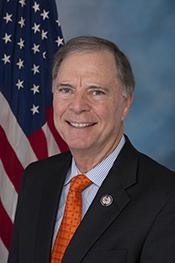
Bill Posey
Former U.S. Representative · Florida District 8 · 2009–2025 · Republican
Bill Posey represented Florida's District 8 in the United States House of Representatives (2009–2025) for the Republican party. The page below collects sourced biographical facts, term history, committee roles, and provenance for Posey.
Bioguide ID: P000599
Key facts
- Full name
- Bill Posey
- State
- Florida
- District
- District 8
- Party
- Republican
- House service
- 2009–2025
- First House term
- 2009
- Status
- Left office
- Current term ends
- —
- Born
- 1947
- Bioguide ID
- P000599
- Committee assignments
- —
- Dataset version
- 1.20260603
Biographical narrative
856 words · sourced from the Wikipedia REST extract
William Joseph Posey was an American businessman and politician who served as a U.S. Representative for Florida's 8th congressional district from 2009 until 2025. A member of the Republican Party, Posey had a diverse career that included roles in local government and the state legislature before his election to Congress. Throughout his tenure, he focused on various issues, particularly those related to space exploration, economic development, and government transparency.
Early life and career
Bill Posey was born on December 18, 1947, in Washington, D.C. He was raised in a family with a rich cultural background; his mother, Beatrice, was of Jewish heritage, having immigrated from Russia, while his father, Walter J. Posey, was a Protestant of primarily English descent. In 1956, Posey and his family relocated to Rockledge, Florida, following his father's employment with McDonnell Douglas, where he worked on the Delta rocket program. This move marked the beginning of Posey's long-standing connection to Florida.
Posey pursued higher education at Brevard Community College, where he earned an Associate of Arts degree in 1969. His early career included a position with McDonnell Douglas, where he contributed to the Apollo Space Program at the Kennedy Space Center until he faced layoffs. Following this, Posey became involved in local politics, serving on the Rockledge Planning Commission from 1974 to 1976. In 1976, he was elected to the Rockledge City Council, marking the start of his political career.
In addition to his political roles, Posey founded a real estate company in the 1970s and later became the director of the Florida Association of Realtors. His work in local government and business provided him with insights into community needs and government accountability, which he later applied in his legislative efforts.
House tenure
Bill Posey entered the U.S. House of Representatives after winning the election for Florida's 15th congressional district in 2008, succeeding retiring Representative Dave Weldon. Posey secured his seat with a majority of the votes against Democratic nominee Stephen Blythe. His initial victory set the stage for a series of successful re-elections, during which he consistently garnered a significant share of the vote against various opponents.
Throughout his eight terms in office, Posey faced Democratic challengers in each election cycle, often winning by substantial margins. His re-election campaigns included victories over candidates such as Shannon Roberts, Richard Gillmor, Gabriel Rothblatt, Corry Westbrook, Sanjay Patel, Jim Kennedy, and Joanne Terry. Posey's electoral success reflected his strong support within his district, which encompasses parts of Brevard County and the Space Coast region of Florida.
Posey did not seek re-election in 2024, concluding his tenure in Congress on January 3, 2025. His decision to step down marked the end of a notable career in public service, during which he was recognized for his commitment to his constituents and the issues he championed.
Legislative focus and committees
During his time in the House of Representatives, Bill Posey served on several key committees, including the Committee on Financial Services and the Committee on Science, Space, and Technology. His involvement in these committees allowed him to influence legislation related to financial institutions, housing, and space exploration, areas that were central to his interests and expertise.
Posey's legislative initiatives often reflected his background in aerospace and his commitment to advancing U.S. leadership in space. He was a proponent of policies that aimed to enhance commercial space activities and promote innovation in the aerospace sector. Notably, he introduced the RACE for Space Act, which facilitated the use of Department of Defense launch infrastructure by commercial space companies. This initiative was part of a broader effort to bolster the U.S. space industry and create high-paying jobs in Florida's Space Coast.
In addition to his work on space-related legislation, Posey also focused on environmental issues and energy policy. He sponsored legislation aimed at addressing the needs of hurricane victims by revising insurance policies, demonstrating his commitment to disaster recovery and community resilience. His legislative efforts in this area were particularly relevant to Florida, a state that frequently faces the impacts of severe weather.
Posey was also known for his involvement in various caucuses, including the Liberty Caucus, the Freedom Caucus, and the Congressional Arts Caucus. His participation in these groups allowed him to collaborate with like-minded colleagues on issues ranging from individual liberties to the promotion of the arts.
Throughout his congressional career, Posey introduced and supported legislation that aimed to enhance government transparency and accountability. One of his early initiatives included a bill that sought to require presidential candidates to provide their birth certificates as part of the election process. This legislation was intended to address concerns about transparency in government, although it faced criticism from some quarters.
In summary, Bill Posey's career as a U.S. Representative was marked by a focus on space exploration, economic development, and government accountability. His background in business and local government informed his legislative priorities, and he played a significant role in shaping policies that impacted his constituents and the broader American landscape. After serving eight terms, Posey concluded his tenure in Congress in early 2025, leaving behind a legacy of public service and advocacy for the issues he championed.
Notable legislation
Sponsored and co-sponsored legislation for Bill Posey is pending operator curation. The biographical narrative above carries the same provenance trail until per-bill rows are written.
Sources
- [1]https://en.wikipedia.org/wiki/Bill_PoseyWikipedia · retrieved 2026-06-03
Notable quotes
Sourced quotes for Bill Posey are pending operator curation. Narrative-scope provenance remains attached below.
Sources
- [1]https://en.wikipedia.org/wiki/Bill_PoseyWikipedia · retrieved 2026-06-03
Key positions
Curated policy positions for Bill Posey are pending operator review. The biographical narrative above carries the same provenance trail until per-topic positions are written.
Sources
- [1]https://en.wikipedia.org/wiki/Bill_PoseyWikipedia · retrieved 2026-06-03
Terms served
- 2009–2011U.S. House · Term 1 · Republican
- 2011–2013U.S. House · Term 2 · Republican
- 2013–2015U.S. House · Term 3 · Republican
- 2015–2017U.S. House · Term 4 · Republican
- 2017–2019U.S. House · Term 5 · Republican
- 2019–2021U.S. House · Term 6 · Republican
- 2021–2023U.S. House · Term 7 · Republican
- 2023–2025U.S. House · Term 8 · Republican
Sources & provenance
Every attributable claim above carries a per-section [N] marker that resolves to the corresponding URL below. Each entry records the upstream provider, the canonical URL, and the timestamp at which the source was retrieved by the ingest pipeline.
Key facts
- https://bioguide.congress.gov/search/bio/P000599bioguide · retrieved 2026-06-03
- https://posey.house.govhouse.gov · retrieved 2026-06-03
Biographical narrative
- https://en.wikipedia.org/wiki/Bill_Poseywikipedia · retrieved 2026-06-03
Find your representative
Every U.S. state elects representatives by district. Browse Florida’s delegation, the full former-representative roster, or explore the role and term length.
Related on The Candidate
- Preceded by Ric KellerEarlier holder of the Florida District 8 House seat · Republican.Open
- Augustus MaxwellFormer U.S. Representative · Florida District 1 · DemocraticOpen
- Charles HamiltonFormer U.S. Representative · Florida District 1 · RepublicanOpen
- Chester McMullenFormer U.S. Representative · Florida District 1 · DemocraticOpen
- Courtney CampbellFormer U.S. Representative · Florida District 1 · DemocraticOpen
- Republican PartyFederal candidates and office holders on the Republican line.Open