
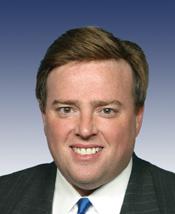
Historical · U.S. House · Florida · District 8
Ric Keller
Former U.S. Representative · Florida District 8 · 2001–2009 · Republican
Ric Keller represented Florida's District 8 in the United States House of Representatives (2001–2009) for the Republican party. The page below collects sourced biographical facts, term history, committee roles, and provenance for Keller.
Bioguide ID: K000361
Key facts
- Full name
- Ric Keller
- State
- Florida
- District
- District 8
- Party
- Republican
- House service
- 2001–2009
- First House term
- 2001
- Status
- Left office
- Current term ends
- —
- Born
- 1964
- Bioguide ID
- K000361
- Committee assignments
- —
- Dataset version
- 1.20260605
Biographical narrative
891 words · sourced from the Wikipedia REST extract
Ric Keller is a former U.S. Representative who served Florida's 8th congressional district from 2001 to 2009. A member of the Republican Party, Keller represented a district that encompassed much of Central Florida, including the Greater Orlando area and notable attractions such as Walt Disney World. Throughout his time in Congress, he held significant positions, including chairing the House Subcommittee on Higher Education and serving on both the Judiciary and Education committees. Following his congressional tenure, Keller transitioned into roles as an author, speaker, television commentator, and attorney.
Early life and career
Ric Keller was born on September 5, 1964, in Johnson City, Tennessee. He pursued higher education at East Tennessee State University, where he distinguished himself academically by graduating first in his class with a bachelor's degree in 1986. Keller continued his education at Vanderbilt University, earning a Juris Doctor (J.D.) degree in 1992. After completing his legal education, he began his professional career as a lawyer in Florida, where he developed a foundation in legal practice that would later inform his political career.
Keller's entry into politics began with his candidacy for the U.S. House of Representatives in 2000. His initial attempt to secure a congressional seat saw him finishing second in the Republican primary, where he garnered 31% of the vote against fellow Republican Bill Sublette, who received 43%. However, Keller successfully defeated Sublette in a subsequent runoff election, obtaining 52% of the vote. In the general election, Keller emerged victorious, winning 51% of the vote against Democratic challenger Linda Chapin. This victory marked the beginning of his four terms in Congress.
House tenure
Ric Keller served four consecutive terms in the U.S. House of Representatives, beginning his first term in January 2001 and concluding his service in January 2009. During his tenure, he was involved in various legislative activities and committee assignments that shaped his political profile. Keller was a member of the Committee on Education and the Workforce, where he contributed to discussions and decisions on educational policy. He also served on the Committee on the Judiciary, participating in matters related to legal and constitutional issues.
Keller's leadership was particularly noted in his role as chairman of the Subcommittee on Higher Education, Workforce Development, and Lifelong Learning. In this capacity, he focused on issues related to post-secondary education and workforce training, advocating for policies that would enhance educational opportunities for students and support workforce development initiatives. His involvement in these committees allowed him to influence significant legislation affecting education and the legal system during his time in office.
Throughout his congressional career, Keller participated in multiple election campaigns. In 2002, he won re-election with a significant margin, receiving 65% of the vote against Democratic opponent Eddie Diaz. His popularity continued in 2004, where he secured his third term with 60% of the vote against Stephen Murray, a Democratic challenger. In 2006, Keller faced a primary challenge from businesswoman Elizabeth Doran, winning with 72% of the vote. He then defeated Democrat Charlie Stuart in the general election, obtaining 53% of the vote.
However, Keller's political fortunes changed in 2008. He won the Republican primary against attorney Todd Long, but in the general election, he lost to Democrat Alan Grayson, receiving 48% of the vote compared to Grayson's 52%. This defeat was influenced by the broader political climate, as the district leaned Democratic during the presidential election, where Barack Obama won the district against Republican nominee John McCain.
Legislative focus and committees
During his time in Congress, Ric Keller was known for his focus on various legislative issues, particularly in the realm of education and consumer rights. His role as chairman of the Subcommittee on Higher Education allowed him to advocate for policies that aimed to improve access to higher education and support students in their academic pursuits. Keller's work in this area included addressing issues related to student loans, college affordability, and workforce development programs.
In addition to his educational initiatives, Keller was involved in consumer protection legislation. One notable piece of legislation he introduced was the Personal Responsibility in Food Consumption Act, which aimed to limit the liability of food manufacturers and sellers in lawsuits related to health issues stemming from food consumption. This legislation reflected his interest in promoting personal responsibility in health and wellness, a theme that resonated with certain segments of the electorate.
Keller's committee assignments also included significant roles in the Judiciary Committee, where he participated in discussions concerning legal frameworks and judicial matters. His involvement in the Subcommittee on Courts, the Internet, and Intellectual Property, as well as the Subcommittee on Commercial and Administrative Law, allowed him to engage with complex issues surrounding intellectual property rights and the regulation of commerce.
After leaving Congress, Keller continued to engage with the public as an author and speaker. In 2022, he published a book titled "Chase the Bears: Little Things to Achieve Big Dreams," which reflects his ongoing interest in personal development and motivation. He currently serves as a partner at the law firm Hill, Rugh, Keller & Main, P.L. in Orlando, Florida, where he continues to apply his legal expertise.
Ric Keller resides in Winter Park, Florida, with his wife, Lori, and their blended family. His career trajectory from lawyer to U.S. Representative and beyond illustrates a commitment to public service and engagement in various professional and civic endeavors.
Notable legislation
Sponsored and co-sponsored legislation for Ric Keller is pending operator curation. The biographical narrative above carries the same provenance trail until per-bill rows are written.
Sources
- [1]https://en.wikipedia.org/wiki/Ric_KellerWikipedia · retrieved 2026-06-05
Notable quotes
Sourced quotes for Ric Keller are pending operator curation. Narrative-scope provenance remains attached below.
Sources
- [1]https://en.wikipedia.org/wiki/Ric_KellerWikipedia · retrieved 2026-06-05
Key positions
Curated policy positions for Ric Keller are pending operator review. The biographical narrative above carries the same provenance trail until per-topic positions are written.
Sources
- [1]https://en.wikipedia.org/wiki/Ric_KellerWikipedia · retrieved 2026-06-05
Terms served
- 2001–2003U.S. House · Term 1 · Republican
- 2003–2005U.S. House · Term 2 · Republican
- 2005–2007U.S. House · Term 3 · Republican
- 2007–2009U.S. House · Term 4 · Republican
Sources & provenance
Every attributable claim above carries a per-section [N] marker that resolves to the corresponding URL below. Each entry records the upstream provider, the canonical URL, and the timestamp at which the source was retrieved by the ingest pipeline.
Key facts
- https://bioguide.congress.gov/search/bio/K000361bioguide · retrieved 2026-06-05
- http://www.house.gov/keller/Frset.htmhouse.gov · retrieved 2026-06-05
Biographical narrative
- https://en.wikipedia.org/wiki/Ric_Kellerwikipedia · retrieved 2026-06-05
Find your representative
Every U.S. state elects representatives by district. Browse Florida’s delegation, the full former-representative roster, or explore the role and term length.
Related on The Candidate
- Preceded by Bill McCollumEarlier holder of the Florida District 8 House seat · Republican.Open
- Succeeded by Bill PoseyLater holder of the Florida District 8 House seat · Republican.Open
- Augustus MaxwellFormer U.S. Representative · Florida District 1 · DemocraticOpen
- Charles HamiltonFormer U.S. Representative · Florida District 1 · RepublicanOpen
- Chester McMullenFormer U.S. Representative · Florida District 1 · DemocraticOpen
- Courtney CampbellFormer U.S. Representative · Florida District 1 · DemocraticOpen