
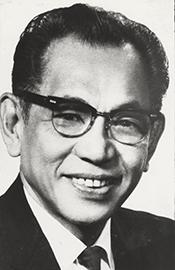
Historical · U.S. House · Guam · At-Large
Antonio Won Pat
Former U.S. Representative · Guam At-Large · 1973–1985 · Democratic
Antonio Won Pat represented Guam's At-Large in the United States House of Representatives (1973–1985) for the Democratic party. The page below collects sourced biographical facts, term history, committee roles, and provenance for Pat.
Bioguide ID: W000686
Key facts
- Full name
- Antonio Won Pat
- State
- Guam
- District
- At-Large
- Party
- Democratic
- House service
- 1973–1985
- First House term
- 1973
- Status
- Left office
- Current term ends
- —
- Born
- 1908
- Bioguide ID
- W000686
- Committee assignments
- —
- Dataset version
- 1.20260605
Biographical narrative
1,044 words · sourced from the Wikipedia REST extract
Antonio B. Won Pat was a prominent Guamanian politician and a member of the Democratic Party who served as the first Delegate from Guam to the United States House of Representatives. His tenure in Congress spanned from 1973 to 1985, during which he played a significant role in advocating for the rights and representation of Guam and its residents. His political career was marked by efforts to enhance the political status of Guam and its neighboring territories in the Pacific, contributing to their self-governance and representation.
Early life and career
Antonio Borja Won Pat was born on December 10, 1908, in Sumay, which is now known as Santa Rita, Guam. He was the son of Ignacio Won Pat, an immigrant from China, and Maria Soriano Borja. He grew up in a family that included two brothers and a sister, which provided him with a supportive environment during his formative years. Won Pat received his primary education at the Normal School in Hagåtña, where he developed a foundation for his future endeavors.
Following his education, Won Pat began his professional career as a teacher, a role he held for eight years. His experience in education likely shaped his understanding of the needs of the community and the importance of civic engagement. In 1936, he was nominated to the advisory Guam Congress, which was a significant step in his political journey. At that time, Guam was under the complete control of the U.S. Navy, and the Guam Congress served merely as an advisory body to the naval governor, lacking any real legislative power.
In the years following World War II, Won Pat emerged as a key figure in Guam's political landscape. He established the Guam Commercial Corporation in 1946, which aimed to promote economic self-sufficiency on the island. Although the corporation played a role in the post-war economic boom, it ultimately went bankrupt in 1954. Nevertheless, Won Pat's political influence continued to grow, and he became a member of the House of Assembly in 1948. By 1951, he had risen to the position of speaker of the Guam Legislature, further solidifying his leadership role in local governance.
The push for American citizenship and greater self-governance for Guam gained momentum after World War II, particularly due to the loyalty demonstrated by the Chamorros during the Japanese occupation. As speaker of the Guam Congress, Won Pat collaborated with naval Governor Carlton Skinner and Francisco B. Leon Guerrero to draft what would become the Guam Organic Act. This landmark legislation, approved in Washington, D.C., granted the people of Guam U.S. citizenship and the establishment of a civil government, marking a significant turning point in the island's political history.
House tenure
Won Pat's political career took a pivotal turn in 1964 when he was elected to represent Guam in Washington, D.C., as part of the newly created Washington Office. This position allowed him to advocate for Guam's interests on a national stage and to raise awareness about the island's political situation among other state representatives. His lobbying efforts were instrumental in securing federal support for Guam, and he built a network of allies in Congress, including notable figures such as California Congressman Philip Burton.
Through his advocacy, Won Pat was able to influence the passage of Public Law 92-271, which was enacted on April 10, 1972. This legislation allowed Guam and the Virgin Islands to have representation in Congress for two-year terms, enabling elected officials to speak on the House floor and introduce legislation, although without voting rights. On January 3, 1973, Antonio B. Won Pat made history by becoming the first resident of Guam to take the oath of office as a member of the 93rd Congress.
During his twelve years in Congress, Won Pat's influence extended beyond Guam. He played a crucial role in assisting the neighboring territories of the Commonwealth of the Northern Mariana Islands, the Federated States of Micronesia, the Republic of the Marshall Islands, and the Republic of Palau in their quests for greater political self-governance. His efforts contributed to the dismantling of the Trust Territory of the Pacific Islands, which had been established by the United States after World War II. The political status of these territories evolved throughout the 1970s, culminating in various forms of self-governance, while Guam continued to seek its own political advancements.
Won Pat served a total of six terms in the U.S. House of Representatives, during which he worked tirelessly to advocate for the rights and needs of his constituents. His tenure came to an end when he was defeated for re-election in 1984 by Republican candidate Ben Blaz, marking the conclusion of a significant chapter in Guam's political history.
Legislative focus and committees
Throughout his time in Congress, Antonio B. Won Pat focused on a range of issues pertinent to the residents of Guam and the broader Pacific region. His legislative efforts were primarily centered on enhancing the political status of Guam and advocating for the rights of its citizens. He worked diligently to raise awareness about the unique challenges faced by Guam, particularly in relation to its status as an unincorporated territory of the United States.
Won Pat's role as a delegate allowed him to serve on various committees, where he could influence legislation that affected not only Guam but also other territories in the Pacific. His advocacy extended to issues such as economic development, education, and social services, reflecting his commitment to improving the quality of life for the people he represented.
In addition to his legislative work, Won Pat's efforts to build relationships with other members of Congress were crucial in advancing the interests of Guam. His ability to forge alliances and collaborate with influential lawmakers helped to secure support for initiatives that benefited both Guam and its neighboring territories.
After his defeat in the 1984 election, Won Pat retired to Sinajana, Guam, where he lived until his passing on May 1, 1987, in Silver Spring, Maryland. He died of a heart attack and was interred at the Veterans Cemetery in Piti, Guam. In recognition of his contributions to Guam and its people, the Guam International Air Terminal was named Antonio B. Won Pat International Airport in January 1989, honoring his legacy as a dedicated public servant and advocate for his community.
Notable legislation
Sponsored and co-sponsored legislation for Antonio Won Pat is pending operator curation. The biographical narrative above carries the same provenance trail until per-bill rows are written.
Sources
- [1]https://en.wikipedia.org/wiki/Antonio_Borja_Won_PatWikipedia · retrieved 2026-06-05
Notable quotes
Sourced quotes for Antonio Won Pat are pending operator curation. Narrative-scope provenance remains attached below.
Sources
- [1]https://en.wikipedia.org/wiki/Antonio_Borja_Won_PatWikipedia · retrieved 2026-06-05
Key positions
Curated policy positions for Antonio Won Pat are pending operator review. The biographical narrative above carries the same provenance trail until per-topic positions are written.
Sources
- [1]https://en.wikipedia.org/wiki/Antonio_Borja_Won_PatWikipedia · retrieved 2026-06-05
Terms served
- 1973–1975U.S. House · Term 1 · Democratic
- 1975–1977U.S. House · Term 2 · Democratic
- 1977–1979U.S. House · Term 3 · Democratic
- 1979–1981U.S. House · Term 4 · Democratic
- 1981–1983U.S. House · Term 5 · Democratic
- 1983–1985U.S. House · Term 6 · Democratic
Sources & provenance
Every attributable claim above carries a per-section [N] marker that resolves to the corresponding URL below. Each entry records the upstream provider, the canonical URL, and the timestamp at which the source was retrieved by the ingest pipeline.
Key facts
- https://bioguide.congress.gov/search/bio/W000686bioguide · retrieved 2026-06-05
- https://www.govtrack.us/congress/members/411838govtrack · retrieved 2026-06-05
Biographical narrative
- https://en.wikipedia.org/wiki/Antonio_Borja_Won_Patwikipedia · retrieved 2026-06-05
Find your representative
Every U.S. state elects representatives by district. Browse Guam’s delegation, the full former-representative roster, or explore the role and term length.
Related on The Candidate
- Succeeded by Ben BlazLater holder of the Guam At-Large House seat · Republican.Open
- Madeleine BordalloFormer U.S. Representative · Guam At-Large · DemocraticOpen
- Michael San NicolasFormer U.S. Representative · Guam At-Large · DemocraticOpen
- Robert UnderwoodFormer U.S. Representative · Guam At-Large · DemocraticOpen
- Democratic PartyFederal candidates and office holders on the Democratic line.Open
- Representatives from GuamEvery former U.S. Representative who has represented Guam.Open