
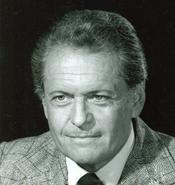
Historical · U.S. House · Hawaii · District 1
Cecil Heftel
Former U.S. Representative · Hawaii District 1 · 1977–1987 · Democratic
Cecil Heftel represented Hawaii's District 1 in the United States House of Representatives (1977–1987) for the Democratic party. The page below collects sourced biographical facts, term history, committee roles, and provenance for Heftel.
Bioguide ID: H000449
Key facts
- Full name
- Cecil Heftel
- State
- Hawaii
- District
- District 1
- Party
- Democratic
- House service
- 1977–1987
- First House term
- 1977
- Status
- Left office
- Current term ends
- —
- Born
- 1924
- Bioguide ID
- H000449
- Committee assignments
- —
- Dataset version
- 1.20260605
Biographical narrative
999 words · sourced from the Wikipedia REST extract
Cecil Heftel was an American politician and businessman who served as a U.S. Representative for Hawaii's 1st congressional district from 1977 until 1986. A member of the Democratic Party, Heftel was known for his involvement in both the broadcasting industry and political affairs, where he was recognized for his advocacy on various issues during his time in Congress. His tenure was marked by significant legislative actions and a notable attempt to transition into state governance, which ultimately did not succeed.
Early life and career
Cecil Landau Heftel was born on September 30, 1924, in Chicago, Illinois. He was raised in a family with Eastern European roots, as his maternal grandparents immigrated from Russia and his paternal grandparents from Poland. Heftel attended Roosevelt High School in the Albany Park neighborhood of Chicago, where he began to develop his interests in business and leadership. Following high school, he pursued higher education at Arizona State University, where he earned a bachelor's degree in 1951.
Heftel's academic journey continued as he enrolled in law school at the University of Utah and later at New York University as a Root-Tilden Scholar. However, he did not complete his law degree. During World War II, Heftel served in the United States Army from 1943 to 1946, an experience that would shape his perspectives on leadership and public service.
After his military service, Heftel relocated to Honolulu, Hawaii, where he established Heftel Broadcasting. He became a prominent figure in the broadcasting industry, owning several radio and television stations, including KGMB-AM-FM-TV. His business acumen was evident when he purchased KIMN in Denver in 1957, pioneering what was then known as Top 30 programming. Under his ownership, KIMN became a leading radio station in a highly competitive market. Heftel sold the station in 1960 and returned to Hawaii, but he continued to expand his broadcasting interests on the mainland, acquiring stations in various cities, including WHYI-FM in Fort Lauderdale, Florida, and WJAS in Pittsburgh.
Throughout the 1970s and 1980s, Heftel demonstrated a keen ability to navigate the broadcasting landscape, often buying and selling stations to capitalize on market trends. His ventures included partnerships and the establishment of H & G Communications, which operated multiple radio stations across the United States. Eventually, Heftel's broadcasting empire included a diverse portfolio of stations in major cities, which were later acquired by Clear Channel Communications in a significant business transaction.
House tenure
Cecil Heftel's political career began in earnest when he decided to run for office after returning to his business in Honolulu. In 1970, he was the Democratic nominee for the U.S. Senate but was defeated by the incumbent Republican Hiram Fong. Despite this setback, Heftel remained active in politics and became a delegate to the 1972 Hawai'i Democratic State Convention, where he was elected to represent his state at the Democratic National Convention.
In 1976, Heftel successfully ran for the U.S. House of Representatives, representing Hawaii's 1st congressional district. He was re-elected four times, serving a total of five terms in Congress until his resignation in 1986. During his time in office, Heftel was involved in various legislative initiatives and was part of a U.S. fact-finding mission to the Philippines, which played a role in the ousting of dictator Ferdinand Marcos.
Heftel's voting record included support for the Economic Recovery Tax Act of 1981, which aimed to stimulate economic growth through significant tax reductions. However, he opposed the Omnibus Budget Reconciliation Act of 1981, which sought to decrease federal spending while increasing military funding. His tenure in Congress was characterized by a commitment to addressing the needs of his constituents and engaging in national issues.
In 1986, Heftel resigned from Congress to pursue a gubernatorial candidacy in Hawaii. However, he lost the Democratic primary to John Waihee. Heftel attributed his defeat to a smear campaign that questioned his character and personal life, suggesting that political adversaries sought to undermine his candidacy. Despite the controversy surrounding his departure from Congress, Heftel remained a notable figure in Hawaii's political landscape.
Legislative focus and committees
Throughout his congressional career, Cecil Heftel focused on a range of legislative issues that were pertinent to his constituents and the broader national context. His involvement in the U.S. House of Representatives allowed him to advocate for policies that aligned with his Democratic values and the interests of Hawaii residents. Heftel's participation in a fact-finding mission to the Philippines underscored his commitment to international human rights and democratic governance, reflecting a broader concern for global political dynamics.
Heftel's legislative actions included significant votes on key economic policies, such as the Economic Recovery Tax Act of 1981, which aimed to stimulate the economy through tax cuts. His opposition to the Omnibus Budget Reconciliation Act of 1981 illustrated his nuanced approach to fiscal policy, balancing the need for economic growth with concerns over federal spending priorities.
In addition to his legislative focus, Heftel's committee assignments and participation in various congressional activities allowed him to engage with a wide array of issues, including education, healthcare, and social welfare. His background in business and broadcasting informed his perspectives on economic policy and media regulation, contributing to his effectiveness as a legislator.
After leaving Congress, Heftel continued to engage in public discourse, authoring a book in 1998 that critiqued the state of campaign finance in the United States. He advocated for reforms aimed at reducing the influence of money in politics and promoting transparency in electoral processes. His later involvement in the political arena included a successful bid for a seat on the state Board of Education in 2004, demonstrating his enduring commitment to public service.
Cecil Heftel passed away on February 4, 2010, in San Diego, California, at the age of 85. His legacy includes a notable career in both business and politics, marked by his contributions to broadcasting and his service in the U.S. House of Representatives. In recognition of his impact, legislation was introduced posthumously to honor him by designating a post office in Honolulu in his name.
Notable legislation
Sponsored and co-sponsored legislation for Cecil Heftel is pending operator curation. The biographical narrative above carries the same provenance trail until per-bill rows are written.
Sources
- [1]https://en.wikipedia.org/wiki/Cecil_HeftelWikipedia · retrieved 2026-06-05
Notable quotes
Sourced quotes for Cecil Heftel are pending operator curation. Narrative-scope provenance remains attached below.
Sources
- [1]https://en.wikipedia.org/wiki/Cecil_HeftelWikipedia · retrieved 2026-06-05
Key positions
Curated policy positions for Cecil Heftel are pending operator review. The biographical narrative above carries the same provenance trail until per-topic positions are written.
Sources
- [1]https://en.wikipedia.org/wiki/Cecil_HeftelWikipedia · retrieved 2026-06-05
Terms served
- 1977–1979U.S. House · Term 1 · Democratic
- 1979–1981U.S. House · Term 2 · Democratic
- 1981–1983U.S. House · Term 3 · Democratic
- 1983–1985U.S. House · Term 4 · Democratic
- 1985–1987U.S. House · Term 5 · Democratic
Sources & provenance
Every attributable claim above carries a per-section [N] marker that resolves to the corresponding URL below. Each entry records the upstream provider, the canonical URL, and the timestamp at which the source was retrieved by the ingest pipeline.
Key facts
- https://bioguide.congress.gov/search/bio/H000449bioguide · retrieved 2026-06-05
- https://www.govtrack.us/congress/members/405314govtrack · retrieved 2026-06-05
Biographical narrative
- https://en.wikipedia.org/wiki/Cecil_Heftelwikipedia · retrieved 2026-06-05
Find your representative
Every U.S. state elects representatives by district. Browse Hawaii’s delegation, the full former-representative roster, or explore the role and term length.
Related on The Candidate
- Preceded by Thomas GillEarlier holder of the Hawaii District 1 House seat · Democratic.Open
- Succeeded by Patricia SaikiLater holder of the Hawaii District 1 House seat · Republican.Open
- Charles DjouFormer U.S. Representative · Hawaii District 1 · RepublicanOpen
- Colleen HanabusaFormer U.S. Representative · Hawaii District 1 · DemocraticOpen
- Mark TakaiFormer U.S. Representative · Hawaii District 1 · DemocraticOpen
- Neil AbercrombieFormer U.S. Representative · Hawaii District 1 · DemocraticOpen