
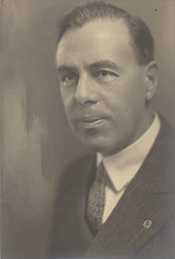
Historical · U.S. House · Hawaii · At-Large
Victor Houston
Former U.S. Representative · Hawaii At-Large · 1927–1933 · Republican
Victor Houston represented Hawaii's At-Large in the United States House of Representatives (1927–1933) for the Republican party. The page below collects sourced biographical facts, term history, committee roles, and provenance for Houston.
Bioguide ID: H000828
Key facts
- Full name
- Victor Houston
- State
- Hawaii
- District
- At-Large
- Party
- Republican
- House service
- 1927–1933
- First House term
- 1927
- Status
- Left office
- Current term ends
- —
- Born
- 1876
- Bioguide ID
- H000828
- Committee assignments
- —
- Dataset version
- 1.20260606
Biographical narrative
890 words · sourced from the Wikipedia REST extract
Victor Houston was an American politician and naval officer who served as a U.S. Representative for the Territory of Hawaii. A member of the Republican Party, he held office from 1927 until 1933, representing the at-large congressional district. Houston's career spanned both military and political realms, reflecting his deep ties to the Hawaiian Islands and his commitment to public service.
Early life and career
Victor Stewart Kaleoaloha Houston was born on July 22, 1876, in San Francisco, California. He was the son of Edwin Samuel Houston, a Rear Admiral in the United States Navy, and Caroline Poor Kahikiola Brickwood, who had Native Hawaiian ancestry. This diverse heritage would later influence his political identity and connection to Hawaii. Houston's early education included attendance at Real Schule in Dresden, Saxony, followed by studies at the Cantonal College in Lausanne, Switzerland. After returning to the United States, he continued his education at Force School in Washington, D.C., and later at Werntz Preparatory School in Annapolis, Maryland.
In 1897, Houston graduated from the United States Naval Academy, receiving both his degree and a commission as a naval officer. His military career began in earnest, and he served in various capacities within the Navy. Over the years, he advanced through the ranks, ultimately retiring in 1926 with the rank of commander. His naval service provided him with a wealth of experience and leadership skills, which he would later apply to his political career.
Houston's connection to Hawaii began in 1909 when he moved to the islands. His relocation coincided with a growing interest in the political landscape of the Territory of Hawaii, where he became actively involved with the Hawaii Republican Party. His military background and commitment to public service positioned him well for a future in politics.
House tenure
Victor Houston's political career in the U.S. House of Representatives began on March 4, 1927, when he was elected as a delegate representing the Territory of Hawaii. During his tenure, which lasted until March 3, 1933, he served three terms in Congress. As a delegate, Houston was responsible for advocating on behalf of the interests of Hawaii, a territory that was not yet a state and thus had limited representation in the federal government.
Throughout his time in office, Houston focused on various issues pertinent to the residents of Hawaii, including economic development, infrastructure, and the unique challenges faced by the territory. His role as a delegate was significant, as he worked to ensure that the voices of Hawaiian citizens were heard in Washington, D.C. Despite his efforts, Houston faced challenges typical of territorial representation, including the limitations placed on delegates compared to full members of Congress.
Houston's congressional career included participation in the Republican National Conventions in 1928 and 1932, where he contributed to the broader political discourse of his party. However, after his third term, he was unsuccessful in his bid for reelection and subsequently retired from politics. His departure from Congress marked the end of a significant chapter in his life, one that had been dedicated to public service and representation for the people of Hawaii.
Legislative focus and committees
During his time in the House of Representatives, Victor Houston's legislative focus encompassed a range of issues that were critical to the development and well-being of the Territory of Hawaii. As a delegate, he worked on matters related to economic growth, infrastructure improvements, and the unique social and cultural needs of the Hawaiian population. His background as a naval officer likely informed his perspectives on national defense and maritime issues, which were particularly relevant to Hawaii's strategic location in the Pacific.
Houston's involvement in congressional committees would have provided him with platforms to advocate for the interests of his constituents. While specific committee assignments during his tenure are not detailed, it is common for representatives to serve on committees that align with their legislative priorities and the needs of their districts. His work would have included engaging with fellow lawmakers, participating in discussions, and contributing to the legislative process, all aimed at improving conditions in Hawaii.
Despite the limitations of being a territorial delegate, Houston's efforts were part of a broader movement to elevate the status of Hawaii within the United States. His work laid the groundwork for future representatives and the eventual transition of Hawaii from a territory to a state. Houston's political career, while ultimately concluding in 1933, was marked by a commitment to public service and a dedication to the people of Hawaii.
After leaving Congress, Houston continued to be involved in public life, and his military service was rekindled during World War II. Following the attack on Pearl Harbor in December 1941, he was recalled to active duty and served until March 1, 1945, achieving the rank of captain. This return to military service underscored his lifelong dedication to his country and his commitment to the defense of Hawaii.
Victor Houston passed away on July 31, 1959, in Honolulu, Hawaii, just weeks before the islands achieved statehood. His legacy as a public servant and naval officer remains a part of Hawaii's rich history, reflecting the contributions of those who have worked to shape the territory and its eventual status as a state. He was laid to rest in Oahu Cemetery, leaving behind a legacy intertwined with the history of Hawaii and its journey toward statehood.
Notable legislation
Sponsored and co-sponsored legislation for Victor Houston is pending operator curation. The biographical narrative above carries the same provenance trail until per-bill rows are written.
Sources
- [1]https://en.wikipedia.org/wiki/Victor_S._K._HoustonWikipedia · retrieved 2026-06-06
Notable quotes
Sourced quotes for Victor Houston are pending operator curation. Narrative-scope provenance remains attached below.
Sources
- [1]https://en.wikipedia.org/wiki/Victor_S._K._HoustonWikipedia · retrieved 2026-06-06
Key positions
Curated policy positions for Victor Houston are pending operator review. The biographical narrative above carries the same provenance trail until per-topic positions are written.
Sources
- [1]https://en.wikipedia.org/wiki/Victor_S._K._HoustonWikipedia · retrieved 2026-06-06
Terms served
- 1927–1929U.S. House · Term 1 · Republican
- 1929–1931U.S. House · Term 2 · Republican
- 1931–1933U.S. House · Term 3 · Republican
Sources & provenance
Every attributable claim above carries a per-section [N] marker that resolves to the corresponding URL below. Each entry records the upstream provider, the canonical URL, and the timestamp at which the source was retrieved by the ingest pipeline.
Key facts
- https://bioguide.congress.gov/search/bio/H000828bioguide · retrieved 2026-06-06
- https://www.govtrack.us/congress/members/405675govtrack · retrieved 2026-06-06
Biographical narrative
- https://en.wikipedia.org/wiki/Victor_S._K._Houstonwikipedia · retrieved 2026-06-06
Find your representative
Every U.S. state elects representatives by district. Browse Hawaii’s delegation, the full former-representative roster, or explore the role and term length.
Related on The Candidate
- Preceded by William JarrettEarlier holder of the Hawaii At-Large House seat · Democratic.Open
- Succeeded by Lincoln McCandlessLater holder of the Hawaii At-Large House seat · Democratic.Open
- Cecil HeftelFormer U.S. Representative · Hawaii District 1 · DemocraticOpen
- Charles DjouFormer U.S. Representative · Hawaii District 1 · RepublicanOpen
- Colleen HanabusaFormer U.S. Representative · Hawaii District 1 · DemocraticOpen
- Mark TakaiFormer U.S. Representative · Hawaii District 1 · DemocraticOpen