
Historical · U.S. House · Iowa · District 1
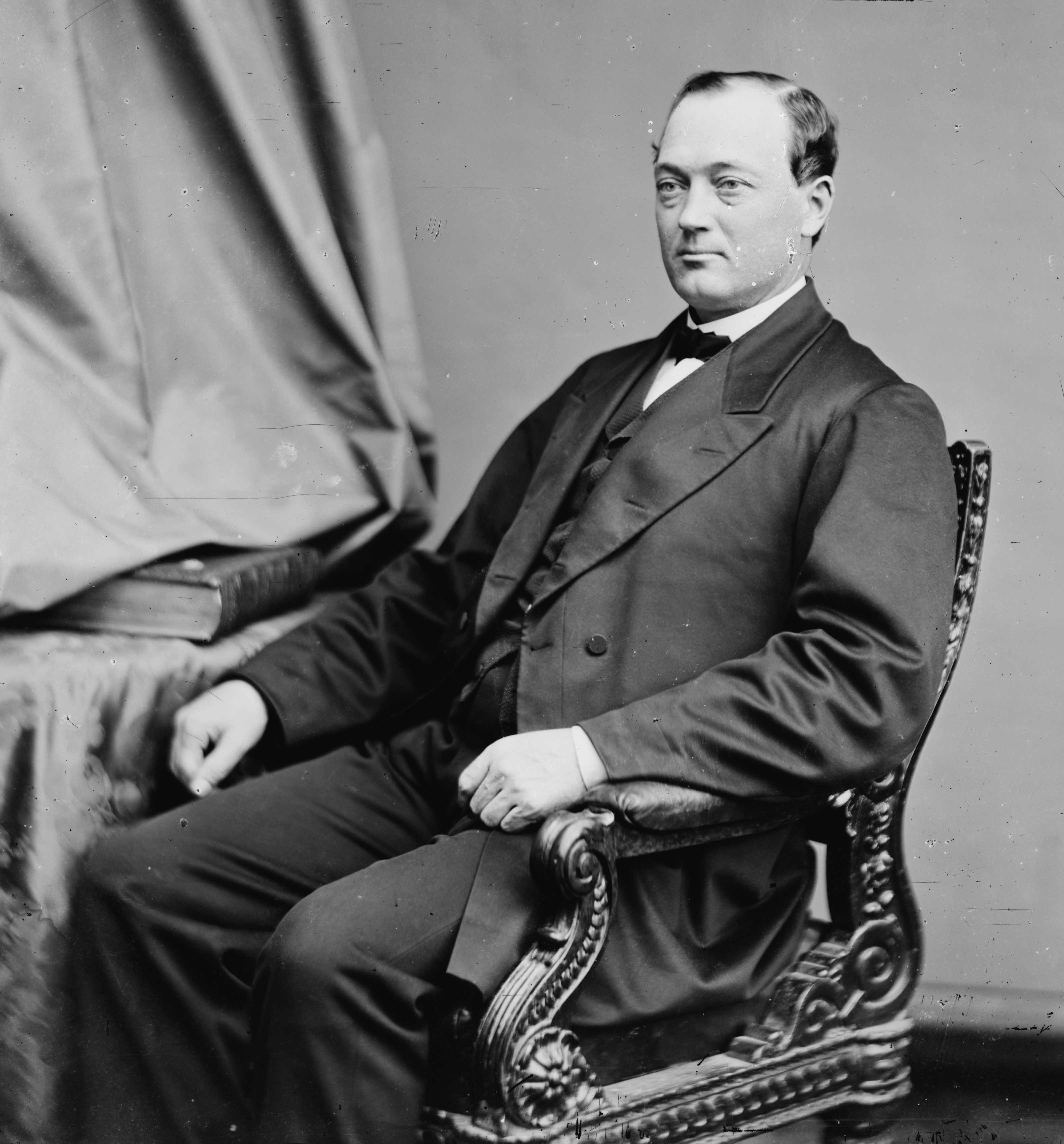
George McCrary
Former U.S. Representative · Iowa District 1 · 1869–1877 · Republican
George McCrary represented Iowa's District 1 in the United States House of Representatives (1869–1877) for the Republican party. The page below collects sourced biographical facts, term history, committee roles, and provenance for McCrary.
Bioguide ID: M000379
Key facts
- Full name
- George McCrary
- State
- Iowa
- District
- District 1
- Party
- Republican
- House service
- 1869–1877
- First House term
- 1869
- Status
- Left office
- Current term ends
- —
- Born
- 1835
- Bioguide ID
- M000379
- Committee assignments
- —
- Dataset version
- 1.20260606
Biographical narrative
822 words · sourced from the Wikipedia REST extract
George McCrary was a prominent American politician and lawyer who served as a U.S. Representative from Iowa's 1st congressional district from 1869 to 1877. A member of the Republican Party, he was known for his involvement in various legislative matters, particularly those related to elections and judicial reform. McCrary also held significant roles outside Congress, including serving as the 33rd Secretary of War and later as a United States circuit judge. His career spanned a transformative period in American history, marked by post-Civil War reconstruction and the evolution of federal judicial processes.
Early life and career
George Washington McCrary was born on August 29, 1835, near Evansville in Vanderburgh County, Indiana. His family moved to the Wisconsin Territory in 1836, which later became part of the Iowa Territory and eventually the State of Iowa. Settling in Van Buren County, McCrary received his early education in public schools and began teaching in local country schools at the age of 18. He pursued a legal education by studying law at the firm of Samuel Freeman Miller, who would later become a Justice of the United States Supreme Court.
After being admitted to the bar in 1856, McCrary began his legal career in Keokuk, Iowa, where he practiced law until 1857. His political career commenced when he was elected to the Iowa House of Representatives in 1857. Following this, he resumed his legal practice in Keokuk until 1861, when he was elected to the Iowa Senate, serving in that capacity until 1865. After another period of private practice, he returned to public service, which ultimately led to his election to the U.S. House of Representatives.
House tenure
McCrary's congressional career began when he was elected to the 41st United States Congress in 1868, succeeding James F. Wilson, a prominent Radical Republican. He served four consecutive terms in the House, from March 4, 1869, to March 3, 1877. During his time in Congress, McCrary was recognized for his leadership roles, including serving as Chairman of the Committee on Elections during the 42nd Congress and as Chairman of the Committee on Railways and Canals during the 43rd Congress.
His tenure was marked by a notable incident in his first month in office when he gained national attention for opposing an appropriation for a federal courthouse in Keokuk. He argued against such expenditures in light of the national debt, reflecting his fiscal conservatism. Throughout his congressional service, McCrary was involved in significant legislative matters, including the establishment of the Electoral Commission to resolve the contentious outcome of the 1876 Presidential Election. He also participated in the investigation of the Crédit Mobilier scandal, which was a major political scandal involving corruption in the construction of the First Transcontinental Railroad.
In addition to his legislative duties, McCrary maintained a strong interest in election law. He authored "A Treatise on the American Law of Elections," published in 1875, which became a significant work in the field and underwent multiple editions. His expertise in contested elections and election laws contributed to his reputation as a knowledgeable figure in these areas.
Legislative focus and committees
During his time in the House, McCrary was affiliated with the "Half-Breeds," a faction within the Republican Party that was characterized by its moderate stance compared to the more hardline "Stalwarts." This group emphasized industrial interests, protective tariffs, and civil service reform, aligning with McCrary's legislative priorities. His focus on election law and judicial reform was evident in his efforts to reorganize the federal court system, although his proposals did not pass.
McCrary's legislative activities were not limited to election law; he also engaged with issues related to infrastructure, particularly in his capacity as Chairman of the Committee on Railways and Canals. His involvement in these committees reflected the broader economic interests of the nation during the post-Civil War era, as the country was undergoing significant changes in its transportation and economic systems.
After concluding his congressional service in 1877, McCrary was appointed as the Secretary of War under President Rutherford B. Hayes, a position he held until 1879. His time in this role was marked by significant military and administrative challenges, including the withdrawal of federal troops from Southern states and involvement in labor disputes.
Following his resignation from the Secretary of War position, McCrary was nominated to serve as a United States circuit judge for the Eighth Circuit, a role he held until 1884. His legal career continued after leaving the bench, as he returned to private practice and served as general counsel for the Atchison, Topeka and Santa Fe Railroad Company until his death on June 23, 1890.
McCrary's career reflects a commitment to public service and a deep engagement with the legal and political issues of his time. His contributions to the fields of election law and judicial reform, along with his roles in Congress and the executive branch, underscore his significance in the political landscape of the late 19th century.
Notable legislation
Sponsored and co-sponsored legislation for George McCrary is pending operator curation. The biographical narrative above carries the same provenance trail until per-bill rows are written.
Sources
- [1]https://en.wikipedia.org/wiki/George_W._McCraryWikipedia · retrieved 2026-06-06
Notable quotes
Sourced quotes for George McCrary are pending operator curation. Narrative-scope provenance remains attached below.
Sources
- [1]https://en.wikipedia.org/wiki/George_W._McCraryWikipedia · retrieved 2026-06-06
Key positions
Curated policy positions for George McCrary are pending operator review. The biographical narrative above carries the same provenance trail until per-topic positions are written.
Sources
- [1]https://en.wikipedia.org/wiki/George_W._McCraryWikipedia · retrieved 2026-06-06
Terms served
- 1869–1871U.S. House · Term 1 · Republican
- 1871–1873U.S. House · Term 2 · Republican
- 1873–1875U.S. House · Term 3 · Republican
- 1875–1877U.S. House · Term 4 · Republican
Sources & provenance
Every attributable claim above carries a per-section [N] marker that resolves to the corresponding URL below. Each entry records the upstream provider, the canonical URL, and the timestamp at which the source was retrieved by the ingest pipeline.
Key facts
- https://bioguide.congress.gov/search/bio/M000379bioguide · retrieved 2026-06-06
- https://www.govtrack.us/congress/members/407382govtrack · retrieved 2026-06-06
Biographical narrative
- https://en.wikipedia.org/wiki/George_W._McCrarywikipedia · retrieved 2026-06-06
Find your representative
Every U.S. state elects representatives by district. Browse Iowa’s delegation, the full former-representative roster, or explore the role and term length.
Related on The Candidate
- Preceded by Samuel CurtisEarlier holder of the Iowa District 1 House seat · Republican.Open
- Succeeded by Joseph StoneLater holder of the Iowa District 1 House seat · Republican.Open
- Abby FinkenauerFormer U.S. Representative · Iowa District 1 · DemocraticOpen
- Augustus HallFormer U.S. Representative · Iowa District 1 · DemocraticOpen
- Benton HallFormer U.S. Representative · Iowa District 1 · DemocraticOpen
- Bernhart HennFormer U.S. Representative · Iowa District 1 · DemocraticOpen