
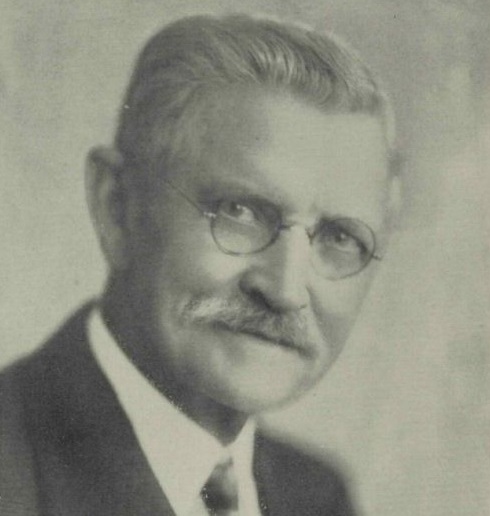
Historical · U.S. House · Iowa · District 2
Bernhard Jacobsen
Former U.S. Representative · Iowa District 2 · 1931–1937 · Democratic
Bernhard Jacobsen represented Iowa's District 2 in the United States House of Representatives (1931–1937) for the Democratic party. The page below collects sourced biographical facts, term history, committee roles, and provenance for Jacobsen.
Bioguide ID: J000038
Key facts
- Full name
- Bernhard Jacobsen
- State
- Iowa
- District
- District 2
- Party
- Democratic
- House service
- 1931–1937
- First House term
- 1931
- Status
- Left office
- Current term ends
- —
- Born
- 1862
- Bioguide ID
- J000038
- Committee assignments
- —
- Dataset version
- 1.20260605
Biographical narrative
881 words · sourced from the Wikipedia REST extract
Bernhard Jacobsen was a Democratic politician who served as a U.S. Representative for Iowa's 2nd congressional district from 1931 until the end of his last term in 1937. His tenure in Congress occurred during a tumultuous period in American history, marked by the Great Depression. Jacobsen was notable for being the first Democrat elected to the U.S. House from Iowa in over a decade, and he played a significant role in the political landscape of his state during his time in office.
Early life and career
Bernhard Jacobsen was born on March 26, 1862, in Tønder, which was then part of the Danish fief Schleswig, now located in modern-day Denmark. In 1876, Jacobsen immigrated to the United States with his parents, settling in Clinton, Iowa. His early years were marked by a determination to adapt to his new environment; he learned English while working as a helper in a local sawmill. This experience laid the groundwork for his future endeavors in business and public service.
After gaining proficiency in English, Jacobsen took a position as a clerk in a dry goods store, where he honed his skills in commerce. In 1886, he transitioned into the mercantile business, which would become a significant part of his career. His involvement in the local economy extended beyond retail; he also served as the postmaster of Clinton from 1914 to 1923. This role not only provided him with valuable administrative experience but also established him as a prominent figure in his community.
In 1927, Jacobsen retired from the mercantile business and shifted his focus to industrial finance. His diverse career experiences contributed to his understanding of economic issues, which would later inform his legislative priorities as a member of Congress.
House tenure
Jacobsen's political career began in earnest when he was elected to the U.S. House of Representatives in 1930. He successfully unseated the incumbent Republican Congressman F. Dickinson Letts, marking a significant political shift in Iowa's 2nd congressional district. Jacobsen's election was particularly noteworthy as he became the first Democrat to represent Iowa in the House since 1916, a period during which the Republican Party had maintained a stronghold in the state.
His victory was emblematic of the broader political changes occurring in the United States during the early years of the Great Depression. Jacobsen's win was seen as a setback for President Herbert Hoover, as the district included West Branch, Cedar County, the President's hometown. Jacobsen's appeal to voters was likely bolstered by the economic challenges facing the nation, which resonated with constituents seeking change.
During his time in Congress, Jacobsen was re-elected to two additional terms, reflecting his growing popularity and the support he garnered from his constituents. His electoral success came during a period when Iowa Democrats were establishing a clear majority in the U.S. House, further solidifying his position as a key figure in the state's political landscape.
In June 1936, Jacobsen won the Democratic primary for what would have been his fourth term in the U.S. House, indicating his continued influence and support within the party. However, his political career was cut short when he passed away on June 30, 1936, in Rochester, Minnesota, after a brief hospitalization. His death occurred shortly after the primary, leading to a special nominating convention that selected his son, William S. Jacobsen, to replace him on the ballot for the general election.
Legislative focus and committees
Throughout his congressional tenure, Jacobsen was involved in various legislative efforts that addressed the pressing issues of his time, particularly those related to the economic difficulties brought on by the Great Depression. While specific details of his legislative initiatives are not provided, it is understood that his background in business and finance likely informed his approach to economic policy.
As a member of the Democratic Party during a period of significant political and social change, Jacobsen would have participated in discussions and decisions aimed at addressing the needs of his constituents and the nation as a whole. His role in Congress came at a time when the federal government was increasingly involved in economic recovery efforts, and Jacobsen's experiences in the business sector may have provided valuable insights into the challenges faced by both individuals and businesses during this era.
Jacobsen's commitment to public service and his understanding of local economic conditions were likely reflected in his legislative priorities. His tenure coincided with the New Deal initiatives implemented by President Franklin D. Roosevelt, which sought to provide relief and recovery to those affected by the economic downturn. Jacobsen's contributions to these discussions would have been shaped by his firsthand experiences in the mercantile and finance sectors, as well as his understanding of the needs of his constituents in Iowa.
In summary, Bernhard Jacobsen's career as a U.S. Representative was marked by his significant electoral victories during a challenging economic period in American history. His background in business and public service informed his legislative focus, and his legacy continued through his son, who succeeded him in Congress following his death. Jacobsen's life and career reflect the complexities of American politics during the Great Depression and the evolving role of government in addressing economic challenges. He was interred in Springdale Cemetery in Clinton, Iowa, leaving behind a legacy of public service and commitment to his community.
Notable legislation
Sponsored and co-sponsored legislation for Bernhard Jacobsen is pending operator curation. The biographical narrative above carries the same provenance trail until per-bill rows are written.
Sources
- [1]https://en.wikipedia.org/wiki/Bernhard_M._JacobsenWikipedia · retrieved 2026-06-05
Notable quotes
Sourced quotes for Bernhard Jacobsen are pending operator curation. Narrative-scope provenance remains attached below.
Sources
- [1]https://en.wikipedia.org/wiki/Bernhard_M._JacobsenWikipedia · retrieved 2026-06-05
Key positions
Curated policy positions for Bernhard Jacobsen are pending operator review. The biographical narrative above carries the same provenance trail until per-topic positions are written.
Sources
- [1]https://en.wikipedia.org/wiki/Bernhard_M._JacobsenWikipedia · retrieved 2026-06-05
Terms served
- 1931–1933U.S. House · Term 1 · Democratic
- 1933–1935U.S. House · Term 2 · Democratic
- 1935–1937U.S. House · Term 3 · Democratic
Sources & provenance
Every attributable claim above carries a per-section [N] marker that resolves to the corresponding URL below. Each entry records the upstream provider, the canonical URL, and the timestamp at which the source was retrieved by the ingest pipeline.
Key facts
- https://bioguide.congress.gov/search/bio/J000038bioguide · retrieved 2026-06-05
- https://www.govtrack.us/congress/members/405943govtrack · retrieved 2026-06-05
Biographical narrative
- https://en.wikipedia.org/wiki/Bernhard_M._Jacobsenwikipedia · retrieved 2026-06-05
Find your representative
Every U.S. state elects representatives by district. Browse Iowa’s delegation, the full former-representative roster, or explore the role and term length.
Related on The Candidate
- Preceded by Fred LettsEarlier holder of the Iowa District 2 House seat · Republican.Open
- Succeeded by William JacobsenLater holder of the Iowa District 2 House seat · Democratic.Open
- Abby FinkenauerFormer U.S. Representative · Iowa District 1 · DemocraticOpen
- Augustus HallFormer U.S. Representative · Iowa District 1 · DemocraticOpen
- Benton HallFormer U.S. Representative · Iowa District 1 · DemocraticOpen
- Bernhart HennFormer U.S. Representative · Iowa District 1 · DemocraticOpen