
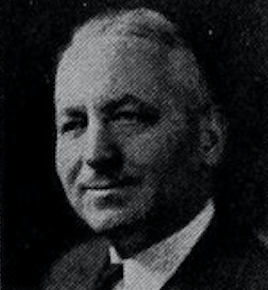
Historical · U.S. House · Iowa · District 4
Frederick Biermann
Former U.S. Representative · Iowa District 4 · 1933–1939 · Democratic
Frederick Biermann represented Iowa's District 4 in the United States House of Representatives (1933–1939) for the Democratic party. The page below collects sourced biographical facts, term history, committee roles, and provenance for Biermann.
Bioguide ID: B000449
Key facts
- Full name
- Frederick Biermann
- State
- Iowa
- District
- District 4
- Party
- Democratic
- House service
- 1933–1939
- First House term
- 1933
- Status
- Left office
- Current term ends
- —
- Born
- 1884
- Bioguide ID
- B000449
- Committee assignments
- —
- Dataset version
- 1.20260605
Biographical narrative
907 words · sourced from the Wikipedia REST extract
Frederick Biermann was an American politician who served as a Democratic U.S. Representative for Iowa's 4th congressional district. His tenure in the House of Representatives spanned three terms, beginning in 1933 and concluding in 1939. Biermann's political career was marked by his election during the significant Democratic wave of the early 1930s, which was associated with President Franklin D. Roosevelt's New Deal policies. After leaving Congress, he continued to engage in public service as a U.S. Marshal for northern Iowa until 1953.
Early life and career
Frederick Elliott Biermann was born on March 20, 1884, in Rochester, Minnesota. Following the death of his mother when he was just four years old, he moved to Decorah, Iowa, to live with an aunt. Biermann completed his secondary education at Decorah High School, graduating in 1901. He pursued higher education at the University of Minnesota in Minneapolis for three years before transferring to Columbia University in New York City, where he graduated in 1905. His academic work included a senior thesis that examined the leadership styles of Thomas Jefferson and Andrew Jackson within the context of American democracy.
After completing his education, Biermann returned to Decorah, where he took on a teaching position at Valder's Business College. He later ventured into homesteading in Morton County, North Dakota, before attending Harvard Law School for two years in 1906 and 1907. Upon returning to Decorah in 1908, he became a half-owner of the Decorah Journal, a local newspaper, and later assumed full ownership in 1911. His career in journalism was complemented by his role as Decorah's postmaster, a position he held starting in 1913.
Biermann's editorial work gained prominence in the 1920s, with his writings frequently cited and critiqued in regional newspapers, including the Mason City Globe-Gazette and the Oelwein Daily Register. His tenure as postmaster and newspaper editor was interrupted by his service in the U.S. Army during World War I. He enlisted in April 1917 and was commissioned as a second lieutenant, later rising to the rank of first lieutenant in the 88th Infantry Division. His military service included ten months overseas before he returned home in June 1919. After the war, Biermann resumed his roles as postmaster and editor, continuing until he sold the Journal in 1931. His decision to sell was influenced by health issues stemming from burns he sustained in an X-ray accident nine years earlier.
House tenure
Biermann's political career took a significant turn in the early 1930s when he became actively involved in the Democratic Party, serving on the Central Committee of the Iowa Democratic Party for eight years. His political engagement culminated in his candidacy for the U.S. House of Representatives in 1932, a time when the Democratic Party was gaining momentum nationally due to the economic challenges of the Great Depression. He announced his candidacy for Iowa's 4th congressional district, which was then represented by the long-serving Republican Gilbert N. Haugen.
In the 1932 election, Biermann was elected to Congress as part of the Roosevelt landslide, winning by a substantial margin of over 20,000 votes. He was sworn into office on March 4, 1933, marking the beginning of his congressional service. During his time in the House, he successfully won re-election in 1934 and 1936, although his victories were characterized by increasingly narrow margins. His 1936 opponent was Henry O. Talle, a professor of economics at Luther College in Decorah. Despite winning that election, Biermann faced a challenging political landscape in 1938, when he was defeated by Talle as part of a broader Republican resurgence that year.
Biermann's congressional service concluded on January 3, 1939, after three terms in office. During his time in the House, he participated in various legislative activities and was a delegate to the Interparliamentary Union Conference held in Paris in 1937. His tenure was marked by the challenges of the Great Depression and the evolving political dynamics of the time.
Legislative focus and committees
Throughout his time in Congress, Biermann's legislative focus aligned with the broader goals of the Democratic Party during the New Deal era. While specific details of his legislative initiatives are not extensively documented, his election as part of a significant political shift indicates his alignment with the party's efforts to address the economic difficulties facing the nation. The New Deal policies aimed to provide relief, recovery, and reform, and Biermann's role as a member of the House would have involved engagement with these initiatives.
In addition to his legislative responsibilities, Biermann's participation in the Interparliamentary Union Conference highlighted his interest in international cooperation and diplomacy. This involvement suggests that he was not only focused on domestic issues but also engaged with global matters, reflecting the interconnectedness of national and international politics during his tenure.
After his congressional service, Biermann continued to contribute to public life by being appointed as the United States Marshal for northern Iowa in October 1940, a position he held until 1953. His involvement in the Democratic National Conventions in 1940 and 1956 further underscores his continued engagement with the party and its activities.
Frederick Biermann passed away on July 1, 1968, in La Crosse, Wisconsin. His contributions to Iowa's political landscape and his service in various capacities reflect a commitment to public service that spanned several decades. He was interred in Phelps Cemetery in Decorah, leaving behind a legacy tied to his community and his role in American politics during a transformative period in the nation's history.
Notable legislation
Sponsored and co-sponsored legislation for Frederick Biermann is pending operator curation. The biographical narrative above carries the same provenance trail until per-bill rows are written.
Sources
- [1]https://en.wikipedia.org/wiki/Fred_BiermannWikipedia · retrieved 2026-06-05
Notable quotes
Sourced quotes for Frederick Biermann are pending operator curation. Narrative-scope provenance remains attached below.
Sources
- [1]https://en.wikipedia.org/wiki/Fred_BiermannWikipedia · retrieved 2026-06-05
Key positions
Curated policy positions for Frederick Biermann are pending operator review. The biographical narrative above carries the same provenance trail until per-topic positions are written.
Sources
- [1]https://en.wikipedia.org/wiki/Fred_BiermannWikipedia · retrieved 2026-06-05
Terms served
- 1933–1935U.S. House · Term 1 · Democratic
- 1935–1937U.S. House · Term 2 · Democratic
- 1937–1939U.S. House · Term 3 · Democratic
Sources & provenance
Every attributable claim above carries a per-section [N] marker that resolves to the corresponding URL below. Each entry records the upstream provider, the canonical URL, and the timestamp at which the source was retrieved by the ingest pipeline.
Key facts
- https://bioguide.congress.gov/search/bio/B000449bioguide · retrieved 2026-06-05
- https://www.govtrack.us/congress/members/401434govtrack · retrieved 2026-06-05
Biographical narrative
- https://en.wikipedia.org/wiki/Fred_Biermannwikipedia · retrieved 2026-06-05
Find your representative
Every U.S. state elects representatives by district. Browse Iowa’s delegation, the full former-representative roster, or explore the role and term length.
Related on The Candidate
- Preceded by Gilbert HaugenEarlier holder of the Iowa District 4 House seat · Republican.Open
- Succeeded by Karl Le CompteLater holder of the Iowa District 4 House seat · Republican.Open
- Abby FinkenauerFormer U.S. Representative · Iowa District 1 · DemocraticOpen
- Augustus HallFormer U.S. Representative · Iowa District 1 · DemocraticOpen
- Benton HallFormer U.S. Representative · Iowa District 1 · DemocraticOpen
- Bernhart HennFormer U.S. Representative · Iowa District 1 · DemocraticOpen