
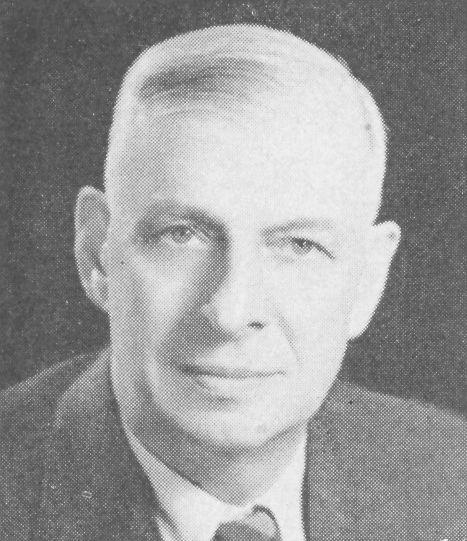
Historical · U.S. House · Iowa · District 4
Karl Le Compte
Former U.S. Representative · Iowa District 4 · 1939–1959 · Republican
Karl Le Compte represented Iowa's District 4 in the United States House of Representatives (1939–1959) for the Republican party. The page below collects sourced biographical facts, term history, committee roles, and provenance for Compte.
Bioguide ID: L000157
Key facts
- Full name
- Karl Le Compte
- State
- Iowa
- District
- District 4
- Party
- Republican
- House service
- 1939–1959
- First House term
- 1939
- Status
- Left office
- Current term ends
- —
- Born
- 1887
- Bioguide ID
- L000157
- Committee assignments
- —
- Dataset version
- 1.20260605
Biographical narrative
1,046 words · sourced from the Wikipedia REST extract
Karl Miles LeCompte was a prominent figure in American politics during the mid-20th century, serving as a Republican U.S. Representative for Iowa's 4th congressional district. His political career spanned two decades, during which he was elected to ten consecutive terms in the House of Representatives from 1939 until 1959. Known for his opposition to the New Deal and his involvement in various legislative committees, LeCompte played a significant role in shaping policy during a transformative period in American history. After retiring from Congress, he returned to his roots in newspaper publishing, where he continued to contribute to the field until his later years.
Early life and career
Karl LeCompte was born on May 25, 1887, in Corydon, Iowa, to Charles Francis and Hannah Miles LeCompte. Growing up in a small town, he attended local public schools, where he laid the foundation for his future academic and professional pursuits. LeCompte furthered his education at the University of Iowa in Iowa City, graduating in 1909. His time at the university likely influenced his later career in journalism and politics, as he developed skills in communication and critical thinking.
In 1910, just a year after graduating, LeCompte became the owner and publisher of the Corydon Times-Republican, a local newspaper. This role allowed him to engage with the community and gain insight into the political landscape of Iowa. His experience in journalism would later serve him well in his political career, as he was adept at conveying his ideas and connecting with constituents.
LeCompte's political career began in earnest in 1916 when he was elected to the Iowa Senate, becoming the youngest member at the age of 29. His tenure in the state legislature lasted until 1921, during which he likely developed a deeper understanding of governance and public policy. Following his time in the Senate, LeCompte served in the medical detachment of United States General Hospital No. 26 during World War I, although he did not see combat overseas. This experience may have shaped his views on national service and public health, themes that would resonate in his later political career.
House tenure
LeCompte's entry into the U.S. House of Representatives came in 1939 when he successfully ran for the Republican nomination in Iowa's 5th congressional district. His campaign emphasized his strong opposition to the New Deal, which he characterized as a program of "waste and extravagance." This stance resonated with many voters who were skeptical of the federal government's expanding role in the economy during the Great Depression. In the general election, he defeated Ruth F. Hollingshead, the first woman to run for Congress in Iowa, marking a significant milestone in both his career and the history of women's participation in politics.
Throughout his ten terms in Congress, LeCompte faced varying levels of opposition. He was re-elected in 1940, and after a redistricting in 1941, he continued to represent the same geographical area, now designated as the 4th district. His political career was marked by a series of electoral contests, with his most significant challenge occurring in 1948 when Democratic attorney Steven V. Carter ran against him. The race was closely contested, with LeCompte winning by a narrow margin of approximately 4,000 votes. This close call highlighted the competitive nature of Iowa politics during this period.
LeCompte's electoral fortunes fluctuated over the years, with Carter mounting a strong challenge again in 1956, coming within 2,000 votes of unseating him. Following this election, Carter contested the results in the U.S. House, but the decision ultimately confirmed LeCompte's victory. His ability to navigate these challenges and maintain his seat for a decade is indicative of his political acumen and the support he garnered from his constituents.
During his time in the House, LeCompte served on several important committees, including the Committee on Public Lands and the Committee on Insular Affairs. His leadership capabilities were recognized when he was appointed chairman of the Committee on House Administration during the Eightieth Congress and again in the Eighty-third Congress. These roles allowed him to influence significant legislative matters and contribute to the governance of the House.
LeCompte chose not to seek re-election in 1958, marking the end of his two-decade-long congressional career. His decision to retire came after a sustained period of public service, and he was succeeded by Carter, who won the seat on his fourth attempt. However, Carter's tenure was cut short by his untimely death from cancer within a year of taking office.
Legislative focus and committees
Throughout his congressional career, Karl LeCompte was known for his conservative stance on various issues, particularly his opposition to the New Deal. His voting record included support for the Civil Rights Act of 1957, reflecting a complex relationship with civil rights legislation during a time of significant social change in the United States. While he was often aligned with the Republican Party's traditional values, his support for this landmark legislation indicated a willingness to engage with the evolving political landscape.
LeCompte's committee assignments played a crucial role in shaping his legislative focus. As a member of the Committee on Public Lands, he was involved in discussions and decisions regarding land use, conservation, and the management of public resources. His work on the Committee on Insular Affairs also placed him at the nexus of issues related to U.S. territories and their governance, which were particularly relevant during the post-World War II era as the United States grappled with its role in global affairs.
In his capacity as chairman of the Committee on House Administration, LeCompte oversaw the internal operations of the House, which included managing its budget, staffing, and procedural rules. This position allowed him to influence the legislative process directly and ensure that the House functioned effectively during his tenure.
After leaving Congress in 1959, LeCompte returned to his roots in journalism, resuming his role in newspaper publishing. He continued to contribute to the field as a writer and editor, showcasing his enduring commitment to communication and public discourse. LeCompte passed away on September 30, 1972, in Centerville, Iowa, and was interred in Corydon Cemetery in his hometown. His life and career reflect a significant chapter in Iowa's political history, marked by a dedication to public service and a commitment to the principles he championed throughout his time in office.
Notable legislation
Sponsored and co-sponsored legislation for Karl Le Compte is pending operator curation. The biographical narrative above carries the same provenance trail until per-bill rows are written.
Sources
- [1]https://en.wikipedia.org/wiki/Karl_M._LeCompteWikipedia · retrieved 2026-06-05
Notable quotes
Sourced quotes for Karl Le Compte are pending operator curation. Narrative-scope provenance remains attached below.
Sources
- [1]https://en.wikipedia.org/wiki/Karl_M._LeCompteWikipedia · retrieved 2026-06-05
Key positions
Curated policy positions for Karl Le Compte are pending operator review. The biographical narrative above carries the same provenance trail until per-topic positions are written.
Sources
- [1]https://en.wikipedia.org/wiki/Karl_M._LeCompteWikipedia · retrieved 2026-06-05
Terms served
- 1939–1941U.S. House · Term 1 · Republican
- 1941–1943U.S. House · Term 2 · Republican
- 1943–1945U.S. House · Term 3 · Republican
- 1945–1947U.S. House · Term 4 · Republican
- 1947–1949U.S. House · Term 5 · Republican
- 1949–1951U.S. House · Term 6 · Republican
- 1951–1953U.S. House · Term 7 · Republican
- 1953–1955U.S. House · Term 8 · Republican
- 1955–1957U.S. House · Term 9 · Republican
- 1957–1959U.S. House · Term 10 · Republican
Sources & provenance
Every attributable claim above carries a per-section [N] marker that resolves to the corresponding URL below. Each entry records the upstream provider, the canonical URL, and the timestamp at which the source was retrieved by the ingest pipeline.
Key facts
- https://bioguide.congress.gov/search/bio/L000157bioguide · retrieved 2026-06-05
- https://www.govtrack.us/congress/members/406661govtrack · retrieved 2026-06-05
Biographical narrative
- https://en.wikipedia.org/wiki/Karl_M._LeComptewikipedia · retrieved 2026-06-05
Find your representative
Every U.S. state elects representatives by district. Browse Iowa’s delegation, the full former-representative roster, or explore the role and term length.
Related on The Candidate
- Preceded by Frederick BiermannEarlier holder of the Iowa District 4 House seat · Democratic.Open
- Succeeded by John KylLater holder of the Iowa District 4 House seat · Republican.Open
- Abby FinkenauerFormer U.S. Representative · Iowa District 1 · DemocraticOpen
- Augustus HallFormer U.S. Representative · Iowa District 1 · DemocraticOpen
- Benton HallFormer U.S. Representative · Iowa District 1 · DemocraticOpen
- Bernhart HennFormer U.S. Representative · Iowa District 1 · DemocraticOpen