
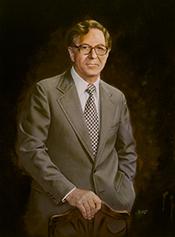
Historical · U.S. House · Iowa · District 4
Neal Smith
Former U.S. Representative · Iowa District 4 · 1959–1995 · Democratic
Neal Smith represented Iowa's District 4 in the United States House of Representatives (1959–1995) for the Democratic party. The page below collects sourced biographical facts, term history, committee roles, and provenance for Smith.
Bioguide ID: S000596
Key facts
- Full name
- Neal Smith
- State
- Iowa
- District
- District 4
- Party
- Democratic
- House service
- 1959–1995
- First House term
- 1959
- Status
- Left office
- Current term ends
- —
- Born
- 1920
- Bioguide ID
- S000596
- Committee assignments
- —
- Dataset version
- 1.20260605
Biographical narrative
942 words · sourced from the Wikipedia REST extract
Neal Edward Smith was an American politician who served as a member of the United States House of Representatives from Iowa's 4th congressional district for 18 consecutive terms, from 1959 until 1995. A member of the Democratic Party, Smith holds the distinction of being the longest-serving Iowan in the history of the U.S. House of Representatives. His tenure was marked by significant legislative contributions, particularly in the areas of anti-nepotism and public service reform. Following his passing in November 2021, Smith was recognized as the oldest living former member of Congress until his death.
Early life and career
Neal Edward Smith was born on March 23, 1920, in a home belonging to his grandparents near Hedrick, in Keokuk County, Iowa. His early life was shaped by the rural environment of Iowa, which would later influence his political career. During World War II, Smith served in the United States Army Air Forces as a bomber pilot. His military service was notable; he was shot down during combat and was awarded several honors, including the Purple Heart, nine battle stars, and the Air Medal with four oak leaf clusters, reflecting his bravery and commitment during the war.
After completing his military service, Smith pursued higher education. He attended the University of Missouri and Syracuse University for his undergraduate studies before earning a law degree from Drake University in 1950. Following his graduation, he began his professional career in law, serving as an assistant county attorney for Polk County, Iowa. His involvement in local politics began to take shape during this period, and he became active in the Democratic Party, eventually serving as the National President of the Young Democratic Clubs of America from 1953 to 1955. Additionally, he held the position of Chairman of the Polk County Welfare Board from 1953 to 1954, further establishing his political credentials.
Smith's entry into national politics came during the Democratic landslide of 1958, when he was elected to the House of Representatives. He represented Iowa's 5th District from 1959 until 1973, after which he continued to serve Iowa's 4th District until his departure from Congress in 1995. Throughout his 18 terms in office, Smith became a prominent figure in Iowa politics, known for his commitment to public service and legislative effectiveness.
House tenure
Neal Smith's tenure in the U.S. House of Representatives spanned nearly four decades, during which he was involved in numerous legislative initiatives and public policy debates. His long service is characterized by a dedication to his constituents in Iowa, particularly those in the central and southwestern regions of the state. Smith's district underwent significant changes due to redistricting, particularly in the 1990s, which altered the demographics and political landscape of the area he represented.
One of Smith's notable legislative achievements was the sponsorship of a federal anti-nepotism law enacted in 1967. This legislation was designed to prevent public officials from appointing relatives to head executive agencies, a response to concerns about nepotism in government. Although the law was perceived as a reaction to President John F. Kennedy's appointment of his brother, Robert Kennedy, as U.S. Attorney General, Smith maintained that his motivation was to address broader issues of nepotism, particularly within the postal service. The law applied to both the executive and legislative branches, reflecting Smith's commitment to ethical governance.
During his time in Congress, Smith was known for his ability to navigate complex political landscapes and build coalitions across party lines. He was reelected 17 times, demonstrating his sustained popularity among voters in his district. However, the 1990s redistricting presented challenges, as Smith found himself representing a new constituency that was less familiar with him. Despite winning reelection in 1992, he faced a significant defeat in the Republican wave of 1994, which resulted in a loss to Republican candidate Greg Ganske. This defeat marked the end of Smith's long and impactful career in the House of Representatives.
Legislative focus and committees
Throughout his congressional career, Neal Smith focused on a range of legislative issues, with particular attention to public service, environmental protection, and community development. His legislative priorities often reflected the needs and interests of his constituents in Iowa, as well as broader national concerns.
Smith's work on environmental issues was particularly noteworthy. He was instrumental in the establishment of the Neal Smith National Wildlife Refuge in Prairie City, Iowa, which was named in his honor. This refuge serves as a testament to his commitment to conservation and the preservation of natural habitats. Additionally, the Neal Smith Trail in Des Moines and the Neal Smith Federal Building in Des Moines are further examples of his legacy in promoting environmental stewardship and public service.
In addition to his environmental initiatives, Smith was involved in various committees during his time in Congress, where he contributed to discussions on legislation affecting a wide array of topics. His experience and leadership within these committees allowed him to influence policy decisions that had lasting impacts on his constituents and the nation as a whole.
Smith's dedication to public service extended beyond his legislative work. He authored several books reflecting on his experiences in politics and his observations on American society. His autobiography, published in 1996, offers insights into his life and career, while subsequent works explore themes related to his upbringing and the historical context of his political journey.
Neal Edward Smith passed away on November 2, 2021, at the age of 101, leaving behind a legacy as a dedicated public servant and a significant figure in Iowa's political history. His contributions to the U.S. House of Representatives and his commitment to his constituents have left an enduring mark on the state and the nation.
Notable legislation
Sponsored and co-sponsored legislation for Neal Smith is pending operator curation. The biographical narrative above carries the same provenance trail until per-bill rows are written.
Sources
- [1]https://en.wikipedia.org/wiki/Neal_Smith_(politician)Wikipedia · retrieved 2026-06-05
Notable quotes
Sourced quotes for Neal Smith are pending operator curation. Narrative-scope provenance remains attached below.
Sources
- [1]https://en.wikipedia.org/wiki/Neal_Smith_(politician)Wikipedia · retrieved 2026-06-05
Key positions
Curated policy positions for Neal Smith are pending operator review. The biographical narrative above carries the same provenance trail until per-topic positions are written.
Sources
- [1]https://en.wikipedia.org/wiki/Neal_Smith_(politician)Wikipedia · retrieved 2026-06-05
Terms served
- 1959–1961U.S. House · Term 1 · Democratic
- 1961–1963U.S. House · Term 2 · Democratic
- 1963–1965U.S. House · Term 3 · Democratic
- 1965–1967U.S. House · Term 4 · Democratic
- 1967–1969U.S. House · Term 5 · Democratic
- 1969–1971U.S. House · Term 6 · Democratic
- 1971–1973U.S. House · Term 7 · Democratic
- 1973–1975U.S. House · Term 8 · Democratic
- 1975–1977U.S. House · Term 9 · Democratic
- 1977–1979U.S. House · Term 10 · Democratic
- 1979–1981U.S. House · Term 11 · Democratic
- 1981–1983U.S. House · Term 12 · Democratic
- 1983–1985U.S. House · Term 13 · Democratic
- 1985–1987U.S. House · Term 14 · Democratic
- 1987–1989U.S. House · Term 15 · Democratic
- 1989–1991U.S. House · Term 16 · Democratic
- 1991–1993U.S. House · Term 17 · Democratic
- 1993–1995U.S. House · Term 18 · Democratic
Sources & provenance
Every attributable claim above carries a per-section [N] marker that resolves to the corresponding URL below. Each entry records the upstream provider, the canonical URL, and the timestamp at which the source was retrieved by the ingest pipeline.
Key facts
- https://bioguide.congress.gov/search/bio/S000596bioguide · retrieved 2026-06-05
- https://www.govtrack.us/congress/members/410076govtrack · retrieved 2026-06-05
Biographical narrative
- https://en.wikipedia.org/wiki/Neal_Smith_(politician)wikipedia · retrieved 2026-06-05
Find your representative
Every U.S. state elects representatives by district. Browse Iowa’s delegation, the full former-representative roster, or explore the role and term length.
Related on The Candidate
- Preceded by Karl Le CompteEarlier holder of the Iowa District 4 House seat · Republican.Open
- Succeeded by Greg GanskeLater holder of the Iowa District 4 House seat · Republican.Open
- Abby FinkenauerFormer U.S. Representative · Iowa District 1 · DemocraticOpen
- Augustus HallFormer U.S. Representative · Iowa District 1 · DemocraticOpen
- Benton HallFormer U.S. Representative · Iowa District 1 · DemocraticOpen
- Bernhart HennFormer U.S. Representative · Iowa District 1 · DemocraticOpen