
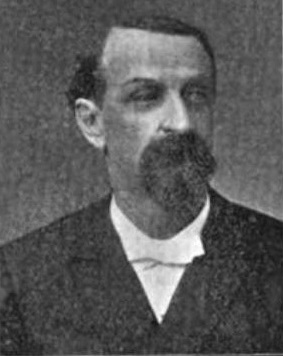
Historical · U.S. House · Iowa · District 4
Thomas Updegraff
Former U.S. Representative · Iowa District 4 · 1879–1899 · Republican
Thomas Updegraff represented Iowa's District 4 in the United States House of Representatives (1879–1899) for the Republican party. The page below collects sourced biographical facts, term history, committee roles, and provenance for Updegraff.
Bioguide ID: U000019
Key facts
- Full name
- Thomas Updegraff
- State
- Iowa
- District
- District 4
- Party
- Republican
- House service
- 1879–1899
- First House term
- 1879
- Status
- Left office
- Current term ends
- —
- Born
- 1834
- Bioguide ID
- U000019
- Committee assignments
- —
- Dataset version
- 1.20260606
Biographical narrative
921 words · sourced from the Wikipedia REST extract
Thomas Updegraff was an American attorney and politician who served as a Republican member of the U.S. House of Representatives for Iowa's 4th congressional district. His political career spanned two non-consecutive periods, during which he represented the interests of his constituents in Congress. Updegraff's legacy includes his involvement in state and national politics, as well as his contributions to local governance in Iowa.
Early life and career
Thomas Updegraff was born on April 3, 1834, in Tioga County, Pennsylvania, into a family with deep historical roots in America. He was the son of William Updegraff and Rachel Smith, and his lineage can be traced back to notable figures in early American history, including his great-grandfather, Abraham Updegraff, who served in the Pennsylvania Militia. The Updegraff family had connections to significant movements in American history, such as the Underground Railroad, through Thomas Updegraff, Sr., who was an agent for the station.
Updegraff's educational journey began at the University of Notre Dame, where he pursued higher education before relocating to Iowa. His early career included serving as the clerk of the district court in Clayton County, Iowa, from 1856 to 1860. This position provided him with valuable experience in the legal system, which he later built upon after studying law. He was admitted to the bar in 1860 and began practicing law in McGregor, Iowa, establishing himself as a legal professional in the community.
In 1858, Updegraff married Laura A. Platt from Huron County, Ohio. Their marriage, however, was short-lived as Laura passed away in 1865. He later married Florence Haight, with whom he had two daughters, Elizabeth and Rachel. His family life, marked by both joy and loss, played a significant role in shaping his character and values, which he carried into his public service.
House tenure
Updegraff’s political career began in earnest in 1878 when he was elected to the Iowa House of Representatives. His entry into state politics laid the groundwork for his subsequent election to the U.S. House of Representatives. In November of that same year, he won a seat in Congress, representing Iowa's 3rd congressional district, which encompassed seven counties in the northeastern part of the state. His first term in the House began on March 4, 1879.
During his initial term, Updegraff was re-elected in 1880, securing a second consecutive term. However, the political landscape changed when the Iowa General Assembly reconfigured congressional districts to accommodate a growing population, resulting in the establishment of a new 4th congressional district. Updegraff sought the Republican Party nomination for this newly drawn district in 1882 but faced defeat in the general election against Luman Hamlin Weller of the Greenback Party. This loss marked a temporary setback in his congressional career.
Following his departure from Congress, Updegraff remained active in local governance. He served on the McGregor Board of Education and held the position of city solicitor, demonstrating his commitment to public service at the local level. His involvement in the community continued to shape his political identity and influence his future endeavors.
After a decade away from Congress, Updegraff made a return to national politics in 1892 when he ran for the 4th congressional district seat once again. This time, he successfully secured both the Republican nomination and the general election, defeating the incumbent Democrat, Walter Halben Butler. Updegraff's return to Congress marked the beginning of a new chapter in his political career, during which he was re-elected for two additional terms. His tenure in the House continued until March 3, 1899, when he concluded his service.
Despite his earlier successes, Updegraff faced challenges in the political arena. In 1898, he sought the Republican nomination for a subsequent term but was defeated by Gilbert N. Haugen, who would go on to serve an extended period in Congress. This loss marked the end of Updegraff's congressional career, but he remained a respected figure in Iowa politics.
Legislative focus and committees
Throughout his time in Congress, Updegraff's legislative focus reflected the interests and needs of his constituents in Iowa. As a member of the Republican Party, he aligned himself with the party's principles and priorities, advocating for policies that he believed would benefit his district and the nation. His legislative agenda was likely influenced by the economic and social issues of the time, including agriculture, infrastructure, and education, which were critical to the constituents he represented.
While specific details about the bills he sponsored or the committees he served on are not provided, it is common for members of Congress to engage in various committees that align with their interests and the needs of their districts. These committees typically address a range of issues, including finance, agriculture, and education, among others. Updegraff's legal background may have also informed his contributions to legislative discussions and debates, as he would have been well-versed in the intricacies of law and governance.
In addition to his legislative work, Updegraff's participation in the 1888 Republican National Convention as a delegate underscores his active engagement in party politics and his commitment to the Republican platform. This involvement likely provided him with further opportunities to influence policy and connect with other party leaders.
After concluding his congressional service, Updegraff returned to McGregor, where he resumed his legal practice. His contributions to both local and national politics left a lasting impact on his community and the state of Iowa. He passed away on October 4, 1910, in McGregor and was interred in Pleasant Grove Cemetery, leaving behind a legacy of public service and commitment to his constituents.
Notable legislation
Sponsored and co-sponsored legislation for Thomas Updegraff is pending operator curation. The biographical narrative above carries the same provenance trail until per-bill rows are written.
Sources
- [1]https://en.wikipedia.org/wiki/Thomas_UpdegraffWikipedia · retrieved 2026-06-06
Notable quotes
Sourced quotes for Thomas Updegraff are pending operator curation. Narrative-scope provenance remains attached below.
Sources
- [1]https://en.wikipedia.org/wiki/Thomas_UpdegraffWikipedia · retrieved 2026-06-06
Key positions
Curated policy positions for Thomas Updegraff are pending operator review. The biographical narrative above carries the same provenance trail until per-topic positions are written.
Sources
- [1]https://en.wikipedia.org/wiki/Thomas_UpdegraffWikipedia · retrieved 2026-06-06
Terms served
- 1879–1881U.S. House · Term 1 · Republican
- 1881–1883U.S. House · Term 2 · Republican
- 1893–1895U.S. House · Term 3 · Republican
- 1895–1897U.S. House · Term 4 · Republican
- 1897–1899U.S. House · Term 5 · Republican
Sources & provenance
Every attributable claim above carries a per-section [N] marker that resolves to the corresponding URL below. Each entry records the upstream provider, the canonical URL, and the timestamp at which the source was retrieved by the ingest pipeline.
Key facts
- https://bioguide.congress.gov/search/bio/U000019bioguide · retrieved 2026-06-06
- https://www.govtrack.us/congress/members/411042govtrack · retrieved 2026-06-06
Biographical narrative
- https://en.wikipedia.org/wiki/Thomas_Updegraffwikipedia · retrieved 2026-06-06
Find your representative
Every U.S. state elects representatives by district. Browse Iowa’s delegation, the full former-representative roster, or explore the role and term length.
Related on The Candidate
- Preceded by Henry PrattEarlier holder of the Iowa District 4 House seat · Republican.Open
- Succeeded by Gilbert HaugenLater holder of the Iowa District 4 House seat · Republican.Open
- Abby FinkenauerFormer U.S. Representative · Iowa District 1 · DemocraticOpen
- Augustus HallFormer U.S. Representative · Iowa District 1 · DemocraticOpen
- Benton HallFormer U.S. Representative · Iowa District 1 · DemocraticOpen
- Bernhart HennFormer U.S. Representative · Iowa District 1 · DemocraticOpen