
Historical · U.S. House · Illinois · District 1
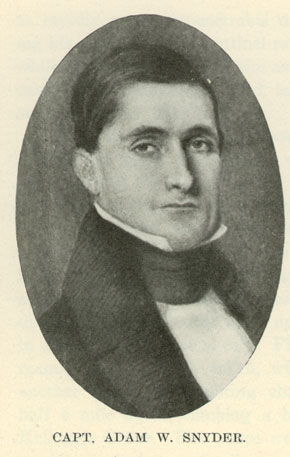
Adam Snyder
Former U.S. Representative · Illinois District 1 · 1837–1839 · Democratic
Adam Snyder represented Illinois's District 1 in the United States House of Representatives (1837–1839) for the Democratic party. The page below collects sourced biographical facts, term history, committee roles, and provenance for Snyder.
Bioguide ID: S000664
Key facts
- Full name
- Adam Snyder
- State
- Illinois
- District
- District 1
- Party
- Democratic
- House service
- 1837–1839
- First House term
- 1837
- Status
- Left office
- Current term ends
- —
- Born
- 1799
- Bioguide ID
- S000664
- Committee assignments
- —
- Dataset version
- 1.20260606
Biographical narrative
965 words · sourced from the Wikipedia REST extract
Adam Snyder was a U.S. Representative from Illinois, serving in the 25th Congress as a member of the Democratic Party. His political career was marked by his involvement in state and national politics during a formative period in American history. Snyder's tenure in the House of Representatives lasted from 1837 until 1839, and he was also known for his military service during the Black Hawk War. His life and career reflect the complexities of early 19th-century American governance and the evolving political landscape of the time.
Early life and career
Adam W. Snyder was born on October 6, 1799, in Connellsville, Pennsylvania. Growing up in a region that was experiencing significant changes due to westward expansion and the burgeoning American frontier, Snyder's early life was shaped by the opportunities and challenges of the era. In 1817, at the age of 18, he moved to Cahokia, Illinois, a settlement that was one of the oldest in the state and served as a gateway for many settlers moving west.
Upon his arrival in Cahokia, Snyder pursued a legal education and was admitted to the bar by 1820, allowing him to begin practicing law in the area. His legal career commenced in a time when the legal profession was becoming increasingly important in the developing communities of the Midwest. In 1822, he was appointed as the prosecuting attorney for the first judicial district of Illinois, a significant position that underscored his growing influence in local governance. However, he resigned from this role in 1823, possibly to focus on other pursuits.
In the years leading up to the Black Hawk War, which took place between 1832 and 1836, Snyder engaged in agricultural activities from 1824 to 1832. This period was crucial as it not only provided him with a deeper understanding of the issues facing settlers and farmers in Illinois but also connected him to the land and the community. Agriculture was a vital part of life in early Illinois, and Snyder's involvement in this sector likely informed his later political views and decisions.
House tenure
Snyder's political career began to take shape when he was elected to the Illinois Senate in December 1830. He won a special election to fill the vacancy left by the late Risdon Moore Jr. during the 6th Illinois General Assembly. His election to the state senate marked the beginning of his formal involvement in politics, and he was subsequently reelected in 1832. During this time, Snyder's legislative activities would have included addressing the pressing concerns of his constituents, such as land rights, infrastructure, and relations with Native American tribes.
His military service during the Black Hawk War further solidified his reputation as a leader in the community. Serving as a captain in the Illinois militia, Snyder played a role in the conflict that arose from tensions between settlers and Native Americans in the region. He was notably involved in the first Battle of Kellogg's Grove, which was part of a larger series of confrontations that characterized the war. This military experience likely contributed to his political identity and may have influenced his subsequent election to the U.S. Congress.
In 1836, Snyder transitioned from state to national politics when he was elected as a Democrat to the 25th U.S. Congress. He served in the House of Representatives from March 4, 1837, until March 3, 1839. During his time in Congress, Snyder participated in the legislative process during a period marked by significant national issues, including debates over land policies, economic development, and the expansion of slavery. However, specific details regarding his legislative contributions or positions on particular issues during his congressional tenure are not extensively documented.
After completing his term in the House, Snyder chose not to seek renomination in 1838. This decision marked the end of his time in national office, but it did not signify the end of his political aspirations. He returned to state politics and was elected once again to the Illinois Senate in 1840. However, his tenure in the state legislature was short-lived, as he resigned in 1841, possibly due to personal or health-related reasons.
Legislative focus and committees
Although detailed records of Snyder's specific legislative focus and committee assignments during his time in the House of Representatives are limited, it is important to contextualize his role within the broader political environment of the late 1830s. The period was characterized by significant debates over issues such as westward expansion, economic policy, and the rights of states versus federal authority. As a member of the Democratic Party, Snyder would have aligned with the party's platform, which often emphasized agrarian interests, states' rights, and opposition to the centralization of power.
Snyder's background as a lawyer and his experience in agriculture likely informed his perspectives on legislation related to land use, property rights, and economic development. The Democratic Party during this era was also closely associated with the interests of farmers and working-class citizens, which would have resonated with Snyder's constituents in Illinois.
Following his congressional service, Snyder's political ambitions continued as he was nominated as a candidate for Governor of Illinois. However, he passed away on May 14, 1842, in Belleville, Illinois, before he could participate in the election. His death marked the end of a career that had spanned various roles in public service, from local law to state and national governance.
Adam Snyder's contributions to Illinois politics and his involvement in the early legislative processes of the United States reflect the complexities of a rapidly changing nation. His military service, legal background, and political career provide insight into the challenges and opportunities faced by early American leaders as they navigated the evolving landscape of governance in the 19th century. He was interred in Green Mount Cemetery, located near Belleville, where he had spent his later years.
Notable legislation
Sponsored and co-sponsored legislation for Adam Snyder is pending operator curation. The biographical narrative above carries the same provenance trail until per-bill rows are written.
Sources
- [1]https://en.wikipedia.org/wiki/Adam_W._SnyderWikipedia · retrieved 2026-06-06
Notable quotes
Sourced quotes for Adam Snyder are pending operator curation. Narrative-scope provenance remains attached below.
Sources
- [1]https://en.wikipedia.org/wiki/Adam_W._SnyderWikipedia · retrieved 2026-06-06
Key positions
Curated policy positions for Adam Snyder are pending operator review. The biographical narrative above carries the same provenance trail until per-topic positions are written.
Sources
- [1]https://en.wikipedia.org/wiki/Adam_W._SnyderWikipedia · retrieved 2026-06-06
Terms served
- 1837–1839U.S. House · Term 1 · Democratic
Sources & provenance
Every attributable claim above carries a per-section [N] marker that resolves to the corresponding URL below. Each entry records the upstream provider, the canonical URL, and the timestamp at which the source was retrieved by the ingest pipeline.
Key facts
- https://bioguide.congress.gov/search/bio/S000664bioguide · retrieved 2026-06-06
- https://www.govtrack.us/congress/members/410137govtrack · retrieved 2026-06-06
Biographical narrative
- https://en.wikipedia.org/wiki/Adam_W._Snyderwikipedia · retrieved 2026-06-06
Find your representative
Every U.S. state elects representatives by district. Browse Illinois’s delegation, the full former-representative roster, or explore the role and term length.
Related on The Candidate
- Preceded by Charles SladeEarlier holder of the Illinois District 1 House seat · Jackson.Open
- Succeeded by John WentworthLater holder of the Illinois District 1 House seat · Republican.Open
- Abner TaylorFormer U.S. Representative · Illinois District 1 · RepublicanOpen
- Arthur MitchellFormer U.S. Representative · Illinois District 1 · DemocraticOpen
- Bennett StewartFormer U.S. Representative · Illinois District 1 · DemocraticOpen
- Bernard CaulfieldFormer U.S. Representative · Illinois District 1 · DemocraticOpen