
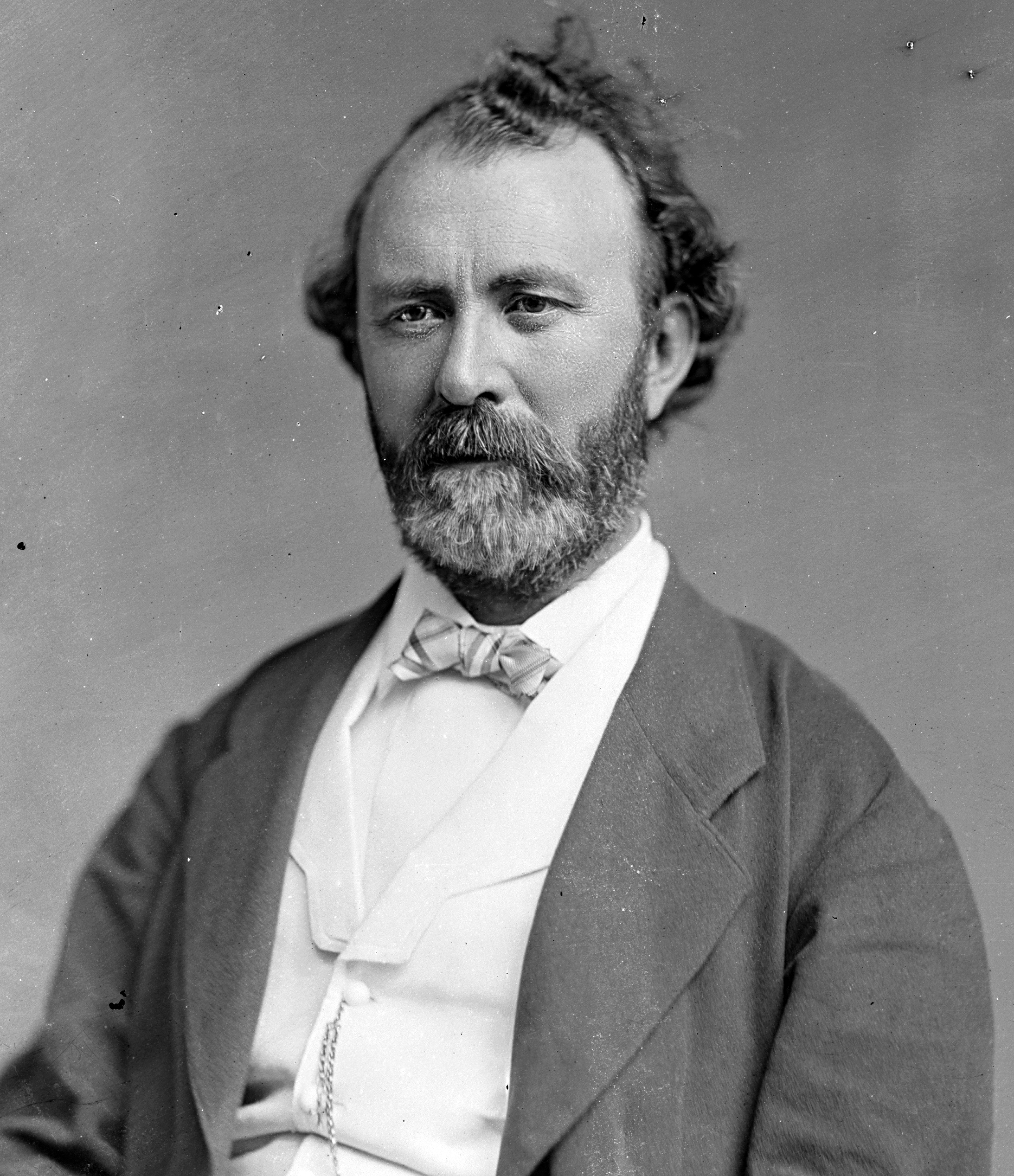
Historical · U.S. House · Illinois · District 1
Bernard Caulfield
Former U.S. Representative · Illinois District 1 · 1873–1877 · Democratic
Bernard Caulfield represented Illinois's District 1 in the United States House of Representatives (1873–1877) for the Democratic party. The page below collects sourced biographical facts, term history, committee roles, and provenance for Caulfield.
Bioguide ID: C000255
Key facts
- Full name
- Bernard Caulfield
- State
- Illinois
- District
- District 1
- Party
- Democratic
- House service
- 1873–1877
- First House term
- 1873
- Status
- Left office
- Current term ends
- —
- Born
- 1828
- Bioguide ID
- C000255
- Committee assignments
- —
- Dataset version
- 1.20260606
Biographical narrative
904 words · sourced from the Wikipedia REST extract
Bernard Caulfield was a U.S. Representative from Illinois, serving in the House of Representatives during the mid-1870s. A member of the Democratic Party, Caulfield's political career was marked by his election to two congressional terms, during which he participated in significant legislative activities and held a leadership position on a key committee. Before entering politics, he had a distinguished educational background and a successful legal career, which laid the foundation for his later public service. Following his tenure in Congress, he continued his legal practice and became a prominent landowner in the Dakota Territory.
Early life and career
Bernard Caulfield was born on October 18, 1828, in Alexandria, Virginia. His early education was classical in nature, reflecting the educational standards of the time, which emphasized a broad curriculum that included the study of languages, philosophy, and the arts. Caulfield pursued higher education at Georgetown College in Washington, D.C., where he graduated in 1848. Following this, he attended the University of Pennsylvania Law School in Philadelphia, completing his legal education in 1850. Upon graduating, he was admitted to the bar the same year, marking the beginning of his professional career in law.
Caulfield initially practiced law in Lexington, Kentucky, where he began to establish his reputation in the legal community. In 1853, he relocated to Chicago, Illinois, a move that would prove significant for his career and political aspirations. In Chicago, he continued to practice law, and his involvement in the legal field allowed him to build a network of connections that would later support his entry into politics. The city was rapidly growing during this period, and Caulfield's legal expertise would serve him well as he navigated the complexities of urban governance and public service.
House tenure
Bernard Caulfield's political career began in earnest when he was elected as a Democrat to the U.S. House of Representatives in 1874. He succeeded John B. Rice, who had chosen not to seek reelection. Caulfield's election came during a time of significant political and social change in the United States, particularly in the wake of the Civil War and the Reconstruction era. His first term in the House began in 1873, and he quickly became involved in the legislative process.
In addition to his regular term, Caulfield also won a special election to complete the term of his predecessor, John B. Rice, following Rice's death shortly after the general election. This special election allowed Caulfield to serve in the Forty-third Congress from February 1, 1875, until March 3, 1877. During his time in the House, he was appointed as the chairman of the Committee on Expenditures in the Department of Justice during the Forty-fourth Congress. This position placed him in a crucial role overseeing the financial aspects of the Department of Justice, which was particularly important given the ongoing challenges related to law enforcement and civil rights during the Reconstruction era.
Caulfield's legislative work was characterized by his focus on issues pertinent to his constituents and the broader national landscape. However, he did not seek renomination in 1876, concluding his congressional career after serving two terms. His decision not to run again may have been influenced by various factors, including the political climate of the time and his personal aspirations.
Legislative focus and committees
During his tenure in the House of Representatives, Bernard Caulfield was involved in various legislative matters that reflected the priorities of the Democratic Party and the interests of his constituents in Illinois. As chairman of the Committee on Expenditures in the Department of Justice, he played a significant role in overseeing the financial operations of the department, which was crucial during a period marked by significant legal and social challenges. The committee's work involved scrutinizing expenditures and ensuring accountability within the department, which was essential for maintaining public trust in government institutions.
Caulfield's legislative focus likely included issues related to justice and legal reform, given his background as a practicing attorney. The post-Civil War era was a time of considerable change in the United States, with ongoing debates about civil rights, the role of the federal government in enforcing laws, and the protection of individual liberties. As a member of Congress, Caulfield would have had the opportunity to engage in discussions and debates surrounding these critical issues, contributing to the shaping of policies that affected the lives of many Americans.
After his congressional service, Caulfield returned to the practice of law, continuing to apply his legal expertise in a different context. In 1878, he moved to the Dakota Territory, where he settled in Deadwood. This move marked a new chapter in his life, as he transitioned from public service back to private practice. In Deadwood, he not only resumed his legal career but also became a significant landowner, indicating his successful adaptation to the opportunities available in the rapidly developing territory.
Bernard Caulfield passed away on December 19, 1887, in Deadwood, South Dakota. His contributions to American politics during his time in the House of Representatives and his subsequent legal career reflect a life dedicated to public service and the practice of law. He was interred in Calvary Cemetery in St. Louis, Missouri, leaving behind a legacy tied to the political and legal developments of his time. His career illustrates the interconnectedness of law and politics in the 19th century and the role of individuals in shaping the governance of the United States during a transformative period in its history.
Notable legislation
Sponsored and co-sponsored legislation for Bernard Caulfield is pending operator curation. The biographical narrative above carries the same provenance trail until per-bill rows are written.
Sources
- [1]https://en.wikipedia.org/wiki/Bernard_G._CaulfieldWikipedia · retrieved 2026-06-06
Notable quotes
Sourced quotes for Bernard Caulfield are pending operator curation. Narrative-scope provenance remains attached below.
Sources
- [1]https://en.wikipedia.org/wiki/Bernard_G._CaulfieldWikipedia · retrieved 2026-06-06
Key positions
Curated policy positions for Bernard Caulfield are pending operator review. The biographical narrative above carries the same provenance trail until per-topic positions are written.
Sources
- [1]https://en.wikipedia.org/wiki/Bernard_G._CaulfieldWikipedia · retrieved 2026-06-06
Terms served
- 1873–1875U.S. House · Term 1 · Democratic
- 1875–1877U.S. House · Term 2 · Democratic
Sources & provenance
Every attributable claim above carries a per-section [N] marker that resolves to the corresponding URL below. Each entry records the upstream provider, the canonical URL, and the timestamp at which the source was retrieved by the ingest pipeline.
Key facts
- https://bioguide.congress.gov/search/bio/C000255bioguide · retrieved 2026-06-06
- https://www.govtrack.us/congress/members/402399govtrack · retrieved 2026-06-06
Biographical narrative
- https://en.wikipedia.org/wiki/Bernard_G._Caulfieldwikipedia · retrieved 2026-06-06
Find your representative
Every U.S. state elects representatives by district. Browse Illinois’s delegation, the full former-representative roster, or explore the role and term length.
Related on The Candidate
- Preceded by Norman JuddEarlier holder of the Illinois District 1 House seat · Republican.Open
- Succeeded by William AldrichLater holder of the Illinois District 1 House seat · Republican.Open
- Abner TaylorFormer U.S. Representative · Illinois District 1 · RepublicanOpen
- Adam SnyderFormer U.S. Representative · Illinois District 1 · DemocraticOpen
- Arthur MitchellFormer U.S. Representative · Illinois District 1 · DemocraticOpen
- Bennett StewartFormer U.S. Representative · Illinois District 1 · DemocraticOpen