
Historical · U.S. House · Illinois · District 1
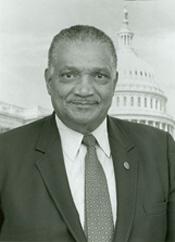
Charles Hayes
Former U.S. Representative · Illinois District 1 · 1983–1993 · Democratic
Charles Hayes represented Illinois's District 1 in the United States House of Representatives (1983–1993) for the Democratic party. The page below collects sourced biographical facts, term history, committee roles, and provenance for Hayes.
Bioguide ID: H000388
Key facts
- Full name
- Charles Hayes
- State
- Illinois
- District
- District 1
- Party
- Democratic
- House service
- 1983–1993
- First House term
- 1983
- Status
- Left office
- Current term ends
- —
- Born
- 1918
- Bioguide ID
- H000388
- Committee assignments
- —
- Dataset version
- 1.20260605
Biographical narrative
838 words · sourced from the Wikipedia REST extract
Charles A. Hayes was an American politician who served as a U.S. Representative for Illinois's 1st congressional district from 1983 until 1993. A member of the Democratic Party, Hayes was known for his extensive background in labor activism and civil rights, which informed his legislative priorities during his time in Congress. His career was marked by significant involvement in trade unions and civil rights organizations, reflecting a commitment to social justice and educational reform.
Early life and career
Charles Arthur Hayes was born on February 17, 1918, in Cairo, Illinois. He completed his secondary education at Sumner High School in Cairo, graduating in 1935. Following his education, Hayes embarked on a career as a trade unionist, a role he would maintain for 45 years, becoming a prominent figure in labor movements. His work in labor organizations included serving as the vice president of the United Food and Commercial Workers Union, where he advocated for workers' rights and fair labor practices.
Hayes relocated to Chicago, where he spent much of his adult life. His commitment to civil rights became evident in the 1950s when he actively participated in fundraising efforts for Martin Luther King Jr.'s voter registration drives in the Southern United States. This involvement positioned him as a key figure in the civil rights movement, and he worked closely with King as a member of the Southern Christian Leadership Conference during the 1960s. Hayes's dedication to social justice extended beyond civil rights; he was also a significant labor leader who participated in anti-apartheid protests in the 1980s, advocating for the release of Nelson Mandela.
In addition to his activism, Hayes played a vital role in the Coalition of Black Trade Unionists (CBTU), serving as its first executive vice president until 1986. His leadership in labor and civil rights laid the groundwork for his subsequent political career.
House tenure
Hayes's political career in the U.S. House of Representatives began when he was elected as a Democrat to the 98th Congress through a special election held on August 23, 1983. This election was necessitated by the resignation of Harold Washington, who had been elected as the mayor of Chicago. Hayes's election marked the beginning of a decade-long tenure in Congress, during which he was re-elected multiple times.
Throughout his five terms in office, Hayes was known for his focus on education and labor issues. He served on the Committee on Education and Labor, as well as the Small Business Committee. His legislative efforts were particularly concentrated on initiatives aimed at encouraging school dropouts to return to education and complete their studies. This focus reflected his belief in the importance of education as a means to empower individuals and improve communities.
Despite his contributions, Hayes faced challenges during his political career. In 1992, he sought renomination for the 103rd Congress but was defeated in the Democratic primary by Bobby Rush. This loss was partly attributed to the House banking scandal, which affected several incumbents and contributed to a shift in voter sentiment.
Legislative focus and committees
During his time in the House of Representatives, Charles Hayes was actively involved in various legislative initiatives, particularly those related to education and labor. His work on the Committee on Education and Labor allowed him to advocate for policies that supported educational access and completion, especially for marginalized communities. Hayes's commitment to education was evident in his efforts to create programs and legislation designed to assist individuals who had left school prematurely, encouraging them to re-engage with their education.
In addition to his focus on education, Hayes's role on the Small Business Committee enabled him to address issues affecting small businesses, which are vital to the economy and job creation. His background in labor and trade unions informed his perspective on the challenges faced by small business owners and workers alike.
Hayes was also a founding member of the Rainbow/PUSH Coalition, an organization established to promote social justice and economic empowerment, alongside civil rights leader Jesse Jackson. This affiliation further underscored his commitment to advocating for the rights of African Americans and other marginalized groups.
Throughout his congressional career, Hayes's legislative priorities were shaped by his extensive experience in labor activism and civil rights. His dedication to education reform and support for small businesses reflected a broader vision of social equity and economic opportunity for all Americans.
After leaving Congress, Hayes continued to be recognized for his contributions to civil rights and labor movements. He passed away on April 8, 1997, at the age of 79 due to complications from lung cancer. His funeral was attended by notable figures, including then-Congressman Jesse Jackson Jr., who spoke in remembrance of Hayes's impact on the community and his legacy in both labor and civil rights advocacy.
Charles A. Hayes's life and career exemplify the intersection of labor rights, civil rights, and public service, marking him as a significant figure in American political history. His efforts to improve education and advocate for workers' rights continue to resonate in discussions about social justice and equity today.
Notable legislation
Sponsored and co-sponsored legislation for Charles Hayes is pending operator curation. The biographical narrative above carries the same provenance trail until per-bill rows are written.
Sources
- [1]https://en.wikipedia.org/wiki/Charles_Hayes_(politician)Wikipedia · retrieved 2026-06-05
Notable quotes
Sourced quotes for Charles Hayes are pending operator curation. Narrative-scope provenance remains attached below.
Sources
- [1]https://en.wikipedia.org/wiki/Charles_Hayes_(politician)Wikipedia · retrieved 2026-06-05
Key positions
Curated policy positions for Charles Hayes are pending operator review. The biographical narrative above carries the same provenance trail until per-topic positions are written.
Sources
- [1]https://en.wikipedia.org/wiki/Charles_Hayes_(politician)Wikipedia · retrieved 2026-06-05
Terms served
- 1983–1985U.S. House · Term 1 · Democratic
- 1985–1987U.S. House · Term 2 · Democratic
- 1987–1989U.S. House · Term 3 · Democratic
- 1989–1991U.S. House · Term 4 · Democratic
- 1991–1993U.S. House · Term 5 · Democratic
Sources & provenance
Every attributable claim above carries a per-section [N] marker that resolves to the corresponding URL below. Each entry records the upstream provider, the canonical URL, and the timestamp at which the source was retrieved by the ingest pipeline.
Key facts
- https://bioguide.congress.gov/search/bio/H000388bioguide · retrieved 2026-06-05
- https://www.govtrack.us/congress/members/405256govtrack · retrieved 2026-06-05
Biographical narrative
- https://en.wikipedia.org/wiki/Charles_Hayes_(politician)wikipedia · retrieved 2026-06-05
Find your representative
Every U.S. state elects representatives by district. Browse Illinois’s delegation, the full former-representative roster, or explore the role and term length.
Related on The Candidate
- Preceded by Bennett StewartEarlier holder of the Illinois District 1 House seat · Democratic.Open
- Succeeded by Bobby RushLater holder of the Illinois District 1 House seat · Democratic.Open
- Abner TaylorFormer U.S. Representative · Illinois District 1 · RepublicanOpen
- Adam SnyderFormer U.S. Representative · Illinois District 1 · DemocraticOpen
- Arthur MitchellFormer U.S. Representative · Illinois District 1 · DemocraticOpen
- Democratic PartyFederal candidates and office holders on the Democratic line.Open