
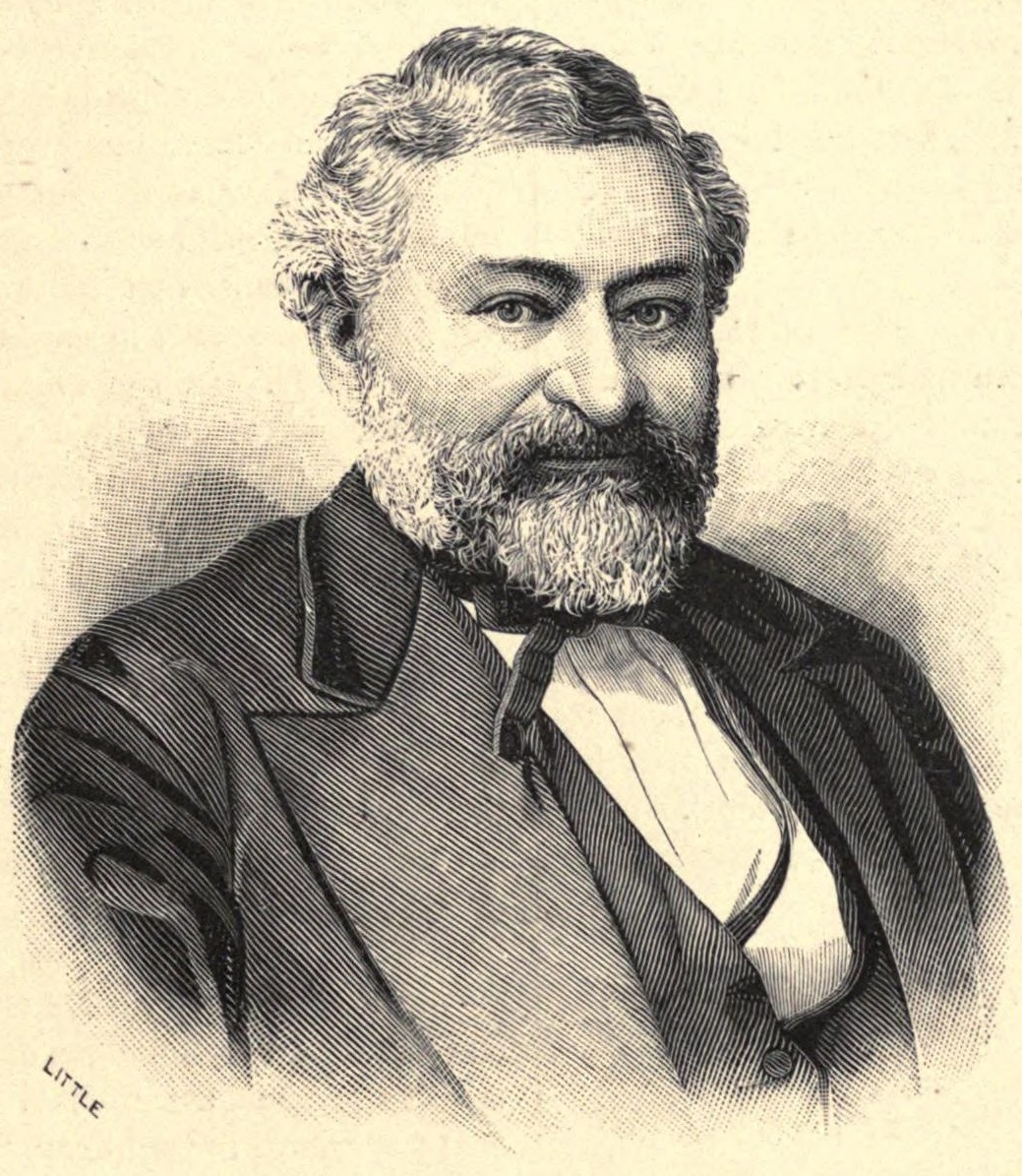
Historical · U.S. House · Illinois · District 10
William Ray
Former U.S. Representative · Illinois District 10 · 1873–1875 · Republican
William Ray represented Illinois's District 10 in the United States House of Representatives (1873–1875) for the Republican party. The page below collects sourced biographical facts, term history, committee roles, and provenance for Ray.
Bioguide ID: R000081
Key facts
- Full name
- William Ray
- State
- Illinois
- District
- District 10
- Party
- Republican
- House service
- 1873–1875
- First House term
- 1873
- Status
- Left office
- Current term ends
- —
- Born
- 1812
- Bioguide ID
- R000081
- Committee assignments
- —
- Dataset version
- 1.20260606
Biographical narrative
851 words · sourced from the Wikipedia REST extract
William Ray was an American politician who served as a U.S. Representative for Illinois's 10th congressional district during the early 1870s. A member of the Republican Party, Ray's congressional career was marked by a single term in the Forty-third Congress, which spanned from March 4, 1873, to March 3, 1875. His life before and after his time in Congress was characterized by his involvement in local business and banking, as well as his connections to notable figures in American history.
Early life and career
William Ray was born on December 14, 1812, in Amenia, New York. His family relocated to Oneida County, New York, when he was just a year old, settling in the city of Utica. Growing up in a region that was experiencing significant growth and development during the early 19th century, Ray attended local common schools, where he received a basic education that would serve him throughout his life.
In 1834, seeking new opportunities, Ray moved to Rushville, Illinois. This move was part of a larger trend during the period, as many individuals sought to establish themselves in the burgeoning Midwest. In Rushville, Ray engaged in mercantile activities, which involved buying and selling goods, and he also developed an interest in banking. His entrepreneurial spirit and business acumen allowed him to become a notable figure in the local economy.
In 1849, Ray purchased a home located at 417 West Washington Street in Rushville. This residence would later gain historical significance, as it became a site of personal connection to Abraham Lincoln. In October 1858, Ray hosted Lincoln for an overnight stay prior to a public address that Lincoln was scheduled to deliver in Rushville. The home is now recognized as the Ray House and is owned by the Schuyler County Architecture Foundation. Efforts have been made to restore the house, which was added to the list of the 12 most endangered historic places in Illinois in May 2019.
Ray's involvement in local governance extended beyond his business pursuits. He served on the first State Board of Equalization from 1867 to 1869, a role that involved overseeing the assessment of property values for taxation purposes in Illinois. This position allowed him to influence fiscal policies at the state level and demonstrated his commitment to public service.
House tenure
William Ray's political career culminated in his election to the United States House of Representatives as a member of the Republican Party. He was elected to the Forty-third Congress, which began its session on March 4, 1873. During his time in office, Ray represented Illinois's 10th congressional district, a position that required him to address the needs and concerns of his constituents while navigating the complexities of national legislation.
Ray's congressional term lasted until March 3, 1875, marking a brief but significant period in his life. The political landscape of the time was characterized by the aftermath of the Civil War and the ongoing challenges of Reconstruction. As a Republican, Ray was part of a party that was focused on issues such as civil rights, economic development, and the integration of formerly Confederate states into the Union. However, specific details regarding his legislative activities, including the bills he supported or opposed, are not documented in the available records.
After completing his term in Congress, Ray returned to Rushville, where he resumed his previous business endeavors. His decision to return to local commerce reflects a common trajectory for many politicians of the era, who often balanced public service with private enterprise. Ray's post-congressional life was marked by a continued commitment to his community, where he remained a respected figure until his death.
Legislative focus and committees
While specific details about William Ray's legislative focus during his time in Congress are limited, it is important to contextualize his role within the broader framework of the Republican Party and the political climate of the early 1870s. The period was marked by significant national challenges, including economic instability and the ongoing efforts to rebuild the South after the Civil War. As a member of the Republican Party, Ray would have been aligned with the party's goals of promoting civil rights and economic growth, particularly in the context of integrating formerly enslaved individuals into society.
Ray's participation in the Forty-third Congress would have involved engaging with various committees and legislative initiatives, although the specific committees he served on are not detailed in the available records. Members of Congress during this time were often involved in committees that addressed issues such as finance, agriculture, and internal improvements, reflecting the diverse interests of their constituents.
In summary, William Ray's tenure in the U.S. House of Representatives was a part of a larger narrative of American political history during a transformative period. His background in business and local governance provided him with a unique perspective as he navigated the complexities of national legislation. After his congressional career, Ray returned to Rushville, where he continued to contribute to his community until his passing on January 25, 1881. He was interred in Rushville Cemetery, leaving behind a legacy intertwined with the historical fabric of Illinois and the nation.
Notable legislation
Sponsored and co-sponsored legislation for William Ray is pending operator curation. The biographical narrative above carries the same provenance trail until per-bill rows are written.
Sources
- [1]https://en.wikipedia.org/wiki/William_H._RayWikipedia · retrieved 2026-06-06
Notable quotes
Sourced quotes for William Ray are pending operator curation. Narrative-scope provenance remains attached below.
Sources
- [1]https://en.wikipedia.org/wiki/William_H._RayWikipedia · retrieved 2026-06-06
Key positions
Curated policy positions for William Ray are pending operator review. The biographical narrative above carries the same provenance trail until per-topic positions are written.
Sources
- [1]https://en.wikipedia.org/wiki/William_H._RayWikipedia · retrieved 2026-06-06
Terms served
- 1873–1875U.S. House · Term 1 · Republican
Sources & provenance
Every attributable claim above carries a per-section [N] marker that resolves to the corresponding URL below. Each entry records the upstream provider, the canonical URL, and the timestamp at which the source was retrieved by the ingest pipeline.
Key facts
- https://bioguide.congress.gov/search/bio/R000081bioguide · retrieved 2026-06-06
- https://www.govtrack.us/congress/members/409061govtrack · retrieved 2026-06-06
Biographical narrative
- https://en.wikipedia.org/wiki/William_H._Raywikipedia · retrieved 2026-06-06
Find your representative
Every U.S. state elects representatives by district. Browse Illinois’s delegation, the full former-representative roster, or explore the role and term length.
Related on The Candidate
- Preceded by Edward RiceEarlier holder of the Illinois District 10 House seat · Democratic.Open
- Succeeded by John BagbyLater holder of the Illinois District 10 House seat · Democratic.Open
- Abner TaylorFormer U.S. Representative · Illinois District 1 · RepublicanOpen
- Adam SnyderFormer U.S. Representative · Illinois District 1 · DemocraticOpen
- Arthur MitchellFormer U.S. Representative · Illinois District 1 · DemocraticOpen
- Bennett StewartFormer U.S. Representative · Illinois District 1 · DemocraticOpen