
Historical · U.S. House · Illinois · District 11
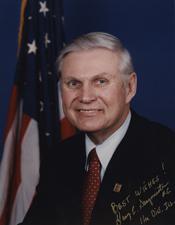
George Sangmeister
Former U.S. Representative · Illinois District 11 · 1989–1995 · Democratic
George Sangmeister represented Illinois's District 11 in the United States House of Representatives (1989–1995) for the Democratic party. The page below collects sourced biographical facts, term history, committee roles, and provenance for Sangmeister.
Bioguide ID: S000056
Key facts
- Full name
- George Sangmeister
- State
- Illinois
- District
- District 11
- Party
- Democratic
- House service
- 1989–1995
- First House term
- 1989
- Status
- Left office
- Current term ends
- —
- Born
- 1931
- Bioguide ID
- S000056
- Committee assignments
- —
- Dataset version
- 1.20260605
Biographical narrative
1,025 words · sourced from the Wikipedia REST extract
George E. Sangmeister was an American politician who served as a U.S. Representative for Illinois, representing the 11th congressional district from 1989 until 1995. A member of the Democratic Party, he had a diverse career that included roles in law, local government, and state politics before his election to Congress. Sangmeister's tenure in the House was marked by his engagement in various legislative issues, reflecting the interests and needs of his constituents in a changing political landscape.
Early life and career
George Edward Sangmeister was born on February 16, 1931, in Frankfort, Illinois. His early life was characterized by a commitment to education and public service. After completing his secondary education, Sangmeister attended Joliet Junior College, where he began to lay the groundwork for his future career. His academic pursuits were temporarily interrupted when he enlisted in the United States Army, serving as a sergeant during the Korean War. This experience in the military not only shaped his character but also instilled in him a sense of duty to his country and community.
Upon returning from military service, Sangmeister continued his education at Elmhurst College, where he further developed his academic credentials. He later attended the John Marshall Law School in Chicago, earning a law degree that would enable him to embark on a career in legal practice. After several years in private law practice, he transitioned into public service, becoming a magistrate for Will County, Illinois, in 1961. This role allowed him to gain valuable experience in the judicial system and to understand the intricacies of local governance.
In 1964, Sangmeister was elected as the Will County State's Attorney, a position that made him the chief prosecutor and legal advisor for the county. His work in this role further solidified his reputation as a dedicated public servant and a capable legal professional. His commitment to justice and community service laid the foundation for his subsequent political career.
Sangmeister's entry into state politics began in 1972 when he was elected to the Illinois House of Representatives as a Democrat. His tenure in the state legislature allowed him to develop a deeper understanding of the political process and to advocate for the interests of his constituents. In 1976, he successfully ran for the Illinois Senate, defeating the Republican incumbent James F. Bell to represent the 42nd district. During his time in the Senate, Sangmeister emerged as a prominent Democratic leader, influencing legislation and shaping policy in Illinois.
In 1986, Sangmeister sought the Democratic nomination for lieutenant governor during the Illinois gubernatorial election. He was endorsed by the presumptive Democratic nominee, Adlai Stevenson III, to serve as his running mate. However, Sangmeister faced a challenging primary and ultimately lost to Mark Fairchild, a candidate associated with the LaRouche movement. Following this defeat, he chose not to join Stevenson on the newly formed Solidarity Party, which was created in response to the political landscape at the time. Stevenson later selected Michael J. Howlett Jr., a former Cook County judge, as his new running mate. The election concluded with the incumbent Republican candidates, James R. Thompson and George Ryan, defeating Stevenson and Howlett.
House tenure
In 1988, George Sangmeister was elected to the U.S. House of Representatives, representing a district that had previously been marginally Republican. His election marked a significant achievement in his political career, as he transitioned from state to federal office. Sangmeister's first term in the House began in January 1989, and he quickly became involved in various legislative matters that affected his constituents and the broader national landscape.
During his time in Congress, Sangmeister served three terms, during which he focused on a range of issues pertinent to his district and the nation. His tenure was characterized by a commitment to addressing the needs of his constituents, as well as engaging in the legislative process to advocate for policies that aligned with Democratic values. Sangmeister's experience in state politics provided him with a solid foundation for navigating the complexities of federal legislation and working with colleagues across party lines.
Despite his dedication to public service, Sangmeister faced challenges during his time in Congress. After three terms, he decided not to seek re-election in 1994, citing frustration with the national political climate. His decision reflected a broader sentiment among some politicians who felt disillusioned with the partisanship and gridlock that characterized Congress during the early 1990s. Following his departure from the House, Sangmeister's seat was contested by Jerry Weller, a Republican state legislator, who ultimately won the election against fellow Democrat Frank Giglio.
Legislative focus and committees
Throughout his congressional career, George Sangmeister was involved in various legislative initiatives and served on several committees that aligned with his interests and expertise. His background in law and local government informed his approach to policy-making, particularly in areas related to justice, public safety, and community development. Sangmeister's commitment to his constituents was evident in his efforts to address issues that directly impacted their lives.
While specific details regarding the bills he sponsored or supported are not provided, it is known that Sangmeister's legislative focus included a range of topics relevant to the needs of his district. His experience as a state legislator and state attorney likely influenced his priorities in Congress, as he sought to advocate for policies that would benefit his constituents and improve their quality of life.
Sangmeister's work on committees allowed him to collaborate with colleagues from both parties and to engage in discussions that shaped national policy. His ability to navigate the complexities of the legislative process was essential in addressing the challenges facing his district and the nation as a whole. His tenure in Congress was marked by a dedication to public service and a commitment to representing the interests of the people of Illinois.
After leaving Congress, Sangmeister returned to private law practice, where he continued to contribute to his community through legal work. He passed away on October 7, 2007, at the age of 76, after a battle with leukemia. His contributions to public service and the legal profession were recognized by those who knew him, and he was interred at Abraham Lincoln National Cemetery in Elwood, Illinois.
Notable legislation
Sponsored and co-sponsored legislation for George Sangmeister is pending operator curation. The biographical narrative above carries the same provenance trail until per-bill rows are written.
Sources
- [1]https://en.wikipedia.org/wiki/George_SangmeisterWikipedia · retrieved 2026-06-05
Notable quotes
Sourced quotes for George Sangmeister are pending operator curation. Narrative-scope provenance remains attached below.
Sources
- [1]https://en.wikipedia.org/wiki/George_SangmeisterWikipedia · retrieved 2026-06-05
Key positions
Curated policy positions for George Sangmeister are pending operator review. The biographical narrative above carries the same provenance trail until per-topic positions are written.
Sources
- [1]https://en.wikipedia.org/wiki/George_SangmeisterWikipedia · retrieved 2026-06-05
Terms served
- 1989–1991U.S. House · Term 1 · Democratic
- 1991–1993U.S. House · Term 2 · Democratic
- 1993–1995U.S. House · Term 3 · Democratic
Sources & provenance
Every attributable claim above carries a per-section [N] marker that resolves to the corresponding URL below. Each entry records the upstream provider, the canonical URL, and the timestamp at which the source was retrieved by the ingest pipeline.
Key facts
- https://bioguide.congress.gov/search/bio/S000056bioguide · retrieved 2026-06-05
- https://www.govtrack.us/congress/members/409570govtrack · retrieved 2026-06-05
Biographical narrative
- https://en.wikipedia.org/wiki/George_Sangmeisterwikipedia · retrieved 2026-06-05
Find your representative
Every U.S. state elects representatives by district. Browse Illinois’s delegation, the full former-representative roster, or explore the role and term length.
Related on The Candidate
- Preceded by Roman PucinskiEarlier holder of the Illinois District 11 House seat · Democratic.Open
- Succeeded by Jerry WellerLater holder of the Illinois District 11 House seat · Republican.Open
- Abner TaylorFormer U.S. Representative · Illinois District 1 · RepublicanOpen
- Adam SnyderFormer U.S. Representative · Illinois District 1 · DemocraticOpen
- Arthur MitchellFormer U.S. Representative · Illinois District 1 · DemocraticOpen
- Bennett StewartFormer U.S. Representative · Illinois District 1 · DemocraticOpen