
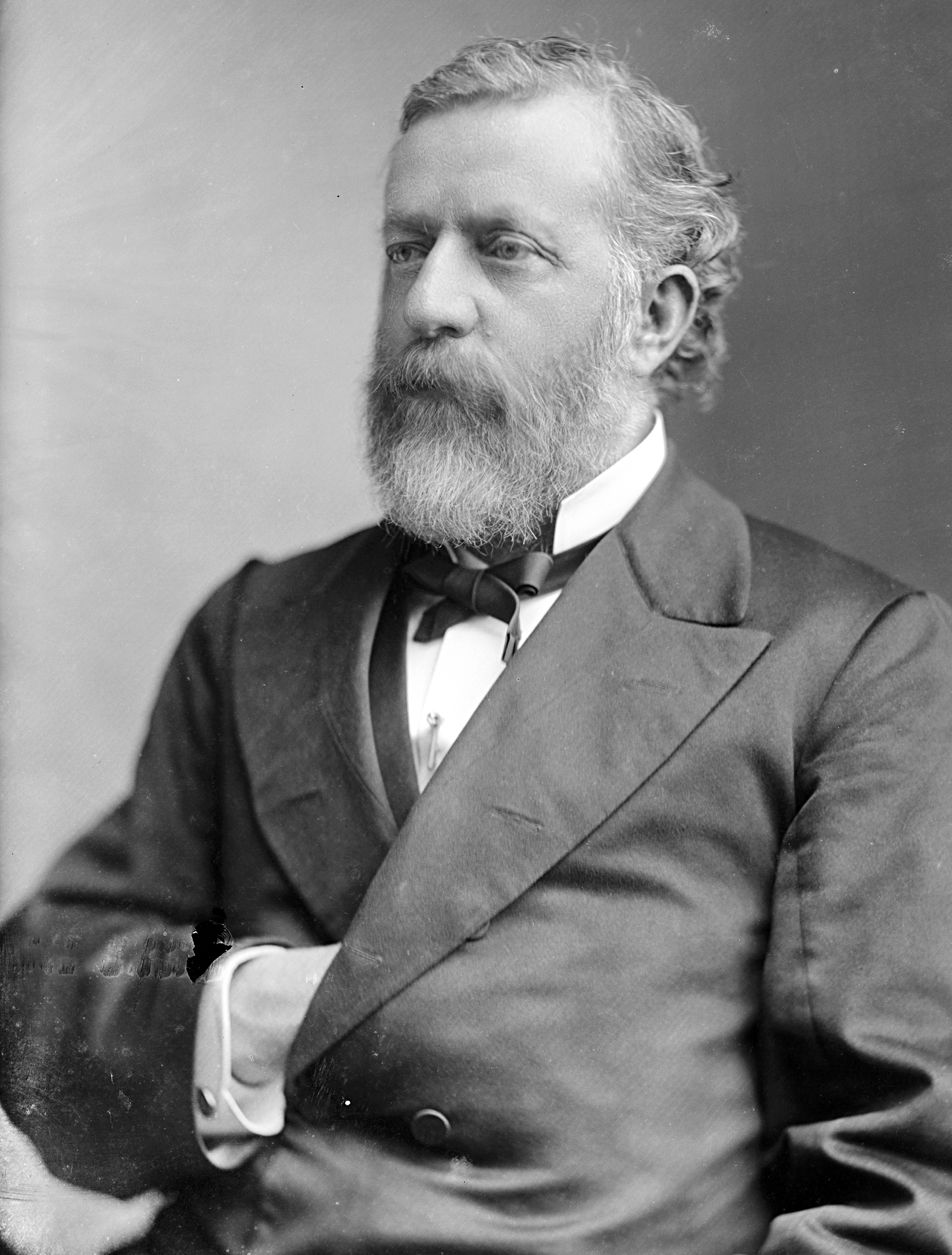
Historical · U.S. House · Illinois · District 11
Robert Knapp
Former U.S. Representative · Illinois District 11 · 1873–1879 · Democratic
Robert Knapp represented Illinois's District 11 in the United States House of Representatives (1873–1879) for the Democratic party. The page below collects sourced biographical facts, term history, committee roles, and provenance for Knapp.
Bioguide ID: K000281
Key facts
- Full name
- Robert Knapp
- State
- Illinois
- District
- District 11
- Party
- Democratic
- House service
- 1873–1879
- First House term
- 1873
- Status
- Left office
- Current term ends
- —
- Born
- 1831
- Bioguide ID
- K000281
- Committee assignments
- —
- Dataset version
- 1.20260606
Biographical narrative
889 words · sourced from the Wikipedia REST extract
Robert Knapp was a prominent political figure in the late 19th century, serving as a U.S. Representative from Illinois. A member of the Democratic Party, Knapp represented Illinois's 11th congressional district during two non-consecutive terms in the U.S. House of Representatives. His political career spanned several years, during which he engaged in various roles at both the local and state levels. Knapp's contributions to public service were marked by his involvement in legislative matters and his commitment to his constituents in Jerseyville, Illinois, where he spent much of his life.
Early life and career
Robert Knapp was born on April 21, 1831, in New York City. His family relocated to Jerseyville, Illinois, in 1839 when he was just eight years old. This move to the Midwest would shape much of his future, as he grew up in a community that would later become the center of his political career. Knapp received his early education in the common schools of Jerseyville, which provided him with a foundational understanding of reading, writing, and arithmetic. He later attended the Kentucky Military Institute located in Frankfort, Kentucky, where he likely received a more structured and disciplined education.
Following his academic pursuits, Knapp turned his attention to the field of law. He studied diligently and was admitted to the bar in 1855, allowing him to begin his legal practice in Jerseyville. His legal career would serve as a significant backdrop to his later political endeavors. In addition to his legal work, Knapp became involved in local governance and public service. He served as a member of the Illinois House of Representatives in 1867, where he began to establish his reputation as a dedicated public servant. His commitment to his community was further demonstrated when he was elected mayor of Jerseyville, a position he held from 1871 to 1876. During his tenure as mayor, Knapp would have been responsible for overseeing local governance and addressing the needs and concerns of his constituents.
House tenure
Knapp's congressional career began when he was elected as a Democrat to the Forty-third Congress, which convened on March 4, 1873. He served in this capacity until March 3, 1875. His election to the House of Representatives marked a significant step in his political journey, allowing him to represent the interests of his district on a national stage. However, his initial term in Congress was not without challenges. Knapp sought reelection in 1874 but was unsuccessful in his bid to continue serving in the House.
Despite this setback, Knapp remained active in politics and was determined to return to public office. His efforts were rewarded when he was elected to the Forty-fifth Congress, serving from March 4, 1877, to March 3, 1879. This second term allowed him to further engage in legislative discussions and contribute to the development of policies that affected his constituents and the nation as a whole. However, like his first term, Knapp's time in the House concluded with another unsuccessful attempt at reelection in 1878.
After his congressional service, Knapp returned to his legal practice in Jerseyville. His experience in Congress and his background in law likely provided him with valuable insights into the workings of government and the legal system. He continued to be involved in his community until his death on June 24, 1889, in Jerseyville, where he was interred at Oak Grove Cemetery.
Legislative focus and committees
During his time in the U.S. House of Representatives, Robert Knapp's specific legislative focus and committee assignments are not extensively documented in the available records. However, as a member of the Democratic Party during a period of significant political and social change in the United States, it can be inferred that his legislative priorities may have aligned with the broader objectives of his party at the time. The Democratic Party in the late 19th century was often associated with agrarian interests, states' rights, and a more limited federal government, which may have influenced Knapp's approach to legislation.
His background as a lawyer and his experience in local government likely informed his perspectives on various issues, including those related to law, governance, and community welfare. Knapp's dual roles as a legal practitioner and a public servant may have provided him with a unique understanding of the challenges faced by his constituents, particularly in a rapidly changing society marked by industrialization and urbanization.
While specific legislative achievements during his terms are not detailed in the available records, Knapp's service in the House of Representatives would have involved participation in debates and discussions on a range of issues pertinent to the nation. His engagement in these legislative processes would have contributed to the shaping of policies that affected not only his district but also the broader American landscape.
In summary, Robert Knapp's career as a U.S. Representative from Illinois reflects a commitment to public service that began in his early years and continued through his involvement in local and state governance. His tenure in Congress, though marked by challenges in securing reelection, provided him with a platform to advocate for the interests of his constituents. Following his congressional service, he returned to his legal practice, continuing to contribute to his community until his passing in 1889. His legacy is one of dedication to public service and the pursuit of justice through his legal career and political endeavors.
Notable legislation
Sponsored and co-sponsored legislation for Robert Knapp is pending operator curation. The biographical narrative above carries the same provenance trail until per-bill rows are written.
Sources
- [1]https://en.wikipedia.org/wiki/Robert_M._KnappWikipedia · retrieved 2026-06-06
Notable quotes
Sourced quotes for Robert Knapp are pending operator curation. Narrative-scope provenance remains attached below.
Sources
- [1]https://en.wikipedia.org/wiki/Robert_M._KnappWikipedia · retrieved 2026-06-06
Key positions
Curated policy positions for Robert Knapp are pending operator review. The biographical narrative above carries the same provenance trail until per-topic positions are written.
Sources
- [1]https://en.wikipedia.org/wiki/Robert_M._KnappWikipedia · retrieved 2026-06-06
Terms served
- 1873–1875U.S. House · Term 1 · Democratic
- 1877–1879U.S. House · Term 2 · Democratic
Sources & provenance
Every attributable claim above carries a per-section [N] marker that resolves to the corresponding URL below. Each entry records the upstream provider, the canonical URL, and the timestamp at which the source was retrieved by the ingest pipeline.
Key facts
- https://bioguide.congress.gov/search/bio/K000281bioguide · retrieved 2026-06-06
- https://www.govtrack.us/congress/members/406438govtrack · retrieved 2026-06-06
Biographical narrative
- https://en.wikipedia.org/wiki/Robert_M._Knappwikipedia · retrieved 2026-06-06
Find your representative
Every U.S. state elects representatives by district. Browse Illinois’s delegation, the full former-representative roster, or explore the role and term length.
Related on The Candidate
- Succeeded by James SingletonLater holder of the Illinois District 11 House seat · Democratic.Open
- Abner TaylorFormer U.S. Representative · Illinois District 1 · RepublicanOpen
- Adam SnyderFormer U.S. Representative · Illinois District 1 · DemocraticOpen
- Arthur MitchellFormer U.S. Representative · Illinois District 1 · DemocraticOpen
- Bennett StewartFormer U.S. Representative · Illinois District 1 · DemocraticOpen
- Democratic PartyFederal candidates and office holders on the Democratic line.Open