
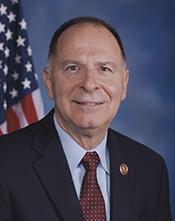
Historical · U.S. House · Illinois · District 12
William Enyart
Former U.S. Representative · Illinois District 12 · 2013–2015 · Democratic
William Enyart represented Illinois's District 12 in the United States House of Representatives (2013–2015) for the Democratic party. The page below collects sourced biographical facts, term history, committee roles, and provenance for Enyart.
Bioguide ID: E000292
Key facts
- Full name
- William Enyart
- State
- Illinois
- District
- District 12
- Party
- Democratic
- House service
- 2013–2015
- First House term
- 2013
- Status
- Left office
- Current term ends
- —
- Born
- 1949
- Bioguide ID
- E000292
- Committee assignments
- —
- Dataset version
- 1.20260605
Biographical narrative
863 words · sourced from the Wikipedia REST extract
William L. Enyart is a former U.S. Representative who served Illinois's 12th congressional district as a member of the Democratic Party. His tenure in the House of Representatives began on January 3, 2013, following his election in November 2012. Enyart's political career is complemented by a distinguished military background, having served as a major general in the Illinois Army National Guard, where he held the position of Adjutant General. He concluded his congressional service on January 3, 2015, after losing his re-election bid in 2014.
Early life and career
William L. Enyart was born on September 22, 1949. He pursued higher education at Southern Illinois University Edwardsville, where he earned a Bachelor of Arts degree in journalism and political science in 1974. Following this, he attended Southern Illinois University School of Law, obtaining his Juris Doctor in 1979. Enyart furthered his education by graduating from the United States Army War College in 2000 with a Master of Science in Strategic Studies. In recognition of his contributions, he received an honorary degree from Lindenwood University in Belleville, Illinois, in 2012.
Enyart's professional journey includes a significant military career. He began his service in the U.S. Air Force before transitioning to the Illinois Army National Guard in 1982, where he served as a Judge Advocate General (JAG) officer. His military career culminated in his appointment as the 37th Adjutant General of the Illinois National Guard in 2007. Enyart was reappointed to this position in 2009 and again in 2011, demonstrating his leadership capabilities. During his tenure, he oversaw the largest deployment of the Illinois National Guard since World War II and coordinated the state's response to the 2011 Mississippi River floods. Enyart retired from military service in 2012, shortly before entering politics.
House tenure
Enyart's political career in the U.S. House of Representatives began when he was selected as the Democratic nominee for Illinois's 12th congressional district on June 23, 2012. This nomination came after the original candidate withdrew for health reasons. Enyart successfully won the general election on November 6, 2012, defeating Republican nominee Jason Plummer with a margin of 52% to 43%. His campaign was marked by discussions around public pensions, particularly in relation to his wife's status as a retired circuit judge receiving multiple taxpayer-funded pensions, which became a point of contention during the election.
In 2014, Enyart sought re-election and ran unopposed in the Democratic primary. He faced Republican state Representative Mike Bost in the general election held on November 4. Enyart was considered one of the more vulnerable freshman Democrats, and ultimately, he lost the election to Bost, receiving 42% of the vote compared to Bost's 53%. His defeat was attributed to a lack of support in most areas of the district outside his base in the St. Louis suburbs, where he only managed to win three of the twelve counties.
Legislative focus and committees
During his time in Congress, Enyart was assigned to several key committees that shaped his legislative focus. He served on the Committee on Agriculture, where he was involved in subcommittees addressing general farm commodities, risk management, livestock, rural development, and credit. Additionally, he was a member of the Committee on Armed Services, participating in subcommittees focused on tactical air and land forces as well as readiness.
Enyart's legislative priorities included a range of issues, particularly those affecting veterans, healthcare, and national security. He was an advocate for the DREAM Act, supporting provisions that would expedite citizenship for immigrants who serve in the military. In healthcare, he opposed efforts to repeal the Patient Protection and Affordable Care Act, acknowledging its flaws but advocating for reforms rather than complete dismantlement.
On tax policy, Enyart expressed support for increasing taxes on higher-income individuals, framing the issue in terms of class dynamics. He also demonstrated a commitment to women's issues by voting in favor of the Violence Against Women Act.
In the realm of privacy and cybersecurity, Enyart co-sponsored the Cyber Intelligence Sharing and Protection Act (CISPA), which aimed to facilitate information sharing between the government and private sector for cybersecurity purposes. However, this bill faced criticism for lacking adequate privacy protections and ultimately did not pass the Senate. He also co-sponsored the Preserving American Privacy Act, which sought to limit the collection of personally identifiable information by federal agencies using drones, though this bill did not advance out of committee.
Enyart's engagement with veterans' issues was notable, as he introduced the Veterans Backlog Reduction Act, aimed at providing provisional benefits to veterans awaiting decisions on their claims. His voting record included a controversial stance when he was the only member of Congress to oppose a bill restoring chaplain services to military personnel during the 2013 government shutdown, which he criticized as ineffective.
In terms of national security, Enyart supported amendments aimed at eliminating indefinite detention for individuals held in the U.S. and advocated for a framework to close the Guantanamo Bay detention facility by a specified date.
William L. Enyart's congressional career, while brief, was marked by a commitment to various legislative issues, particularly those impacting veterans, healthcare, and civil liberties. His military background and legal expertise informed his approach to governance and public service.
Notable legislation
Sponsored and co-sponsored legislation for William Enyart is pending operator curation. The biographical narrative above carries the same provenance trail until per-bill rows are written.
Sources
- [1]https://en.wikipedia.org/wiki/William_EnyartWikipedia · retrieved 2026-06-05
Notable quotes
Sourced quotes for William Enyart are pending operator curation. Narrative-scope provenance remains attached below.
Sources
- [1]https://en.wikipedia.org/wiki/William_EnyartWikipedia · retrieved 2026-06-05
Key positions
Curated policy positions for William Enyart are pending operator review. The biographical narrative above carries the same provenance trail until per-topic positions are written.
Sources
- [1]https://en.wikipedia.org/wiki/William_EnyartWikipedia · retrieved 2026-06-05
Terms served
- 2013–2015U.S. House · Term 1 · Democratic
Sources & provenance
Every attributable claim above carries a per-section [N] marker that resolves to the corresponding URL below. Each entry records the upstream provider, the canonical URL, and the timestamp at which the source was retrieved by the ingest pipeline.
Key facts
- https://bioguide.congress.gov/search/bio/E000292bioguide · retrieved 2026-06-05
- http://enyart.house.govhouse.gov · retrieved 2026-06-05
Biographical narrative
- https://en.wikipedia.org/wiki/William_Enyartwikipedia · retrieved 2026-06-05
Find your representative
Every U.S. state elects representatives by district. Browse Illinois’s delegation, the full former-representative roster, or explore the role and term length.
Related on The Candidate
- Preceded by Jerry CostelloEarlier holder of the Illinois District 12 House seat · Democratic.Open
- Abner TaylorFormer U.S. Representative · Illinois District 1 · RepublicanOpen
- Adam SnyderFormer U.S. Representative · Illinois District 1 · DemocraticOpen
- Arthur MitchellFormer U.S. Representative · Illinois District 1 · DemocraticOpen
- Bennett StewartFormer U.S. Representative · Illinois District 1 · DemocraticOpen
- Democratic PartyFederal candidates and office holders on the Democratic line.Open