
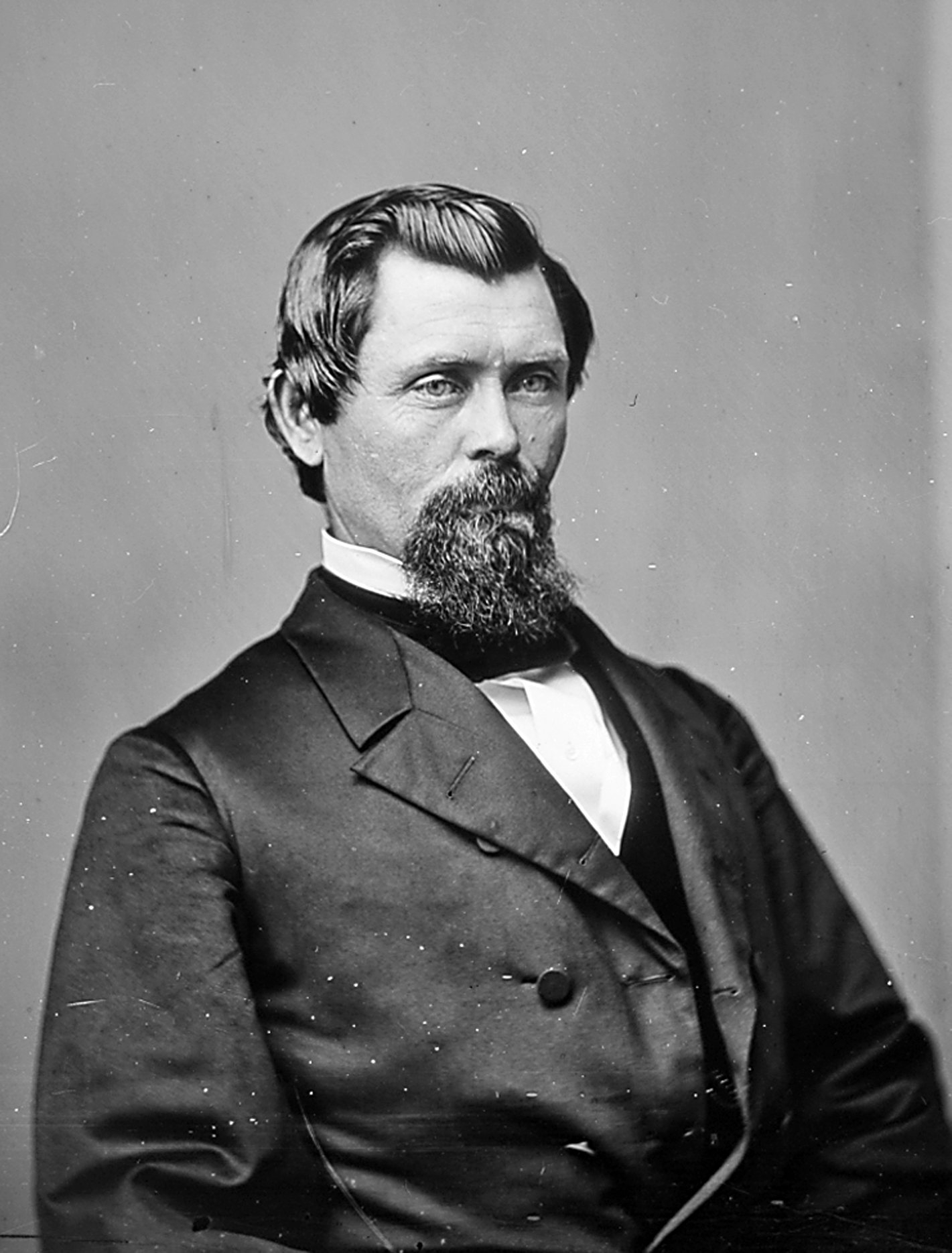
Historical · U.S. House · Illinois · District 13
William Allen
Former U.S. Representative · Illinois District 13 · 1861–1865 · Democratic
William Allen represented Illinois's District 13 in the United States House of Representatives (1861–1865) for the Democratic party. The page below collects sourced biographical facts, term history, committee roles, and provenance for Allen.
Bioguide ID: A000152
Key facts
- Full name
- William Allen
- State
- Illinois
- District
- District 13
- Party
- Democratic
- House service
- 1861–1865
- First House term
- 1861
- Status
- Left office
- Current term ends
- —
- Born
- 1829
- Bioguide ID
- A000152
- Committee assignments
- —
- Dataset version
- 1.20260606
Biographical narrative
1,033 words · sourced from the Wikipedia REST extract
William Allen was an American lawyer, jurist, and politician who served as a U.S. Representative from Illinois during the mid-19th century. A member of the Democratic Party, he represented Illinois's 13th congressional district in the United States House of Representatives. His congressional service spanned two terms, beginning in 1861 and concluding in 1865. Following his time in Congress, Allen continued his legal career and later served as a federal judge. His life and career reflect the political and legal developments of his time, particularly in the context of the Civil War and its aftermath.
Early life and career
William Allen was born on June 9, 1829, in Wilson County, Tennessee. He was the son of Willis Allen, who also had a political career as a U.S. Representative from Illinois. Around 1830, when William was still an infant, his family relocated to Franklin County, Illinois, which is now part of Williamson County. By 1839, they settled in Marion, Illinois, where Allen attended local common schools. This early education laid the foundation for his future academic and professional pursuits.
In 1848, Allen earned a Bachelor of Laws degree from the University of Louisville Law Department, which is now known as the University of Louisville School of Law. His legal career began shortly thereafter, as he was admitted to the bar and entered private practice in Metropolis, Illinois, from 1849 to 1853. During this period, he gained valuable experience in the legal field, which would serve him well in his future endeavors.
Allen's early career included several significant roles in public service. He served as an enrolling and engrossing clerk for the Illinois General Assembly in 1849 and again in 1851. This experience provided him with insight into the legislative process and the workings of state government. In 1853, he was appointed as the prosecuting attorney for the Twenty-Sixth Judicial Circuit of Illinois, a position he held until 1854. Following this role, he returned to private practice in Marion, where he continued to build his legal reputation until 1862.
In addition to his legal work, Allen was active in politics. He was elected to the Illinois House of Representatives for the 3rd district, serving from 1855 to 1857. His political career continued to evolve when he was appointed as the United States Attorney for the Southern District of Illinois, a position he held from 1855 to 1859. This role further solidified his standing in the legal community and provided him with experience in federal law enforcement.
Allen's judicial career began when he was appointed as a Judge of the Illinois Circuit Court for the Twenty-Sixth Judicial Circuit, serving from 1859 until 1861. His legal expertise and experience in various capacities prepared him for the next significant phase of his career: his election to the United States Congress.
House tenure
William Allen's congressional career began when he was elected as a Democrat to the United States House of Representatives, representing Illinois's 9th congressional district. He filled the vacancy left by the resignation of John A. Logan, a prominent figure in Illinois politics. Allen's first term in Congress commenced in 1861, during a tumultuous period in American history marked by the Civil War.
In 1862, Allen was reelected to represent Illinois's 13th congressional district, a position he held until March 3, 1865. His time in Congress coincided with significant national events, including debates over war policies, civil rights, and the Reconstruction era that followed the Civil War. Although specific details about his legislative actions during this period are not provided, it can be inferred that he was involved in discussions and decisions that shaped the nation during a critical time.
Allen chose not to seek reelection in 1864, concluding his congressional service after two terms. His decision not to run again may have been influenced by the shifting political landscape of the time or personal considerations. After leaving Congress, he returned to private legal practice, where he continued to contribute to the legal field in various capacities.
Legislative focus and committees
While specific details about the committees on which William Allen served during his time in Congress are not documented, it is essential to understand the broader context of his legislative focus. As a member of the Democratic Party during the Civil War, Allen would have been involved in discussions surrounding war efforts, civil liberties, and the implications of federal policies on states' rights. The Democratic Party at that time was often characterized by its opposition to certain Republican policies, particularly those related to the war and Reconstruction.
The political environment in which Allen operated was marked by significant challenges, including the need to address the consequences of the Civil War and the integration of formerly enslaved individuals into American society. The legislative priorities of the period included issues such as military funding, civil rights, and the reconstruction of the Southern states. As a representative from Illinois, a state that played a crucial role in the war, Allen's contributions would have been relevant to both his constituents and the national discourse.
After his congressional tenure, Allen continued to engage in public service and legal practice. He participated in the Illinois state constitutional conventions in 1862 and 1870, contributing to the development of state governance during a time of change. Additionally, he was a delegate to all Democratic National Conventions from 1864 to 1888, reflecting his ongoing involvement in national politics.
In 1887, Allen received a recess appointment from President Grover Cleveland to serve as a judge on the United States District Court for the Southern District of Illinois. His nomination was confirmed by the Senate in January 1888, and he served in this capacity until his death in 1901. This judicial role marked a significant transition in his career, allowing him to influence the legal landscape of the region until his passing.
William Allen's life and career encapsulate the complexities of American politics and law during the 19th century. His experiences as a lawyer, legislator, and judge reflect the evolving nature of governance and the legal system in a nation grappling with profound changes. His legacy is intertwined with the history of Illinois and the broader narrative of the United States during a pivotal era.
Notable legislation
Sponsored and co-sponsored legislation for William Allen is pending operator curation. The biographical narrative above carries the same provenance trail until per-bill rows are written.
Sources
- [1]https://en.wikipedia.org/wiki/William_J._AllenWikipedia · retrieved 2026-06-06
Notable quotes
Sourced quotes for William Allen are pending operator curation. Narrative-scope provenance remains attached below.
Sources
- [1]https://en.wikipedia.org/wiki/William_J._AllenWikipedia · retrieved 2026-06-06
Key positions
Curated policy positions for William Allen are pending operator review. The biographical narrative above carries the same provenance trail until per-topic positions are written.
Sources
- [1]https://en.wikipedia.org/wiki/William_J._AllenWikipedia · retrieved 2026-06-06
Terms served
- 1861–1863U.S. House · Term 1 · Democratic
- 1863–1865U.S. House · Term 2 · Democratic
Sources & provenance
Every attributable claim above carries a per-section [N] marker that resolves to the corresponding URL below. Each entry records the upstream provider, the canonical URL, and the timestamp at which the source was retrieved by the ingest pipeline.
Key facts
- https://bioguide.congress.gov/search/bio/A000152bioguide · retrieved 2026-06-06
- https://www.govtrack.us/congress/members/400807govtrack · retrieved 2026-06-06
Biographical narrative
- https://en.wikipedia.org/wiki/William_J._Allenwikipedia · retrieved 2026-06-06
Find your representative
Every U.S. state elects representatives by district. Browse Illinois’s delegation, the full former-representative roster, or explore the role and term length.
Related on The Candidate
- Succeeded by Andrew KuykendallLater holder of the Illinois District 13 House seat · Republican.Open
- Abner TaylorFormer U.S. Representative · Illinois District 1 · RepublicanOpen
- Adam SnyderFormer U.S. Representative · Illinois District 1 · DemocraticOpen
- Arthur MitchellFormer U.S. Representative · Illinois District 1 · DemocraticOpen
- Bennett StewartFormer U.S. Representative · Illinois District 1 · DemocraticOpen
- Democratic PartyFederal candidates and office holders on the Democratic line.Open