
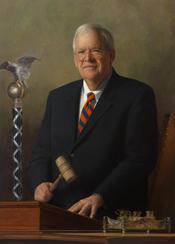
Historical · U.S. House · Illinois · District 14
Denny Hastert
Former U.S. Representative · Illinois District 14 · 1987–2007 · Republican
Denny Hastert represented Illinois's District 14 in the United States House of Representatives (1987–2007) for the Republican party. The page below collects sourced biographical facts, term history, committee roles, and provenance for Hastert.
Bioguide ID: H000323
Key facts
- Full name
- Denny Hastert
- State
- Illinois
- District
- District 14
- Party
- Republican
- House service
- 1987–2007
- First House term
- 1987
- Status
- Left office
- Current term ends
- —
- Born
- 1942
- Bioguide ID
- H000323
- Committee assignments
- —
- Dataset version
- 1.20260605
Biographical narrative
950 words · sourced from the Wikipedia REST extract
John Dennis Hastert is a former American politician who served as a U.S. Representative for Illinois's 14th congressional district from 1987 until 2007. A member of the Republican Party, Hastert held the position of Speaker of the House from 1999 to 2007, making him the 51st individual to occupy that role. His tenure as Speaker is noted for being one of the longest in history, particularly among Republican leaders. Hastert's political career, however, was overshadowed by legal issues that arose after his retirement, culminating in his conviction for financial crimes related to his past conduct as a high school wrestling coach.
Early life and career
J. Dennis Hastert was born on January 2, 1942, in Aurora, Illinois. He was raised in a rural farming community, the eldest of two sons in a middle-class family that owned a farm supply business and a family farm. His early life involved various responsibilities, including working at the family restaurant, The Clock Tower, where he gained experience in the food service industry. Hastert's formative years were marked by his involvement in sports; he excelled as a wrestler and football player at Oswego High School.
Hastert's educational journey began at North Central College, where he briefly studied before transferring to Wheaton College, a Christian liberal arts institution. He graduated from Wheaton in 1964 with a Bachelor of Arts degree in economics. Following his undergraduate studies, he pursued a Master of Science in philosophy of education at Northern Illinois University, where he also participated in the People to People Student Ambassador Program, spending three months in Japan.
From 1965 to 1981, Hastert worked in the Yorkville Community Unit School District 115, primarily as a teacher at Yorkville High School. He taught various subjects, including government, history, economics, and sociology, while also coaching the school's wrestling and football teams. Under his leadership, the wrestling team achieved notable success, winning the state title in 1976, and he was recognized as Illinois Coach of the Year. During this period, Hastert was also involved in community service as a volunteer with the Boy Scouts, contributing to youth development through various outdoor activities and trips.
In 1973, Hastert married Jean Kahl, a fellow educator, and together they had two sons. His initial foray into politics began after he lost a Republican primary for the Illinois House of Representatives in 1980. Despite this setback, Hastert demonstrated a knack for campaigning and subsequently volunteered for a state senator, which helped him gain valuable political experience. Following the illness of a sitting state representative, Hastert was selected by local Republican officials to fill the vacancy, marking the beginning of his political career.
House tenure
Hastert was first elected to the United States House of Representatives in 1986, representing Illinois's 14th congressional district. He was re-elected every two years, serving a total of 11 terms in the House. His rise within the Republican Party was marked by his appointment as chief deputy whip in 1995, a position that allowed him to play a significant role in party leadership and legislative strategy.
In 1999, Hastert ascended to the role of Speaker of the House, succeeding Newt Gingrich. His tenure as Speaker was characterized by a strong alignment with the policies of the George W. Bush administration, particularly in areas of foreign and domestic policy. Hastert's leadership coincided with significant national events, including the aftermath of the September 11 attacks and the subsequent push for military action in Afghanistan and Iraq.
As Speaker, Hastert was involved in various legislative initiatives and was a key figure in shaping the Republican agenda during his time in office. His leadership style emphasized party unity and discipline, and he was known for his ability to navigate complex legislative challenges. However, his time as Speaker came to an end following the 2006 midterm elections, when the Democratic Party regained control of the House. After the elections, Hastert chose not to seek the position of minority leader and subsequently resigned from his congressional seat in November 2007.
Following his departure from Congress, Hastert transitioned into a lobbying role, joining the firm Dickstein Shapiro. His post-congressional career, however, would later be marred by legal troubles that emerged in 2015.
Legislative focus and committees
During his time in the House, Hastert served on several committees, which allowed him to influence a range of legislative issues. His work primarily focused on areas such as education, transportation, and infrastructure, reflecting his background as an educator and community leader. Hastert's experience as a teacher and coach informed his perspectives on educational policy, and he advocated for initiatives aimed at improving schools and educational opportunities.
Hastert's role as Speaker placed him at the center of significant legislative debates and decisions. He was instrumental in advancing key Republican priorities, including tax cuts, welfare reform, and national security measures. His leadership during the early 2000s was marked by a commitment to conservative principles, and he often worked to unify the party around these goals.
Despite his legislative accomplishments, Hastert's later years were overshadowed by his indictment in 2015 on federal charges related to financial misconduct. The charges stemmed from allegations that he had structured bank withdrawals to evade reporting requirements, with prosecutors asserting that the funds were intended as hush money to conceal past misconduct. In 2016, he pleaded guilty to one count of structuring bank withdrawals, leading to a sentence of 15 months in prison.
Hastert's legal issues and subsequent conviction marked a significant departure from his earlier political career, raising questions about his legacy and the impact of his actions on the public perception of political leaders. His case remains a notable example of the complexities and challenges faced by public figures in the political arena.
Notable legislation
Sponsored and co-sponsored legislation for Denny Hastert is pending operator curation. The biographical narrative above carries the same provenance trail until per-bill rows are written.
Sources
- [1]https://en.wikipedia.org/wiki/Dennis_HastertWikipedia · retrieved 2026-06-05
Notable quotes
Sourced quotes for Denny Hastert are pending operator curation. Narrative-scope provenance remains attached below.
Sources
- [1]https://en.wikipedia.org/wiki/Dennis_HastertWikipedia · retrieved 2026-06-05
Key positions
Curated policy positions for Denny Hastert are pending operator review. The biographical narrative above carries the same provenance trail until per-topic positions are written.
Sources
- [1]https://en.wikipedia.org/wiki/Dennis_HastertWikipedia · retrieved 2026-06-05
Terms served
- 1987–1989U.S. House · Term 1 · Republican
- 1989–1991U.S. House · Term 2 · Republican
- 1991–1993U.S. House · Term 3 · Republican
- 1993–1995U.S. House · Term 4 · Republican
- 1995–1997U.S. House · Term 5 · Republican
- 1997–1999U.S. House · Term 6 · Republican
- 1999–2001U.S. House · Term 7 · Republican
- 2001–2003U.S. House · Term 8 · Republican
- 2003–2005U.S. House · Term 9 · Republican
- 2005–2007U.S. House · Term 10 · Republican
- 2007–2007U.S. House · Term 11 · Republican
Sources & provenance
Every attributable claim above carries a per-section [N] marker that resolves to the corresponding URL below. Each entry records the upstream provider, the canonical URL, and the timestamp at which the source was retrieved by the ingest pipeline.
Key facts
- https://bioguide.congress.gov/search/bio/H000323bioguide · retrieved 2026-06-05
- http://www.house.gov/hasterthouse.gov · retrieved 2026-06-05
Biographical narrative
- https://en.wikipedia.org/wiki/Dennis_Hastertwikipedia · retrieved 2026-06-05
Find your representative
Every U.S. state elects representatives by district. Browse Illinois’s delegation, the full former-representative roster, or explore the role and term length.
Related on The Candidate
- Preceded by John GrotbergEarlier holder of the Illinois District 14 House seat · Republican.Open
- Succeeded by Randy HultgrenLater holder of the Illinois District 14 House seat · Republican.Open
- Abner TaylorFormer U.S. Representative · Illinois District 1 · RepublicanOpen
- Adam SnyderFormer U.S. Representative · Illinois District 1 · DemocraticOpen
- Arthur MitchellFormer U.S. Representative · Illinois District 1 · DemocraticOpen
- Bennett StewartFormer U.S. Representative · Illinois District 1 · DemocraticOpen