
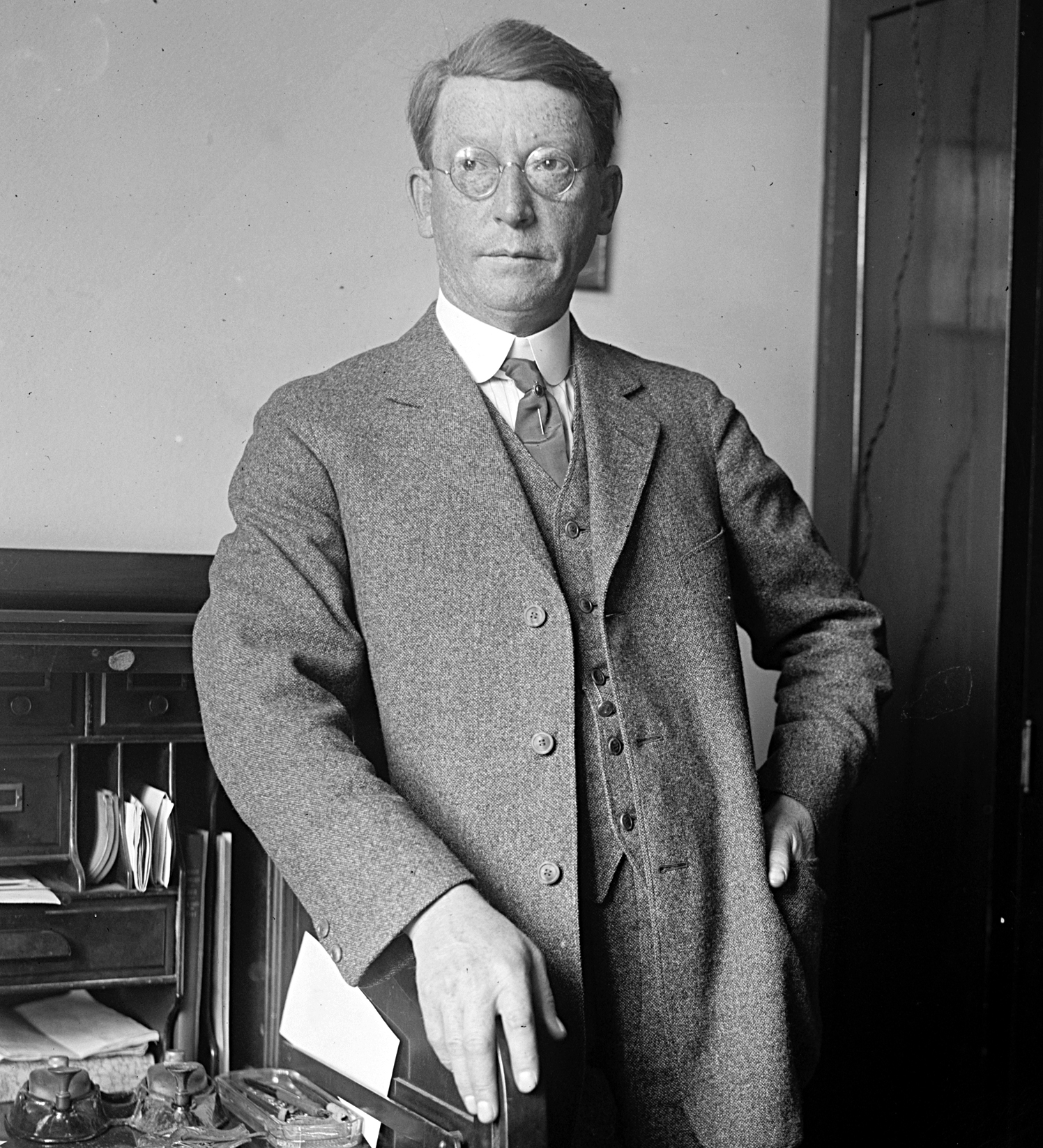
Historical · U.S. House · Illinois · District 14
William Graham
Former U.S. Representative · Illinois District 14 · 1917–1925 · Republican
William Graham represented Illinois's District 14 in the United States House of Representatives (1917–1925) for the Republican party. The page below collects sourced biographical facts, term history, committee roles, and provenance for Graham.
Bioguide ID: G000364
Key facts
- Full name
- William Graham
- State
- Illinois
- District
- District 14
- Party
- Republican
- House service
- 1917–1925
- First House term
- 1917
- Status
- Left office
- Current term ends
- —
- Born
- 1872
- Bioguide ID
- G000364
- Committee assignments
- —
- Dataset version
- 1.20260606
Biographical narrative
823 words · sourced from the Wikipedia REST extract
William Graham was a prominent American politician and lawyer who served as a U.S. Representative for Illinois's 14th congressional district from 1917 until 1924. A member of the Republican Party, Graham's political career was marked by his involvement in both state and federal government, culminating in a judicial appointment following his congressional tenure. His contributions to legislation and governance were significant during a transformative period in American history.
Early life and career
William Graham was born on February 7, 1872, in New Castle, Pennsylvania. He was the son of parents who later moved to Illinois in 1879, settling in Aledo, located in Mercer County. Graham's early education took place in the public schools of Illinois, where he laid the groundwork for his future academic and professional pursuits. He attended the University of Illinois Urbana-Champaign, where he earned a Bachelor of Laws degree in 1893. Following this, he furthered his legal education by reading law, a common practice of the time, and was admitted to the bar in 1895.
Upon gaining admission to the bar, Graham began his legal career in private practice in Aledo. His legal expertise and community involvement led to his election as the state's attorney for Mercer County, a position he held from 1901 to 1909. This role provided him with valuable experience in legal matters and public service, enhancing his reputation within the community. In addition to his legal career, Graham was active in politics, serving as a delegate to the Republican National Convention in 1912. His political aspirations continued to grow, and he was elected to the Illinois House of Representatives, where he served from 1915 to 1916. This experience in state government set the stage for his subsequent election to the U.S. Congress.
House tenure
William Graham's congressional career began when he was elected as a Republican to the 65th United States Congress, taking office on March 4, 1917. He was re-elected to three additional terms, serving in total from 1917 until June 7, 1924, when he resigned to accept a judicial appointment. During his time in the House, Graham was involved in various legislative activities and served on important committees, including his role as Chairman of the Committee on Expenditures in the United States Department of War during the 66th Congress. His leadership on this committee allowed him to influence matters related to military expenditures and oversight, which were particularly relevant during the post-World War I era.
Graham's tenure in Congress coincided with a period of significant political and social change in the United States. The nation was navigating the aftermath of World War I, and issues such as veterans' affairs, economic recovery, and the evolving role of government were at the forefront of congressional discussions. Graham's legislative work during this time reflected the priorities of his constituents and the broader national interests.
Legislative focus and committees
Throughout his congressional career, William Graham focused on a range of issues pertinent to his constituents in Illinois and the nation as a whole. His position as Chairman of the Committee on Expenditures in the United States Department of War placed him at the center of discussions regarding military funding and accountability. This role required a keen understanding of both fiscal responsibility and the needs of the armed forces, especially in the context of a nation adjusting to peacetime after the war.
Graham's legislative efforts were characterized by a commitment to the principles of the Republican Party, which during his time in office emphasized limited government intervention in the economy, fiscal conservatism, and a strong national defense. His work on the committee allowed him to advocate for policies that aligned with these principles, contributing to the broader Republican agenda of the era.
In addition to his committee work, Graham's legislative focus extended to various issues affecting his constituents, including agriculture, infrastructure, and economic development. As a representative from Illinois, a state with a significant agricultural base, he was likely attuned to the needs and concerns of farmers and rural communities. His background as a lawyer and former state's attorney also informed his perspectives on legal and judicial matters, which would later play a role in his judicial career.
After serving four terms in the House of Representatives, Graham resigned in 1924 to accept a judicial appointment. His transition from legislative service to the judiciary marked a new chapter in his career, reflecting his ongoing commitment to public service and the law. Following his resignation, he was nominated by President Calvin Coolidge to serve as the Presiding Judge of the United States Court of Customs Appeals, a position he held until his death in 1937.
William Graham's life and career exemplify the trajectory of a public servant dedicated to both legal practice and legislative governance. His contributions to the U.S. Congress and later to the judiciary underscore the interconnected nature of these roles in shaping American law and policy during a pivotal time in the nation's history.
Notable legislation
Sponsored and co-sponsored legislation for William Graham is pending operator curation. The biographical narrative above carries the same provenance trail until per-bill rows are written.
Sources
- [1]https://en.wikipedia.org/wiki/William_J._GrahamWikipedia · retrieved 2026-06-06
Notable quotes
Sourced quotes for William Graham are pending operator curation. Narrative-scope provenance remains attached below.
Sources
- [1]https://en.wikipedia.org/wiki/William_J._GrahamWikipedia · retrieved 2026-06-06
Key positions
Curated policy positions for William Graham are pending operator review. The biographical narrative above carries the same provenance trail until per-topic positions are written.
Sources
- [1]https://en.wikipedia.org/wiki/William_J._GrahamWikipedia · retrieved 2026-06-06
Terms served
- 1917–1919U.S. House · Term 1 · Republican
- 1919–1921U.S. House · Term 2 · Republican
- 1921–1923U.S. House · Term 3 · Republican
- 1923–1925U.S. House · Term 4 · Republican
Sources & provenance
Every attributable claim above carries a per-section [N] marker that resolves to the corresponding URL below. Each entry records the upstream provider, the canonical URL, and the timestamp at which the source was retrieved by the ingest pipeline.
Key facts
- https://bioguide.congress.gov/search/bio/G000364bioguide · retrieved 2026-06-06
- https://www.govtrack.us/congress/members/404718govtrack · retrieved 2026-06-06
Biographical narrative
- https://en.wikipedia.org/wiki/William_J._Grahamwikipedia · retrieved 2026-06-06
Find your representative
Every U.S. state elects representatives by district. Browse Illinois’s delegation, the full former-representative roster, or explore the role and term length.
Related on The Candidate
- Preceded by Clyde TavennerEarlier holder of the Illinois District 14 House seat · Democratic.Open
- Succeeded by John AllenLater holder of the Illinois District 14 House seat · Republican.Open
- Abner TaylorFormer U.S. Representative · Illinois District 1 · RepublicanOpen
- Adam SnyderFormer U.S. Representative · Illinois District 1 · DemocraticOpen
- Arthur MitchellFormer U.S. Representative · Illinois District 1 · DemocraticOpen
- Bennett StewartFormer U.S. Representative · Illinois District 1 · DemocraticOpen