
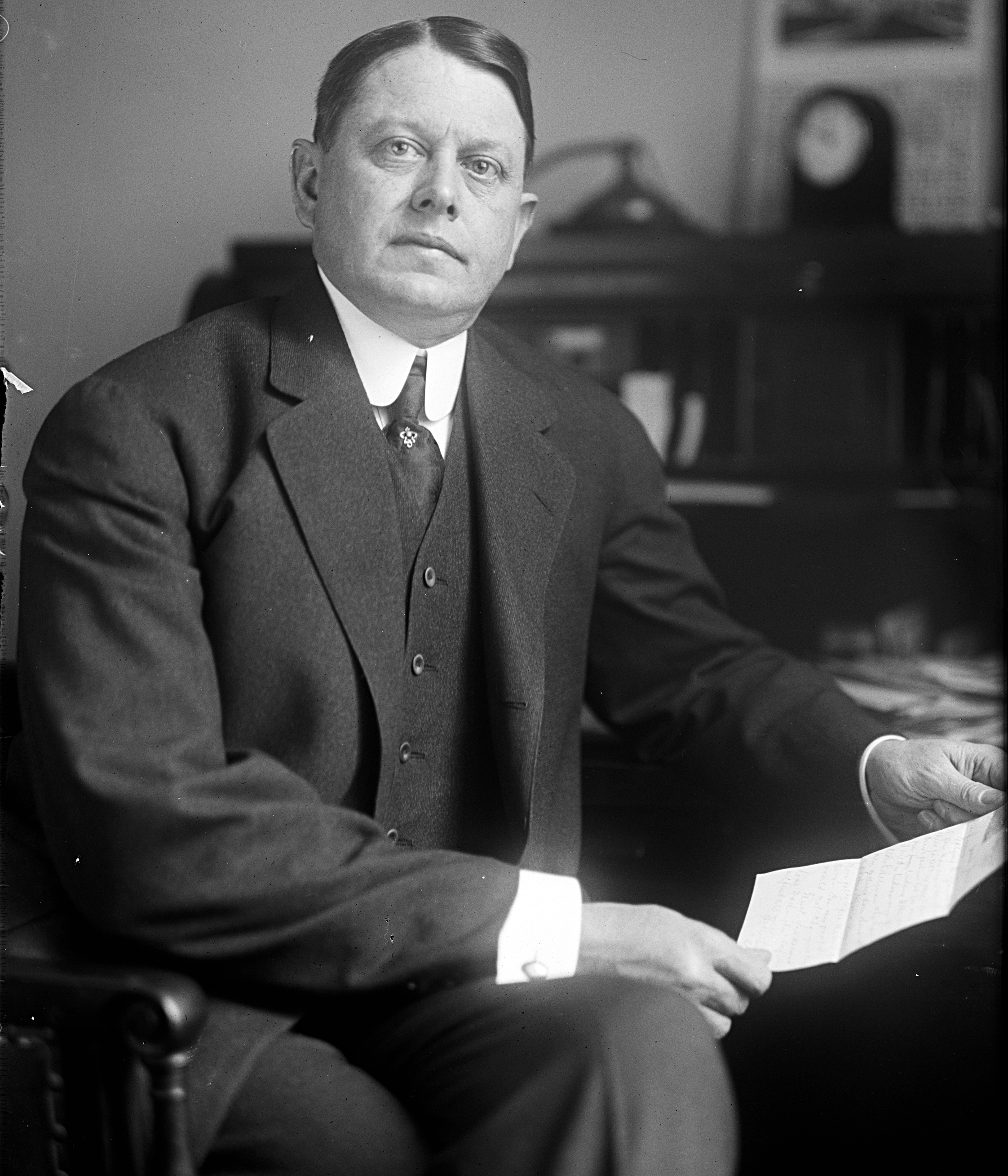
Historical · U.S. House · Illinois · District 15
Burnett Chiperfield
Former U.S. Representative · Illinois District 15 · 1915–1933 · Republican
Burnett Chiperfield represented Illinois's District 15 in the United States House of Representatives (1915–1933) for the Republican party. The page below collects sourced biographical facts, term history, committee roles, and provenance for Chiperfield.
Bioguide ID: C000364
Key facts
- Full name
- Burnett Chiperfield
- State
- Illinois
- District
- District 15
- Party
- Republican
- House service
- 1915–1933
- First House term
- 1915
- Status
- Left office
- Current term ends
- —
- Born
- 1870
- Bioguide ID
- C000364
- Committee assignments
- —
- Dataset version
- 1.20260606
Biographical narrative
953 words · sourced from the Wikipedia REST extract
Burnett Chiperfield was a notable figure in early 20th-century American politics, serving as a U.S. Representative for Illinois's 15th congressional district. A member of the Republican Party, Chiperfield's congressional career spanned three terms from 1915 until 1933. His life was marked by a blend of legal, military, and political service, reflecting a commitment to public service that extended beyond his time in Congress.
Early life and career
Burnett Mitchell Chiperfield was born on June 14, 1870, in Dover, Illinois. He grew up in a region that was rapidly developing during the late 19th century, which likely influenced his later pursuits in law and politics. Chiperfield attended public schools in Illinois before furthering his education at Hamline University in St. Paul, Minnesota. His academic journey culminated in the study of law, leading to his admission to the bar in 1891. Following this, he established a legal practice and took on the role of prosecuting attorney for Fulton County, Illinois, from 1896 to 1900. This early legal experience provided him with a foundation in law and governance that would serve him well in his political career.
In addition to his legal work, Chiperfield was active in state politics. He served in the Illinois House of Representatives from 1903 to 1913, where he began to build a reputation as a dedicated public servant. His commitment to education was evident during his tenure as secretary and trustee of the Western Illinois State Normal School, now known as Western Illinois University, in Macomb, Illinois, from 1904 to 1909. This role allowed him to influence educational policy and support the development of future educators.
Chiperfield also had a significant military career, serving as an officer in the Illinois National Guard for two decades. His military service included participation in the Spanish-American War, which marked his entry into military affairs. Later, he served in the United States Army Judge Advocate General's Corps from 1917 to 1919 and again from 1921 to 1934, achieving the rank of lieutenant colonel. In this capacity, he was responsible for investigating claims of subversion within the Army and overseeing numerous courts-martial. His military service extended to World War I, during which he served in France and was involved in civil affairs with the Army of Occupation in Koblenz after the war. This combination of legal and military experience provided him with a unique perspective on governance and public service.
In addition to his roles in law and the military, Chiperfield was also engaged in the banking sector, further diversifying his professional portfolio. This background in finance likely informed his legislative priorities and approach to economic issues during his time in Congress.
House tenure
Chiperfield's congressional career began with an unsuccessful bid for the Sixty-third Congress in 1912. However, he was elected as a Republican to the Sixty-fourth Congress, serving from March 4, 1915, to March 3, 1917. His initial term in the House of Representatives allowed him to gain valuable experience in federal legislation and national politics. Following this term, Chiperfield did not seek renomination but instead pursued a seat in the United States Senate, although this attempt was also unsuccessful.
Chiperfield remained active in Republican politics, serving as a delegate to the Republican National Conventions in both 1920 and 1936. His involvement in these conventions demonstrated his ongoing commitment to the party and its platform, as well as his influence within Illinois Republican circles.
In a notable turn of events, Chiperfield was elected simultaneously to the Seventy-first and Seventy-second Congresses to fill the vacancy caused by the death of United States Representative-elect Edward J. King. He served in this capacity from November 4, 1930, until March 3, 1933. This period was marked by significant challenges, including the Great Depression, which affected economic conditions across the nation. Chiperfield's legislative actions during this time would have been influenced by the pressing needs of his constituents and the broader economic context.
After his time in Congress, Chiperfield sought reelection to the Seventy-third Congress in 1932 but was unsuccessful. He also attempted to secure a position in the Seventy-fourth Congress in 1934, but these efforts did not result in further terms. His congressional career officially ended on March 3, 1933.
Legislative focus and committees
During his time in the House of Representatives, Chiperfield's legislative focus likely reflected the interests and needs of his constituents in Illinois. While specific details about the bills he sponsored or supported are not provided, his background in law and finance suggests that he may have been involved in legislation related to legal reform, economic recovery, and education. His experiences as a prosecuting attorney and banker would have informed his perspectives on issues such as fiscal policy and public accountability.
Chiperfield's military service and involvement in the Judge Advocate General's Corps may have also influenced his legislative priorities, particularly in matters related to national defense and veterans' affairs. His dual experiences in law and military service positioned him to advocate for policies that supported both active service members and veterans returning to civilian life.
While specific committee assignments during his congressional tenure are not detailed, it is common for members of Congress to serve on committees that align with their professional expertise and the interests of their constituents. Chiperfield's legal background may have led him to participate in committees focused on judiciary matters, while his banking experience could have directed him toward financial and economic committees.
Burnett Chiperfield passed away on June 24, 1940, in Canton, Illinois. His contributions to public service, both in the military and in Congress, reflect a life dedicated to the governance and betterment of his community and country. He was interred in Greenwood Cemetery, leaving behind a legacy of commitment to public service and civic engagement.
Notable legislation
Sponsored and co-sponsored legislation for Burnett Chiperfield is pending operator curation. The biographical narrative above carries the same provenance trail until per-bill rows are written.
Sources
- [1]https://en.wikipedia.org/wiki/Burnett_M._ChiperfieldWikipedia · retrieved 2026-06-06
Notable quotes
Sourced quotes for Burnett Chiperfield are pending operator curation. Narrative-scope provenance remains attached below.
Sources
- [1]https://en.wikipedia.org/wiki/Burnett_M._ChiperfieldWikipedia · retrieved 2026-06-06
Key positions
Curated policy positions for Burnett Chiperfield are pending operator review. The biographical narrative above carries the same provenance trail until per-topic positions are written.
Sources
- [1]https://en.wikipedia.org/wiki/Burnett_M._ChiperfieldWikipedia · retrieved 2026-06-06
Terms served
- 1915–1917U.S. House · Term 1 · Republican
- 1929–1931U.S. House · Term 2 · Republican
- 1931–1933U.S. House · Term 3 · Republican
Sources & provenance
Every attributable claim above carries a per-section [N] marker that resolves to the corresponding URL below. Each entry records the upstream provider, the canonical URL, and the timestamp at which the source was retrieved by the ingest pipeline.
Key facts
- https://bioguide.congress.gov/search/bio/C000364bioguide · retrieved 2026-06-06
- https://www.govtrack.us/congress/members/402503govtrack · retrieved 2026-06-06
Biographical narrative
- https://en.wikipedia.org/wiki/Burnett_M._Chiperfieldwikipedia · retrieved 2026-06-06
Find your representative
Every U.S. state elects representatives by district. Browse Illinois’s delegation, the full former-representative roster, or explore the role and term length.
Related on The Candidate
- Preceded by Stephen HoxworthEarlier holder of the Illinois District 15 House seat · Democratic.Open
- Succeeded by Jackson AdairLater holder of the Illinois District 15 House seat · Democratic.Open
- Abner TaylorFormer U.S. Representative · Illinois District 1 · RepublicanOpen
- Adam SnyderFormer U.S. Representative · Illinois District 1 · DemocraticOpen
- Arthur MitchellFormer U.S. Representative · Illinois District 1 · DemocraticOpen
- Bennett StewartFormer U.S. Representative · Illinois District 1 · DemocraticOpen