
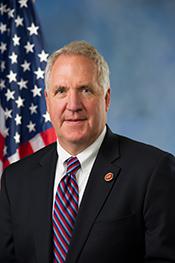
Historical · U.S. House · Illinois · District 15
John Shimkus
Former U.S. Representative · Illinois District 15 · 1997–2021 · Republican
John Shimkus represented Illinois's District 15 in the United States House of Representatives (1997–2021) for the Republican party. The page below collects sourced biographical facts, term history, committee roles, and provenance for Shimkus.
Bioguide ID: S000364
Key facts
- Full name
- John Shimkus
- State
- Illinois
- District
- District 15
- Party
- Republican
- House service
- 1997–2021
- First House term
- 1997
- Status
- Left office
- Current term ends
- —
- Born
- 1958
- Bioguide ID
- S000364
- Committee assignments
- —
- Dataset version
- 1.20260604
Biographical narrative
906 words · sourced from the Wikipedia REST extract
John Shimkus is a former U.S. Representative who served Illinois's 15th congressional district from 1997 until 2021. A member of the Republican Party, Shimkus was initially elected to the House of Representatives in 1996, succeeding Dick Durbin after Durbin moved to the Senate. Over his twelve terms in office, Shimkus became known for his involvement in various legislative initiatives, particularly in the areas of environmental policy and food safety. He announced in 2019 that he would not seek re-election in 2020 and was succeeded by fellow Republican Mary Miller.
Early life and career
John Shimkus was born on February 21, 1958, in Collinsville, Illinois, where he spent most of his life. He is the son of Kathleen N. Mondy and Gene L. Shimkus, and he has Lithuanian ancestry through his paternal grandfather. Shimkus attended the United States Military Academy, where he earned a bachelor's degree. Following his graduation, he fulfilled a five-year commitment in the United States Army, serving overseas with the 54th Infantry Regiment in West Germany. After his active duty service, he joined the United States Army Reserve, where he eventually retired as a lieutenant colonel in 2008. During his military career, he received several commendations, including the Expert Infantry Badge, Ranger Tab, and Parachutist Badge.
After his military service, Shimkus pursued a career in education. He obtained a teaching certificate from Christ College Irvine, which is now known as Concordia University Irvine, and began teaching at Metro East Lutheran High School in Edwardsville, Illinois. In 1987, he earned a Master of Business Administration (MBA) from Southern Illinois University Edwardsville. Shimkus's political career began in 1989 when he was elected as a trustee for Collinsville Township. The following year, he was elected as Madison County treasurer, becoming the first Republican to hold a countywide office in a decade. In 1994, he made history again by being the first Republican to be re-elected as county treasurer in 60 years.
House tenure
Shimkus's tenure in the U.S. House of Representatives began in January 1997 after he won a special election to fill the seat left vacant by Dick Durbin's election to the Senate. Over the course of his twelve terms, Shimkus represented Illinois's 20th, 19th, and 15th congressional districts. He quickly established himself as a prominent member of the Republican Party within the House. His electoral success was marked by a series of victories, with only one competitive general election following his initial win in 1996. In 2002, due to redistricting, Shimkus faced a significant challenge from Democratic incumbent David Phelps, but he retained his seat despite a contentious campaign.
Throughout his time in Congress, Shimkus served on several key committees, including the Committee on Energy and Commerce, where he held positions on various subcommittees such as Communications and Technology, Energy and Power, Environment and Economy, and Health. He also participated in the Republican Study Committee, a group of conservative members of the House. His committee assignments allowed him to influence a wide range of legislative issues, particularly those related to energy, health care, and environmental regulations.
In August 2019, Shimkus announced that he would not seek re-election in 2020, concluding a long career in the House. His decision to retire opened the door for fellow Republican Mary Miller to succeed him.
Legislative focus and committees
During his time in Congress, John Shimkus focused on several key legislative areas, particularly environmental policy, food safety, and national security. He played a significant role in the reform of the Toxic Substances Control Act, which was amended in 2016 through the Lautenberg Chemical Safety Act. This legislation aimed to enhance the regulation of chemicals and improve safety standards for public health.
Shimkus was also a strong advocate for food safety initiatives, supporting legislation that increased the Food and Drug Administration's (FDA) authority to recall contaminated food products. He served as one of the chief Republican negotiators on the FDA Food Safety Modernization Act, which aimed to improve food safety protocols and prevent foodborne illnesses. He emphasized the importance of government authority in ensuring public health and safety.
In the realm of energy policy, Shimkus was a proponent of the Keystone Pipeline project, which aimed to transport Canadian crude oil through the Midwest. He expressed a preference for partnering with Canada for energy resources rather than relying on foreign oil imports. His support for the pipeline reflected his broader commitment to energy independence and economic development.
Shimkus's views on climate change were notable, as he acknowledged the reality of climate change while questioning the effectiveness of government spending to address it. He often referenced biblical principles in discussions about environmental issues, arguing against drastic measures that could hinder agricultural productivity.
On matters of national security, Shimkus supported various policies during the Trump administration, including an executive order aimed at temporarily restricting immigration from certain countries for improved vetting processes. However, he later expressed criticism of the decision to withdraw U.S. troops from Syria, indicating a complex stance on foreign policy.
Throughout his legislative career, Shimkus was a member of several caucuses, including the House Baltic Caucus and the Congressional NextGen 9-1-1 Caucus, which focused on improving emergency communication systems.
In summary, John Shimkus's career in the U.S. House of Representatives was marked by a commitment to various legislative priorities, including environmental reform, food safety, and national security. His long tenure and involvement in key committees allowed him to shape significant policies affecting his constituents and the nation.
Notable legislation
Sponsored and co-sponsored legislation for John Shimkus is pending operator curation. The biographical narrative above carries the same provenance trail until per-bill rows are written.
Sources
- [1]https://en.wikipedia.org/wiki/John_ShimkusWikipedia · retrieved 2026-06-04
Notable quotes
Sourced quotes for John Shimkus are pending operator curation. Narrative-scope provenance remains attached below.
Sources
- [1]https://en.wikipedia.org/wiki/John_ShimkusWikipedia · retrieved 2026-06-04
Key positions
Curated policy positions for John Shimkus are pending operator review. The biographical narrative above carries the same provenance trail until per-topic positions are written.
Sources
- [1]https://en.wikipedia.org/wiki/John_ShimkusWikipedia · retrieved 2026-06-04
Terms served
- 1997–1999U.S. House · Term 1 · Republican
- 1999–2001U.S. House · Term 2 · Republican
- 2001–2003U.S. House · Term 3 · Republican
- 2003–2005U.S. House · Term 4 · Republican
- 2005–2007U.S. House · Term 5 · Republican
- 2007–2009U.S. House · Term 6 · Republican
- 2009–2011U.S. House · Term 7 · Republican
- 2011–2013U.S. House · Term 8 · Republican
- 2013–2015U.S. House · Term 9 · Republican
- 2015–2017U.S. House · Term 10 · Republican
- 2017–2019U.S. House · Term 11 · Republican
- 2019–2021U.S. House · Term 12 · Republican
Sources & provenance
Every attributable claim above carries a per-section [N] marker that resolves to the corresponding URL below. Each entry records the upstream provider, the canonical URL, and the timestamp at which the source was retrieved by the ingest pipeline.
Key facts
- https://bioguide.congress.gov/search/bio/S000364bioguide · retrieved 2026-06-04
- https://shimkus.house.govhouse.gov · retrieved 2026-06-04
Biographical narrative
- https://en.wikipedia.org/wiki/John_Shimkuswikipedia · retrieved 2026-06-04
Find your representative
Every U.S. state elects representatives by district. Browse Illinois’s delegation, the full former-representative roster, or explore the role and term length.
Related on The Candidate
- Preceded by Edward MadiganEarlier holder of the Illinois District 15 House seat · Republican.Open
- Abner TaylorFormer U.S. Representative · Illinois District 1 · RepublicanOpen
- Adam SnyderFormer U.S. Representative · Illinois District 1 · DemocraticOpen
- Arthur MitchellFormer U.S. Representative · Illinois District 1 · DemocraticOpen
- Bennett StewartFormer U.S. Representative · Illinois District 1 · DemocraticOpen
- Republican PartyFederal candidates and office holders on the Republican line.Open