
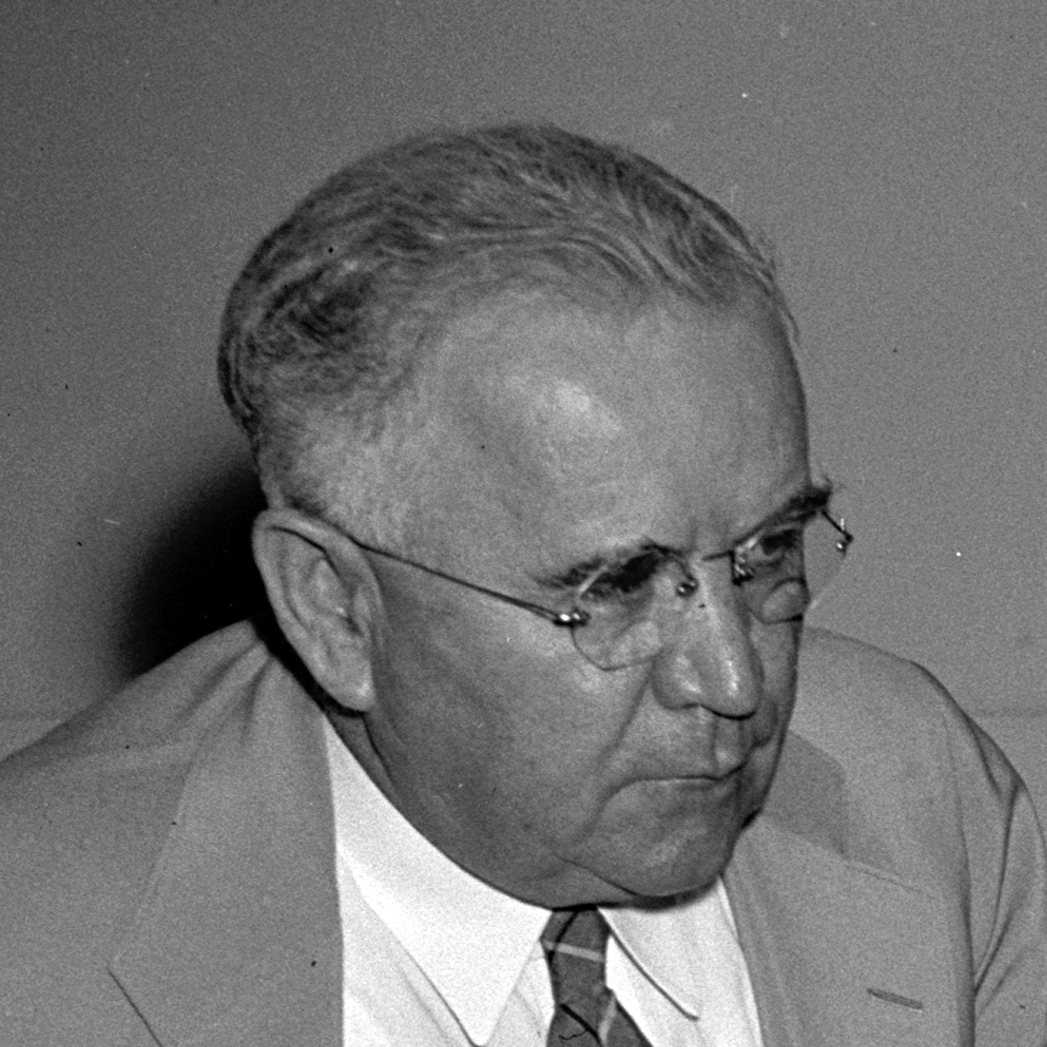
Historical · U.S. House · Illinois · District 15
Noah Mason
Former U.S. Representative · Illinois District 15 · 1937–1963 · Republican
Noah Mason represented Illinois's District 15 in the United States House of Representatives (1937–1963) for the Republican party. The page below collects sourced biographical facts, term history, committee roles, and provenance for Mason.
Bioguide ID: M000224
Key facts
- Full name
- Noah Mason
- State
- Illinois
- District
- District 15
- Party
- Republican
- House service
- 1937–1963
- First House term
- 1937
- Status
- Left office
- Current term ends
- —
- Born
- 1882
- Bioguide ID
- M000224
- Committee assignments
- —
- Dataset version
- 1.20260605
Biographical narrative
1,002 words · sourced from the Wikipedia REST extract
Noah Mason was an American politician who served as a U.S. Representative from Illinois, representing the 15th congressional district after previously serving the 12th district. A member of the Republican Party, Mason's congressional career spanned over two decades, during which he was known for his conservative views and commitment to states' rights. He was born on July 19, 1882, in Glamorganshire, Wales, and immigrated to the United States with his family in 1888. Mason's political career began at the local level and culminated in his election to the U.S. House of Representatives, where he served 13 consecutive terms until his retirement in 1963.
Early life and career
Noah Mason was born into a large family as the twelfth of thirteen children. His early life was marked by modest beginnings; his father worked as a coal miner before transitioning to farming after the family immigrated to the United States. The Mason family settled in La Salle, Illinois, where Noah's upbringing was shaped by the values of hard work and education. He left formal schooling at the age of 14 to assist on the family farm, but his mother encouraged him to pursue further education. He attended Dixon College and later graduated from Illinois State Normal University in Normal, Illinois.
Mason began his professional career in education, working as a teacher and principal in Oglesby, Illinois, from 1902 to 1905. His commitment to education continued as he served as the superintendent of schools in Oglesby from 1908 until 1936. In addition to his educational roles, Mason was active in local government, serving as a city commissioner in Oglesby from 1918 to 1926. His involvement in education and local politics laid the groundwork for his later political ambitions.
In 1930, Mason was elected to the Illinois State Senate, where he served until 1936. His experience in state politics provided him with a platform to launch his congressional career. In 1936, he was elected as a Republican to the 75th United States Congress, marking the beginning of a lengthy tenure in the House of Representatives. Over the course of his career, he was reelected to twelve subsequent Congresses, serving until January 3, 1963.
House tenure
Noah Mason's tenure in the U.S. House of Representatives was characterized by his alignment with conservative Republican ideals. He represented Illinois's 12th congressional district initially, and after the district boundaries were redrawn, he continued to serve the 15th district. Throughout his time in Congress, Mason was a member of the influential Ways and Means Committee, where he was part of a conservative bloc that sought to limit federal government intervention in various sectors, particularly in business.
Mason's legislative record reflects his commitment to conservative principles. He was a vocal advocate for states' rights, often expressing concerns about the federal government's role in regulating business and economic activity. His opposition to federal spending was a hallmark of his political stance, and he frequently criticized the New Deal policies of President Franklin D. Roosevelt, viewing them as excessive government intervention.
Mason's voting record included opposition to significant civil rights legislation, including the Civil Rights Acts of 1957 and 1960. He also took a position of neutrality on the 24th Amendment to the U.S. Constitution, which aimed to eliminate poll taxes in federal elections. His isolationist views were evident when he voted against the Lend-Lease program in 1941, reflecting his skepticism toward international involvement during World War II.
During his time in the House, Mason was involved with the House Un-American Activities Committee from 1938 to 1943, a body known for investigating alleged communist activities in the United States. He was also a supporter of Senator Joseph McCarthy's efforts to expose perceived communist influences in American society during the early 1950s. Despite his alignment with the Republican Party, Mason often found himself at odds with some of the party's more moderate members, particularly during the Eisenhower administration, where he opposed many of the president's initiatives, including the proposal for Hawaii's statehood.
Mason's political career came to an end when he chose not to seek renomination for the 88th Congress in 1962. His decision to retire marked the conclusion of a notable career in public service that spanned over three decades.
Legislative focus and committees
Throughout his congressional career, Noah Mason's legislative focus was heavily influenced by his conservative ideology. As a member of the Ways and Means Committee, he played a significant role in shaping tax policy and economic legislation. Mason advocated for higher tariffs as a means to protect American businesses and workers, a stance that diverged from the evolving views within the Republican Party regarding trade and economic policy.
Mason's commitment to states' rights was a recurring theme in his legislative actions. He consistently sought to limit the federal government's role in various aspects of governance, reflecting a broader conservative philosophy that emphasized local control and individual liberties. His skepticism of federal regulation extended to various sectors, including education and labor, where he believed that state and local governments should have greater authority.
In addition to his work on the Ways and Means Committee, Mason's involvement with the House Un-American Activities Committee underscored his focus on national security and anti-communism during the Cold War era. His participation in this committee aligned with his broader concerns about perceived threats to American values and institutions.
Mason's voting record indicates a strong alignment with conservative positions on social issues, particularly regarding civil rights. His opposition to landmark civil rights legislation reflected a commitment to maintaining the status quo in a rapidly changing social landscape. This resistance to federal intervention in civil rights matters was consistent with his overall political philosophy, which prioritized individual states' rights over federal mandates.
After retiring from Congress, Mason continued to reside in Plainfield, Illinois, where he lived until his death on March 29, 1965. His contributions to Illinois politics and his lengthy service in the U.S. House of Representatives remain a part of the historical record of American governance during a transformative period in the nation's history.
Notable legislation
Sponsored and co-sponsored legislation for Noah Mason is pending operator curation. The biographical narrative above carries the same provenance trail until per-bill rows are written.
Sources
- [1]https://en.wikipedia.org/wiki/Noah_M._MasonWikipedia · retrieved 2026-06-05
Notable quotes
Sourced quotes for Noah Mason are pending operator curation. Narrative-scope provenance remains attached below.
Sources
- [1]https://en.wikipedia.org/wiki/Noah_M._MasonWikipedia · retrieved 2026-06-05
Key positions
Curated policy positions for Noah Mason are pending operator review. The biographical narrative above carries the same provenance trail until per-topic positions are written.
Sources
- [1]https://en.wikipedia.org/wiki/Noah_M._MasonWikipedia · retrieved 2026-06-05
Terms served
- 1937–1939U.S. House · Term 1 · Republican
- 1939–1941U.S. House · Term 2 · Republican
- 1941–1943U.S. House · Term 3 · Republican
- 1943–1945U.S. House · Term 4 · Republican
- 1945–1947U.S. House · Term 5 · Republican
- 1947–1949U.S. House · Term 6 · Republican
- 1949–1951U.S. House · Term 7 · Republican
- 1951–1953U.S. House · Term 8 · Republican
- 1953–1955U.S. House · Term 9 · Republican
- 1955–1957U.S. House · Term 10 · Republican
- 1957–1959U.S. House · Term 11 · Republican
- 1959–1961U.S. House · Term 12 · Republican
- 1961–1963U.S. House · Term 13 · Republican
Sources & provenance
Every attributable claim above carries a per-section [N] marker that resolves to the corresponding URL below. Each entry records the upstream provider, the canonical URL, and the timestamp at which the source was retrieved by the ingest pipeline.
Key facts
- https://bioguide.congress.gov/search/bio/M000224bioguide · retrieved 2026-06-05
- https://www.govtrack.us/congress/members/407242govtrack · retrieved 2026-06-05
Biographical narrative
- https://en.wikipedia.org/wiki/Noah_M._Masonwikipedia · retrieved 2026-06-05
Find your representative
Every U.S. state elects representatives by district. Browse Illinois’s delegation, the full former-representative roster, or explore the role and term length.
Related on The Candidate
- Preceded by Jackson AdairEarlier holder of the Illinois District 15 House seat · Democratic.Open
- Succeeded by Charlotte ReidLater holder of the Illinois District 15 House seat · Republican.Open
- Abner TaylorFormer U.S. Representative · Illinois District 1 · RepublicanOpen
- Adam SnyderFormer U.S. Representative · Illinois District 1 · DemocraticOpen
- Arthur MitchellFormer U.S. Representative · Illinois District 1 · DemocraticOpen
- Bennett StewartFormer U.S. Representative · Illinois District 1 · DemocraticOpen