
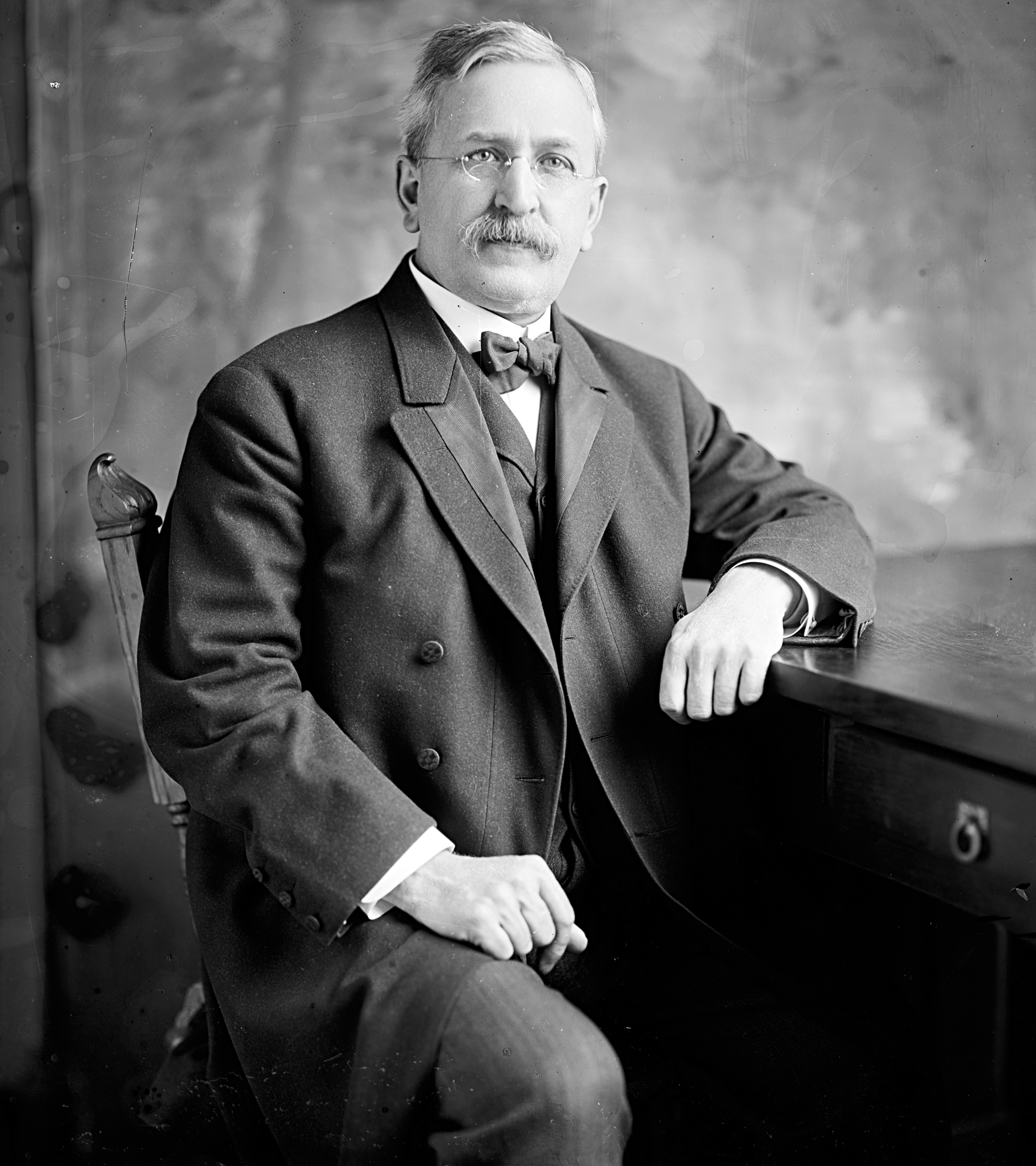
Historical · U.S. House · Illinois · District 16
Joseph Graff
Former U.S. Representative · Illinois District 16 · 1895–1911 · Republican
Joseph Graff represented Illinois's District 16 in the United States House of Representatives (1895–1911) for the Republican party. The page below collects sourced biographical facts, term history, committee roles, and provenance for Graff.
Bioguide ID: G000351
Key facts
- Full name
- Joseph Graff
- State
- Illinois
- District
- District 16
- Party
- Republican
- House service
- 1895–1911
- First House term
- 1895
- Status
- Left office
- Current term ends
- —
- Born
- 1854
- Bioguide ID
- G000351
- Committee assignments
- —
- Dataset version
- 1.20260606
Biographical narrative
980 words · sourced from the Wikipedia REST extract
Joseph Graff was a prominent figure in American politics during the late 19th and early 20th centuries, serving as a U.S. Representative for Illinois's 16th congressional district. A member of the Republican Party, Graff's congressional career spanned from 1895 to 1911, during which he was elected to eight consecutive terms. His background in law and education, along with his involvement in local governance, shaped his political career and legislative priorities. After leaving Congress, he continued his professional pursuits in law and banking until his death in 1921.
Early life and career
Joseph Graff was born on July 1, 1854, in Terre Haute, Indiana. He received his early education at Terre Haute High School, where he laid the groundwork for his future academic and professional endeavors. Following high school, Graff attended Wabash College in Crawfordsville, Indiana, for one year. This brief period of higher education contributed to his intellectual development and prepared him for his future career.
In 1873, Graff relocated to Delavan, Illinois, where he initially engaged in mercantile pursuits. His work in the business sector provided him with valuable experience in commerce and community engagement. However, Graff's ambitions extended beyond business; he pursued a career in law. He studied law diligently and was admitted to the bar in 1879, allowing him to commence his legal practice in Delavan. His legal career later transitioned to Pekin, Illinois, where he continued to build his reputation as a lawyer.
Graff's commitment to public service became evident early in his career. In 1891, he was elected as an inspector of the Pekin public schools, demonstrating his interest in education and community welfare. His dedication to the educational system led to his election as president of the board of education, where he played a significant role in shaping local educational policies and initiatives. Additionally, Graff's political involvement included serving as a delegate to the Republican National Convention in 1892, further solidifying his ties to the Republican Party and its platform.
House tenure
Joseph Graff's political career took a significant turn when he was elected to the United States House of Representatives. He began his first term on March 4, 1895, representing Illinois's 16th congressional district. Over the course of his tenure, Graff was elected to eight consecutive terms, reflecting the confidence his constituents had in his leadership and representation. His time in Congress was marked by a commitment to the principles of the Republican Party and an emphasis on legislative issues that aligned with his constituents' interests.
During his time in the House, Graff served on various committees, including a notable role as chairman of the Committee on Claims during the Fifty-sixth through Fifty-eighth Congresses. This committee was responsible for reviewing claims against the federal government, which often involved issues related to veterans, land grants, and other financial matters. His leadership in this capacity allowed him to influence significant legislation and advocate for the interests of his constituents, particularly in matters of financial claims and compensation.
Graff's legislative focus was shaped by the political landscape of the time, which included issues such as economic development, infrastructure, and veterans' affairs. His experience as a lawyer likely informed his approach to legislative matters, as he sought to navigate the complexities of federal law and advocate for policies that would benefit his district and the broader community.
Despite his success in Congress, Graff faced challenges as well. In 1910, he sought reelection to the Sixty-second Congress but was unsuccessful. This defeat marked the end of his congressional career, concluding a significant chapter in his life that had begun 15 years earlier. After leaving Congress, Graff returned to his legal practice in Peoria, Illinois, where he had moved in 1899. His continued engagement in law demonstrated his commitment to public service and the legal profession.
Legislative focus and committees
Throughout his congressional career, Joseph Graff's legislative focus reflected the priorities of his constituents and the broader Republican agenda. As a member of the House of Representatives, he was involved in various legislative initiatives that addressed the needs and concerns of his district. His role as chairman of the Committee on Claims allowed him to play a pivotal part in shaping legislation related to financial claims against the government, which often had direct implications for veterans and other individuals seeking compensation.
Graff's tenure in Congress coincided with a period of significant change in American society, including industrialization and urbanization. These changes brought about new challenges and opportunities for lawmakers, and Graff's legislative efforts were likely influenced by the evolving needs of his constituents. His background in law and experience in local governance equipped him with the skills necessary to navigate complex legislative issues and advocate for policies that would benefit his district.
In addition to his work on the Committee on Claims, Graff's involvement in other legislative matters reflected his commitment to addressing the concerns of his constituents. He was part of a larger Republican effort to promote economic growth and stability during a time of significant national change. His legislative priorities may have included issues related to infrastructure development, education, and economic policy, all of which were critical to the constituents he represented.
After concluding his congressional service in 1911, Graff continued to engage in public life through his legal practice and involvement in banking. His professional pursuits allowed him to maintain a connection to the community and contribute to the economic development of the region. Graff's life and career exemplify the journey of a dedicated public servant who navigated the complexities of American politics during a transformative era.
Joseph Graff passed away on November 10, 1921, in Peoria, Illinois. His contributions to public service and the legal profession left a lasting impact on his community. He was interred in Glendale Cemetery in Washington, Tazewell County, Illinois, where he is remembered as a significant figure in the political history of Illinois and the United States.
Notable legislation
Sponsored and co-sponsored legislation for Joseph Graff is pending operator curation. The biographical narrative above carries the same provenance trail until per-bill rows are written.
Sources
- [1]https://en.wikipedia.org/wiki/Joseph_V._GraffWikipedia · retrieved 2026-06-06
Notable quotes
Sourced quotes for Joseph Graff are pending operator curation. Narrative-scope provenance remains attached below.
Sources
- [1]https://en.wikipedia.org/wiki/Joseph_V._GraffWikipedia · retrieved 2026-06-06
Key positions
Curated policy positions for Joseph Graff are pending operator review. The biographical narrative above carries the same provenance trail until per-topic positions are written.
Sources
- [1]https://en.wikipedia.org/wiki/Joseph_V._GraffWikipedia · retrieved 2026-06-06
Terms served
- 1895–1897U.S. House · Term 1 · Republican
- 1897–1899U.S. House · Term 2 · Republican
- 1899–1901U.S. House · Term 3 · Republican
- 1901–1903U.S. House · Term 4 · Republican
- 1903–1905U.S. House · Term 5 · Republican
- 1905–1907U.S. House · Term 6 · Republican
- 1907–1909U.S. House · Term 7 · Republican
- 1909–1911U.S. House · Term 8 · Republican
Sources & provenance
Every attributable claim above carries a per-section [N] marker that resolves to the corresponding URL below. Each entry records the upstream provider, the canonical URL, and the timestamp at which the source was retrieved by the ingest pipeline.
Key facts
- https://bioguide.congress.gov/search/bio/G000351bioguide · retrieved 2026-06-06
- https://www.govtrack.us/congress/members/404707govtrack · retrieved 2026-06-06
Biographical narrative
- https://en.wikipedia.org/wiki/Joseph_V._Graffwikipedia · retrieved 2026-06-06
Find your representative
Every U.S. state elects representatives by district. Browse Illinois’s delegation, the full former-representative roster, or explore the role and term length.
Related on The Candidate
- Preceded by George FithianEarlier holder of the Illinois District 16 House seat · Democratic.Open
- Succeeded by Claudius StoneLater holder of the Illinois District 16 House seat · Democratic.Open
- Abner TaylorFormer U.S. Representative · Illinois District 1 · RepublicanOpen
- Adam SnyderFormer U.S. Representative · Illinois District 1 · DemocraticOpen
- Arthur MitchellFormer U.S. Representative · Illinois District 1 · DemocraticOpen
- Bennett StewartFormer U.S. Representative · Illinois District 1 · DemocraticOpen