
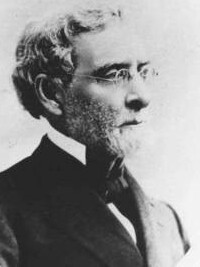
Historical · U.S. House · Illinois · District 17
Samuel Moulton
Former U.S. Representative · Illinois District 17 · 1865–1885 · Democratic
Samuel Moulton represented Illinois's District 17 in the United States House of Representatives (1865–1885) for the Democratic party. The page below collects sourced biographical facts, term history, committee roles, and provenance for Moulton.
Bioguide ID: M001047
Key facts
- Full name
- Samuel Moulton
- State
- Illinois
- District
- District 17
- Party
- Democratic
- House service
- 1865–1885
- First House term
- 1865
- Status
- Left office
- Current term ends
- —
- Born
- 1821
- Bioguide ID
- M001047
- Committee assignments
- —
- Dataset version
- 1.20260606
Biographical narrative
893 words · sourced from the Wikipedia REST extract
Samuel Moulton was a prominent American educator, attorney, and politician who served as a U.S. Representative for Illinois's 17th congressional district during the post-Civil War era. Born on January 20, 1821, in Wenham, Massachusetts, Moulton's career spanned various roles, including state legislator, university trustee, and a significant figure in the establishment of public education in Illinois. His legislative service in the U.S. House of Representatives lasted from 1865 until 1885, marking a notable period in his life dedicated to public service and educational reform.
Early life and career
Samuel Wheeler Moulton was born into a family with deep roots in Massachusetts. His father, William Moulton, and mother, Mary Lunt Moulton, provided a foundation for his early education. Moulton's lineage can be traced back to James Moulton, who is believed to have immigrated from Norfolk, England, to Essex County in the early 1630s. Moulton received his education in public schools within Essex County, which prepared him for a career that would eventually lead him to various educational and legal pursuits.
In pursuit of professional opportunities, Moulton moved to Kentucky after completing his education, where he began his career as a schoolteacher. He later relocated to Mississippi, continuing his teaching career and marrying Mary H. Affleck in 1844. After their marriage, the couple moved to Illinois in 1845, influenced by family ties, as Mary’s parents had previously settled in the state. Upon arriving in Illinois, Moulton began studying law and was admitted to the bar in 1847, establishing a legal practice in Sullivan, Illinois. He later moved to Shelbyville, where he continued to practice law and became known as a contemporary of Abraham Lincoln, with whom he collaborated on legal cases.
Moulton's entry into politics began with his election to the Illinois House of Representatives, where he served from 1852 to 1859. During his tenure, he championed the cause of free public education and played a crucial role in the establishment of what would become Illinois State University. His commitment to education was further exemplified by his appointment as the first president of the Illinois State Board of Education, a position he held from 1859 until 1876.
In addition to his educational contributions, Moulton served in the United States Army during the Civil War as an enrollment commissioner for the 10th District of Illinois. His military service, however, was marked by challenges, including a letter from President Lincoln expressing concerns about Moulton's performance in his role. Despite these difficulties, Moulton's dedication to public service remained evident throughout his career.
House tenure
Moulton's political career in the U.S. House of Representatives began when he was elected as an at-large Republican to the Thirty-ninth Congress, serving from March 4, 1865, to March 3, 1867. His election came after an unsuccessful bid for the Thirty-eighth Congress in 1862. Moulton's representation of Illinois's 17th congressional district was significant, particularly as he and fellow attorney Anthony Thornton from Shelbyville served concurrently, reflecting the political importance of their region during this period.
Throughout his congressional tenure, Moulton was recognized for his alignment with the Republican Party, particularly during the Reconstruction era following the Civil War. His political career was characterized by a commitment to the values of his party, which included a focus on civil rights and educational reform. Although he was a well-regarded member of the Illinois Republican establishment, he chose not to seek re-election after his first term, instead supporting General Logan, who was nominated to represent the party in subsequent elections.
Moulton's congressional service included participation in various legislative discussions and decisions that shaped the post-war landscape of the United States. His background in education and law informed his contributions to debates on policies affecting public education and civil rights, reflecting the broader societal changes occurring during this transformative period in American history.
Legislative focus and committees
During his time in the U.S. House of Representatives, Samuel Moulton's legislative focus was largely influenced by his background as an educator and his commitment to public service. His advocacy for educational reform was a defining aspect of his political career, aligning with his earlier efforts in the Illinois House of Representatives and as president of the Illinois State Board of Education. Moulton's experiences in these roles provided him with a unique perspective on the challenges and opportunities facing public education in the United States.
Moulton's involvement in the legislative process included serving on various committees, where he contributed to discussions on education, civil rights, and other pressing issues of the day. His work in Congress coincided with significant developments in American society, including the ongoing efforts to integrate formerly enslaved individuals into the fabric of American life. Moulton's commitment to these issues reflected the broader goals of the Republican Party during the Reconstruction era, as they sought to address the needs of a diverse and changing population.
After completing his congressional service, Moulton continued to engage in public life until his death on June 3, 1905. His legacy as an educator, attorney, and politician remains a testament to his contributions to the state of Illinois and the nation as a whole. Through his various roles, Moulton played a significant part in shaping educational policies and advocating for the rights of individuals during a pivotal time in American history. His career exemplifies the interconnectedness of education, law, and politics in the pursuit of social progress and public welfare.
Notable legislation
Sponsored and co-sponsored legislation for Samuel Moulton is pending operator curation. The biographical narrative above carries the same provenance trail until per-bill rows are written.
Sources
- [1]https://en.wikipedia.org/wiki/Samuel_W._MoultonWikipedia · retrieved 2026-06-06
Notable quotes
Sourced quotes for Samuel Moulton are pending operator curation. Narrative-scope provenance remains attached below.
Sources
- [1]https://en.wikipedia.org/wiki/Samuel_W._MoultonWikipedia · retrieved 2026-06-06
Key positions
Curated policy positions for Samuel Moulton are pending operator review. The biographical narrative above carries the same provenance trail until per-topic positions are written.
Sources
- [1]https://en.wikipedia.org/wiki/Samuel_W._MoultonWikipedia · retrieved 2026-06-06
Terms served
- 1865–1867U.S. House · Term 1 · Republican
- 1881–1883U.S. House · Term 2 · Democratic
- 1883–1885U.S. House · Term 3 · Democratic
Sources & provenance
Every attributable claim above carries a per-section [N] marker that resolves to the corresponding URL below. Each entry records the upstream provider, the canonical URL, and the timestamp at which the source was retrieved by the ingest pipeline.
Key facts
- https://bioguide.congress.gov/search/bio/M001047bioguide · retrieved 2026-06-06
- https://www.govtrack.us/congress/members/408014govtrack · retrieved 2026-06-06
Biographical narrative
- https://en.wikipedia.org/wiki/Samuel_W._Moultonwikipedia · retrieved 2026-06-06
Find your representative
Every U.S. state elects representatives by district. Browse Illinois’s delegation, the full former-representative roster, or explore the role and term length.
Related on The Candidate
- Succeeded by Edward LaneLater holder of the Illinois District 17 House seat · Democratic.Open
- Abner TaylorFormer U.S. Representative · Illinois District 1 · RepublicanOpen
- Adam SnyderFormer U.S. Representative · Illinois District 1 · DemocraticOpen
- Arthur MitchellFormer U.S. Representative · Illinois District 1 · DemocraticOpen
- Bennett StewartFormer U.S. Representative · Illinois District 1 · DemocraticOpen
- Democratic PartyFederal candidates and office holders on the Democratic line.Open