
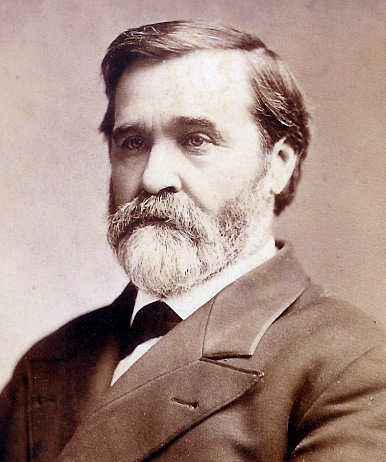
Historical · U.S. House · Illinois · District 18
William Morrison
Former U.S. Representative · Illinois District 18 · 1863–1887 · Democratic
William Morrison represented Illinois's District 18 in the United States House of Representatives (1863–1887) for the Democratic party. The page below collects sourced biographical facts, term history, committee roles, and provenance for Morrison.
Bioguide ID: M001000
Key facts
- Full name
- William Morrison
- State
- Illinois
- District
- District 18
- Party
- Democratic
- House service
- 1863–1887
- First House term
- 1863
- Status
- Left office
- Current term ends
- —
- Born
- 1824
- Bioguide ID
- M001000
- Committee assignments
- —
- Dataset version
- 1.20260606
Biographical narrative
1,001 words · sourced from the Wikipedia REST extract
William Morrison was an American politician who served as a U.S. Representative for Illinois's 18th congressional district. A member of the Democratic Party, he had a lengthy congressional career spanning eight terms from 1863 until 1887. Morrison's tenure in the House of Representatives was marked by his involvement in significant legislative matters, particularly in tariff reform, and his leadership roles on various congressional committees.
Early life and career
William Morrison was born on September 14, 1824, on a farm located at Prairie du Long, near what is now Waterloo, Illinois. He pursued his education at McKendree College in Lebanon, Illinois. Following his studies, Morrison served in the Mexican-American War, which contributed to his early experiences in military and civic leadership. In 1849, he traveled to California during the Gold Rush but returned to Illinois two years later in 1851.
Upon his return, Morrison studied law and was admitted to the bar in 1855, subsequently establishing a legal practice in Waterloo, Illinois. His early career included serving as the clerk of the circuit court for Monroe County from 1852 to 1854. He also entered politics, becoming a member of the Illinois House of Representatives, where he served multiple terms from 1854 to 1860 and again in 1870 and 1871. During his time in the state legislature, he held the position of speaker in 1859 and 1860, demonstrating his leadership abilities at a young age.
Morrison's personal life included his marriage to Eleanor Horan, a childhood acquaintance, when he was 27 years old and she was 17. His commitment to public service extended into the Civil War, where he played a significant role. In 1861, he helped organize the 49th Illinois Volunteer Infantry Regiment and was appointed as its colonel. The regiment was mustered into service at the end of December 1861 and was attached to Ulysses S. Grant's army at Cairo, Illinois. Morrison's leadership was recognized as he commanded a brigade during the Battle of Fort Donelson, where he was wounded. Following his injury, he resigned from military service in December 1863.
House tenure
Morrison's congressional career began while he was still serving in the military. He was elected as a Democrat to the Thirty-eighth Congress, serving from March 4, 1863, to March 3, 1865. After an unsuccessful bid for re-election in 1864 and a subsequent attempt in 1866, he returned to his law practice in Waterloo. However, he re-entered politics and was elected to the Forty-third Congress, serving from March 4, 1873, until March 3, 1887. Throughout his time in the House, Morrison was re-elected multiple times, establishing himself as a prominent figure within the Democratic Party.
During his tenure, Morrison held several significant committee positions. He served as chairman of the House Committee on Ways and Means during the Forty-fourth, Forty-eighth, and Forty-ninth Congresses, where he focused on fiscal policies and tariff issues. Additionally, he chaired the Committee on Public Lands during the Forty-fifth Congress and the Committee on Expenditures in the Department of the Treasury during the Forty-sixth Congress. His leadership roles reflected his influence within the House and his commitment to addressing key legislative matters.
Morrison's legislative efforts were often characterized by his pursuit of tariff reform. Despite his dedication to this cause, he faced considerable opposition, particularly from within his own party. His attempts to advance tariff reform legislation were met with resistance, and his proposals did not achieve the desired outcomes. Notably, his tariff bill faced significant obstruction, failing to reach a final vote in both 1884 and 1886. This opposition was largely attributed to tensions with other Democratic leaders, particularly Congressman Samuel J. Randall, who held differing views on tariff policies. Their longstanding rivalry influenced Morrison's ability to navigate the complexities of legislative negotiations.
Legislative focus and committees
Throughout his congressional career, Morrison's primary focus was on economic issues, particularly those related to tariffs and public finance. As chairman of the Committee on Ways and Means, he sought to implement reforms aimed at adjusting tariff rates, which he believed were necessary for economic growth and fairness. However, his efforts were often thwarted by internal party dynamics and competing interests among lawmakers.
Morrison's tenure was marked by a notable lack of success in passing significant tariff reform legislation. His proposed bills encountered substantial opposition, leading to frustrations within the Democratic caucus. The political landscape of the time was complicated by differing opinions on how protective tariffs should be, and Morrison's attempts to advocate for lower rates faced challenges from more protectionist members of his party. This internal conflict hindered his ability to advance his legislative agenda effectively.
In addition to his work on the Committee on Ways and Means, Morrison's involvement in other committees allowed him to engage with various aspects of governance. His chairmanship of the Committee on Public Lands and the Committee on Expenditures in the Department of the Treasury provided him with opportunities to influence policies related to land management and federal spending. These roles underscored his commitment to addressing the needs of his constituents and the broader public.
Morrison's personality and approach to politics were often described as unpretentious. He was not known for his oratory skills or charismatic presence, which may have limited his effectiveness in rallying support for his initiatives. His demeanor was likened to that of a "village lawyer," reflecting a straightforward and practical approach to his work in Congress. Despite these challenges, Morrison remained a dedicated public servant until the end of his congressional career.
William Morrison's legislative legacy is characterized by his long service in the U.S. House of Representatives and his commitment to addressing economic issues through tariff reform and fiscal policy. His career spanned a transformative period in American history, and his efforts to navigate the complexities of legislative leadership and party dynamics remain a notable aspect of his biography. After concluding his final term in 1887, Morrison's contributions to American politics continued to be recognized, and he remained a respected figure in his community until his passing on September 29, 1909.
Notable legislation
Sponsored and co-sponsored legislation for William Morrison is pending operator curation. The biographical narrative above carries the same provenance trail until per-bill rows are written.
Sources
- [1]https://en.wikipedia.org/wiki/William_Ralls_MorrisonWikipedia · retrieved 2026-06-06
Notable quotes
Sourced quotes for William Morrison are pending operator curation. Narrative-scope provenance remains attached below.
Sources
- [1]https://en.wikipedia.org/wiki/William_Ralls_MorrisonWikipedia · retrieved 2026-06-06
Key positions
Curated policy positions for William Morrison are pending operator review. The biographical narrative above carries the same provenance trail until per-topic positions are written.
Sources
- [1]https://en.wikipedia.org/wiki/William_Ralls_MorrisonWikipedia · retrieved 2026-06-06
Terms served
- 1863–1865U.S. House · Term 1 · Democratic
- 1873–1875U.S. House · Term 2 · Democratic
- 1875–1877U.S. House · Term 3 · Democratic
- 1877–1879U.S. House · Term 4 · Democratic
- 1879–1881U.S. House · Term 5 · Democratic
- 1881–1883U.S. House · Term 6 · Democratic
- 1883–1885U.S. House · Term 7 · Democratic
- 1885–1887U.S. House · Term 8 · Democratic
Sources & provenance
Every attributable claim above carries a per-section [N] marker that resolves to the corresponding URL below. Each entry records the upstream provider, the canonical URL, and the timestamp at which the source was retrieved by the ingest pipeline.
Key facts
- https://bioguide.congress.gov/search/bio/M001000bioguide · retrieved 2026-06-06
- https://www.govtrack.us/congress/members/407968govtrack · retrieved 2026-06-06
Biographical narrative
- https://en.wikipedia.org/wiki/William_Ralls_Morrisonwikipedia · retrieved 2026-06-06
Find your representative
Every U.S. state elects representatives by district. Browse Illinois’s delegation, the full former-representative roster, or explore the role and term length.
Related on The Candidate
- Succeeded by William FormanLater holder of the Illinois District 18 House seat · Democratic.Open
- Abner TaylorFormer U.S. Representative · Illinois District 1 · RepublicanOpen
- Adam SnyderFormer U.S. Representative · Illinois District 1 · DemocraticOpen
- Arthur MitchellFormer U.S. Representative · Illinois District 1 · DemocraticOpen
- Bennett StewartFormer U.S. Representative · Illinois District 1 · DemocraticOpen
- Democratic PartyFederal candidates and office holders on the Democratic line.Open