
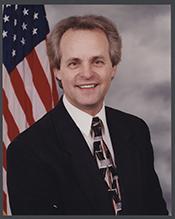
Historical · U.S. House · Illinois · District 19
David Phelps
Former U.S. Representative · Illinois District 19 · 1999–2003 · Democratic
David Phelps represented Illinois's District 19 in the United States House of Representatives (1999–2003) for the Democratic party. The page below collects sourced biographical facts, term history, committee roles, and provenance for Phelps.
Bioguide ID: P000584
Key facts
- Full name
- David Phelps
- State
- Illinois
- District
- District 19
- Party
- Democratic
- House service
- 1999–2003
- First House term
- 1999
- Status
- Left office
- Current term ends
- —
- Born
- 1947
- Bioguide ID
- P000584
- Committee assignments
- —
- Dataset version
- 1.20260605
Biographical narrative
935 words · sourced from the Wikipedia REST extract
David D. Phelps is a former American politician and educator who served as a Democratic member of the U.S. House of Representatives, representing Illinois's 19th congressional district from 1999 until 2003. His career in public service is marked by his background in education and local governance, as well as his tenure in state and federal legislative roles. Phelps' political career spanned several decades, during which he engaged in various legislative efforts and faced significant electoral challenges.
Early life and career
David Dwain Phelps was born on October 26, 1947, in Eldorado, Illinois. He pursued higher education at Southern Illinois University, where he graduated in 1969. Phelps initially trained as an educator, a profession he embraced for several years before transitioning into school administration. His experience in education laid a foundation for his later political career, as he developed a strong understanding of the issues affecting schools and communities.
In addition to his work in education, Phelps entered public service at the local level. From 1980 to 1984, he served as the Saline County Clerk and Recorder, where he gained experience in government operations and public administration. Following this role, Phelps was elected to the Illinois House of Representatives, where he served from 1984 until 1998. His time in the state legislature allowed him to build a network of political connections and gain insights into the legislative process, which would later inform his work at the federal level.
Phelps' political career in the Illinois House was characterized by his engagement with various issues, particularly those affecting his constituents in southern Illinois. His background in education and local governance provided him with a unique perspective on the challenges faced by his community, and he sought to address these challenges through his legislative efforts.
House tenure
In 1998, David Phelps was elected to the U.S. House of Representatives, succeeding long-serving incumbent Glenn Poshard, who had opted to run for governor. Phelps' election marked a significant transition in his political career, as he moved from state to federal office. He began his first term in Congress in January 1999, representing Illinois's 19th congressional district.
Phelps' tenure in the House was marked by a series of legislative initiatives and a commitment to his constituents. However, his time in Congress was not without challenges. Following the 2000 Census, Illinois lost one congressional district, leading to significant redistricting that affected Phelps' electoral prospects. The redistricting process resulted in the dismantling of his district, which was split among three neighboring districts. This change meant that Phelps' home in Eldorado was drawn into the Champaign-Urbana-based 15th District, while Decatur, a key area of his former district, was shifted to the Quad Cities-based 17th District. The majority of his former district was merged with the neighboring 20th District.
In the 2002 election, Phelps faced Republican incumbent John Shimkus in a highly contentious race for the newly configured 19th District. Although the district retained its numerical designation, it was geographically and demographically more aligned with Shimkus' political base. Phelps only retained about 35 percent of his previous territory, which posed a significant challenge in his re-election campaign. The race was marked by intense rivalry, with both candidates accusing each other's staff of inappropriate behavior. Ultimately, Phelps lost the election to Shimkus by a substantial margin, concluding his congressional career on January 3, 2003.
Legislative focus and committees
During his time in the U.S. House of Representatives, David Phelps was known for his alignment with the Blue Dog Coalition, a group of moderate Democrats who often advocated for fiscal responsibility and centrist policies. His legislative focus included issues related to education, public safety, and social conservatism. Phelps was recognized for his strong anti-abortion stance and support for gun rights, reflecting the values of many constituents in his district.
In addition to his legislative priorities, Phelps co-sponsored the Federal Marriage Amendment, which sought to define marriage at the federal level. His involvement in this initiative highlighted his commitment to traditional values, which resonated with a segment of the electorate in his district.
Beyond his legislative work, Phelps also engaged in activities that reflected his personal interests and background. He was a professional songwriter and toured the country as a gospel singer, performing in a quartet with his brothers. His musical talents extended to his role as the hymn director for the Congressional Weekly Prayer Breakfast on Capitol Hill, where he contributed to the spiritual life of the legislative community.
After leaving Congress, Phelps continued to be involved in public service. He served as an assistant director of the Illinois Department of Transportation from 2003 to 2011. However, his tenure in this role was marred by controversy, as he was found by the Illinois Office of Executive Inspector General to have engaged in behavior that warranted a ban from working in state government. Phelps resigned from his position amid a scandal involving allegations against one of his deputies.
In the years following his congressional career, Phelps remained active in local governance. As of August 2017, he was serving on the Saline County Board, continuing his commitment to public service at the local level. His family has also been involved in politics, with both his nephew, Brandon Phelps, and his daughter, Natalie Phelps Finnie, serving as members of the Illinois House of Representatives from the 118th district.
David Phelps' career reflects a blend of educational commitment, public service, and political engagement, illustrating the complexities of a life dedicated to serving his community and constituents. His experiences in both state and federal government provide insights into the challenges and responsibilities faced by elected officials in the United States.
Notable legislation
Sponsored and co-sponsored legislation for David Phelps is pending operator curation. The biographical narrative above carries the same provenance trail until per-bill rows are written.
Sources
- [1]https://en.wikipedia.org/wiki/David_Phelps_(politician)Wikipedia · retrieved 2026-06-05
Notable quotes
Sourced quotes for David Phelps are pending operator curation. Narrative-scope provenance remains attached below.
Sources
- [1]https://en.wikipedia.org/wiki/David_Phelps_(politician)Wikipedia · retrieved 2026-06-05
Key positions
Curated policy positions for David Phelps are pending operator review. The biographical narrative above carries the same provenance trail until per-topic positions are written.
Sources
- [1]https://en.wikipedia.org/wiki/David_Phelps_(politician)Wikipedia · retrieved 2026-06-05
Terms served
- 1999–2001U.S. House · Term 1 · Democratic
- 2001–2003U.S. House · Term 2 · Democratic
Sources & provenance
Every attributable claim above carries a per-section [N] marker that resolves to the corresponding URL below. Each entry records the upstream provider, the canonical URL, and the timestamp at which the source was retrieved by the ingest pipeline.
Key facts
- https://bioguide.congress.gov/search/bio/P000584bioguide · retrieved 2026-06-05
- https://www.govtrack.us/congress/members/400519govtrack · retrieved 2026-06-05
Biographical narrative
- https://en.wikipedia.org/wiki/David_Phelps_(politician)wikipedia · retrieved 2026-06-05
Find your representative
Every U.S. state elects representatives by district. Browse Illinois’s delegation, the full former-representative roster, or explore the role and term length.
Related on The Candidate
- Preceded by Glenn PoshardEarlier holder of the Illinois District 19 House seat · Democratic.Open
- Abner TaylorFormer U.S. Representative · Illinois District 1 · RepublicanOpen
- Adam SnyderFormer U.S. Representative · Illinois District 1 · DemocraticOpen
- Arthur MitchellFormer U.S. Representative · Illinois District 1 · DemocraticOpen
- Bennett StewartFormer U.S. Representative · Illinois District 1 · DemocraticOpen
- Democratic PartyFederal candidates and office holders on the Democratic line.Open