
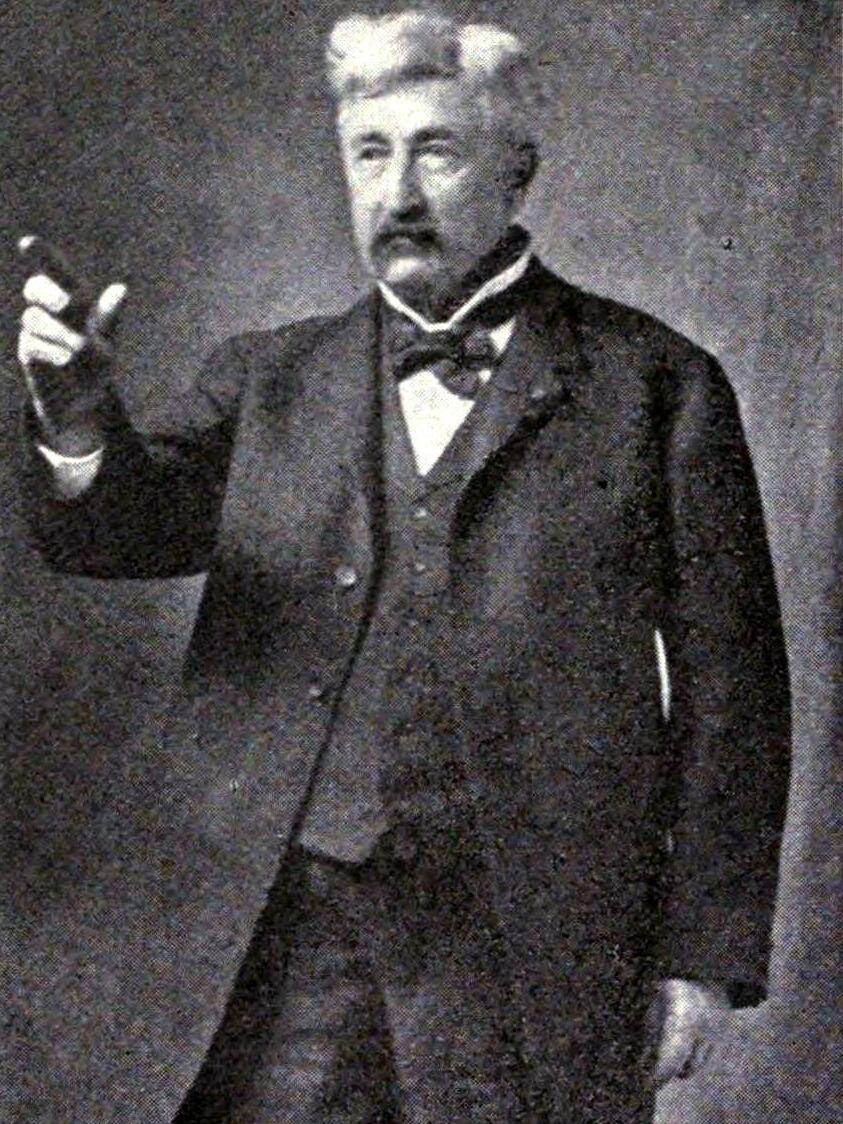
Historical · U.S. House · Illinois · District 19
Vespasian Warner
Former U.S. Representative · Illinois District 19 · 1895–1905 · Republican
Vespasian Warner represented Illinois's District 19 in the United States House of Representatives (1895–1905) for the Republican party. The page below collects sourced biographical facts, term history, committee roles, and provenance for Warner.
Bioguide ID: W000158
Key facts
- Full name
- Vespasian Warner
- State
- Illinois
- District
- District 19
- Party
- Republican
- House service
- 1895–1905
- First House term
- 1895
- Status
- Left office
- Current term ends
- —
- Born
- 1842
- Bioguide ID
- W000158
- Committee assignments
- —
- Dataset version
- 1.20260606
Biographical narrative
894 words · sourced from the Wikipedia REST extract
Vespasian Warner was a prominent U.S. Representative from Illinois, serving in the House of Representatives as a member of the Republican Party from 1895 until 1905. His political career spanned five terms, during which he was involved in various legislative efforts and held significant committee positions. Beyond his congressional service, Warner was also a veteran of the Civil War and had a successful career in law and business, contributing to his community in various capacities.
Early life and career
Vespasian Warner was born on April 23, 1842, in Mount Pleasant, which is now known as Farmer City, located in De Witt County, Illinois. In 1843, when Warner was just a year old, his family moved to Clinton, Illinois, where he would spend much of his early life. He received his education in the public schools of Clinton and furthered his studies at Lombard College in Galesburg, Illinois. Warner's academic pursuits included a focus on law, which he began studying in Clinton.
Warner's early career was significantly shaped by his military service during the American Civil War. He enlisted as a private in Company E of the 20th Regiment, Illinois Volunteer Infantry, on June 13, 1861. His dedication and leadership abilities led to a series of promotions: he became a sergeant shortly after his enlistment, was promoted to second lieutenant in early 1862, and later achieved the rank of captain and commissary of subsistence in February 1865. By the end of the war, he was brevetted to the rank of major on March 13, 1865, and was mustered out of service on July 13, 1866.
After the war, Warner pursued a legal education at Harvard University, graduating from the law department in 1868. He returned to Clinton the same year to begin his law practice, partnering with his father-in-law, Clifton H. Moore. This partnership not only marked the beginning of his professional career but also established his roots in the community, where he would later become a significant public figure.
House tenure
Vespasian Warner's political career in the U.S. House of Representatives began when he was elected as a Republican to the Fifty-fourth Congress, which commenced on March 4, 1895. He was subsequently re-elected to four additional terms, serving in total for a decade until March 3, 1905. During his time in Congress, Warner was involved in various legislative activities and contributed to discussions and decisions that shaped national policies.
Throughout his congressional tenure, Warner held the position of chairman of the Committee on Revision of the Laws during the Fifty-fifth through Fifty-eighth Congresses. This role placed him at the forefront of efforts to review and update existing laws, ensuring that they remained relevant and effective in addressing the needs of the American populace. His leadership in this committee underscored his commitment to legislative reform and governance.
In 1904, Warner sought to further his political career by running for Governor of Illinois as a Republican candidate. However, he was unsuccessful in securing his party's nomination. The Republican nomination ultimately went to Charles S. Deneen, who won the general election. Following this electoral setback, Warner was nominated by President Theodore Roosevelt to serve as the United States Commissioner of Pensions, a position he held from March 4, 1905, until November 25, 1909. This role involved overseeing an agency within the Department of the Interior that was responsible for managing veterans' benefits, reflecting Warner's ongoing commitment to public service and support for those who had served in the military.
Legislative focus and committees
During his five terms in the House of Representatives, Vespasian Warner's legislative focus encompassed a range of issues pertinent to his constituents and the nation. His role as chairman of the Committee on Revision of the Laws highlighted his interest in legal reform and the modernization of legislative frameworks. This committee was responsible for reviewing existing laws and proposing necessary amendments or repeals, which was crucial for maintaining an effective legal system.
Warner's legislative activities were likely influenced by his background in law and his experiences as a Civil War veteran. His understanding of the legal system and the challenges faced by veterans may have informed his approach to legislation concerning military and veterans' affairs. This connection to military service was further emphasized by his later appointment as the United States Commissioner of Pensions, where he continued to advocate for the rights and benefits of veterans.
In addition to his legislative responsibilities, Warner was active in his community outside of Congress. He engaged in various business ventures in Clinton, Illinois, including banking and real estate. His contributions to the local community extended beyond his political and professional endeavors. Notably, he played a significant role in the establishment of the Vespasian Warner Public Library. After the death of his father-in-law, Clifton H. Moore, who was a passionate book collector, Warner donated funds and land to create a public library in Clinton. This library, which opened in 1908, continues to serve the community today, reflecting Warner's lasting impact on local education and culture.
Vespasian Warner passed away on March 31, 1925, in Clinton, Illinois. His legacy is marked by his service in the U.S. House of Representatives, his contributions to the legal profession, and his commitment to community development through initiatives such as the public library. He was interred in Woodlawn Cemetery, leaving behind a record of public service that spanned several decades.
Notable legislation
Sponsored and co-sponsored legislation for Vespasian Warner is pending operator curation. The biographical narrative above carries the same provenance trail until per-bill rows are written.
Sources
- [1]https://en.wikipedia.org/wiki/Vespasian_WarnerWikipedia · retrieved 2026-06-06
Notable quotes
Sourced quotes for Vespasian Warner are pending operator curation. Narrative-scope provenance remains attached below.
Sources
- [1]https://en.wikipedia.org/wiki/Vespasian_WarnerWikipedia · retrieved 2026-06-06
Key positions
Curated policy positions for Vespasian Warner are pending operator review. The biographical narrative above carries the same provenance trail until per-topic positions are written.
Sources
- [1]https://en.wikipedia.org/wiki/Vespasian_WarnerWikipedia · retrieved 2026-06-06
Terms served
- 1895–1897U.S. House · Term 1 · Republican
- 1897–1899U.S. House · Term 2 · Republican
- 1899–1901U.S. House · Term 3 · Republican
- 1901–1903U.S. House · Term 4 · Republican
- 1903–1905U.S. House · Term 5 · Republican
Sources & provenance
Every attributable claim above carries a per-section [N] marker that resolves to the corresponding URL below. Each entry records the upstream provider, the canonical URL, and the timestamp at which the source was retrieved by the ingest pipeline.
Key facts
- https://bioguide.congress.gov/search/bio/W000158bioguide · retrieved 2026-06-06
- https://www.govtrack.us/congress/members/411331govtrack · retrieved 2026-06-06
Biographical narrative
- https://en.wikipedia.org/wiki/Vespasian_Warnerwikipedia · retrieved 2026-06-06
Find your representative
Every U.S. state elects representatives by district. Browse Illinois’s delegation, the full former-representative roster, or explore the role and term length.
Related on The Candidate
- Preceded by Richard TownshendEarlier holder of the Illinois District 19 House seat · Democratic.Open
- Succeeded by Charles BorchersLater holder of the Illinois District 19 House seat · Democratic.Open
- Abner TaylorFormer U.S. Representative · Illinois District 1 · RepublicanOpen
- Adam SnyderFormer U.S. Representative · Illinois District 1 · DemocraticOpen
- Arthur MitchellFormer U.S. Representative · Illinois District 1 · DemocraticOpen
- Bennett StewartFormer U.S. Representative · Illinois District 1 · DemocraticOpen