
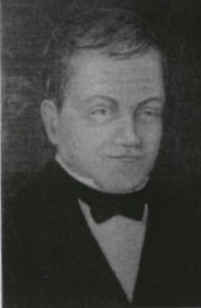
Historical · U.S. House · Illinois · District 2
Zadok Casey
Former U.S. Representative · Illinois District 2 · 1833–1843 · Ind. Democrat
Zadok Casey represented Illinois's District 2 in the United States House of Representatives (1833–1843) for the Ind. Democrat party. The page below collects sourced biographical facts, term history, committee roles, and provenance for Casey.
Bioguide ID: C000230
Key facts
- Full name
- Zadok Casey
- State
- Illinois
- District
- District 2
- Party
- Ind. Democrat
- House service
- 1833–1843
- First House term
- 1833
- Status
- Left office
- Current term ends
- —
- Born
- 1796
- Bioguide ID
- C000230
- Committee assignments
- —
- Dataset version
- 1.20260606
Biographical narrative
877 words · sourced from the Wikipedia REST extract
Zadok Casey was an American politician who served as a U.S. Representative from Illinois, representing the second congressional district. A member of the Independent Democratic Party, he held office for five terms in the House of Representatives from 1833 until 1843. Casey was also a significant figure in the early development of Illinois, notably as a founder of the city of Mount Vernon. His political career spanned several decades, during which he engaged in various roles at both the state and federal levels.
Early life and career
Zadok Casey was born on March 7, 1796, in Greene County, Georgia. His early life is not extensively documented, but it is known that his father, Randolph Casey, served in the Revolutionary War alongside notable figures such as Francis Marion. In 1800, the Casey family relocated to Tennessee, where Zadok spent his formative years. In 1817, Casey moved to Illinois with his wife, son, and widowed mother, contributing to the establishment of the city of Mount Vernon around the same time.
Casey was a devout Wesleyan and began his career as a preacher in his youth. His religious convictions led him to play a pivotal role in founding the Society of the Methodist Episcopal Church in Mount Vernon, where he conducted the church's inaugural services. His commitment to community service extended beyond his religious duties; in 1819, he was instrumental in the organization of Jefferson County, Illinois, and began his political career by serving on its first Board of County Commissioners.
Despite an unsuccessful bid for the Illinois House of Representatives in 1820, Casey persevered and won elections to the Illinois House in 1822 and 1824. His political career continued to ascend when he secured a seat in the Illinois Senate in 1826, serving until 1830. In that year, he was elected as Illinois's fourth Lieutenant Governor, further solidifying his influence in state politics.
House tenure
Zadok Casey's congressional career began with his election to the United States House of Representatives in 1832, following the apportionment of three congressional seats to Illinois after the 1830 Census. He represented the newly created second congressional district, marking the beginning of a significant tenure in the House. Casey's first term commenced in 1833, and he was re-elected for a total of five terms, serving until March 3, 1843.
During his time in Congress, Casey was known for his efforts to secure federal support for infrastructure projects in Illinois. A notable achievement was his role in obtaining a land grant that facilitated the establishment of the Illinois Central Railroad, which was crucial for the state's economic development. His tenure was characterized by his alignment with the Jacksonian Democratic Party, reflecting the political landscape of the time.
In the latter part of his congressional career, Casey transitioned to the role of an Independent Democrat, signaling a shift in his political affiliations. Despite his contributions and popularity, he faced electoral challenges and ultimately lost his re-election bid in 1842 to John A. McClernand.
Legislative focus and committees
Throughout his time in the House of Representatives, Zadok Casey was involved in various legislative initiatives and committees that reflected the interests and needs of his constituents. His focus on infrastructure development, particularly the Illinois Central Railroad, underscored his commitment to enhancing the state's transportation network and economic prospects. This project was significant in connecting different regions of Illinois and facilitating trade and commerce.
In addition to his work on transportation issues, Casey's political career was marked by his involvement in state constitutional conventions. After his congressional tenure, he served as a delegate to the state constitutional conventions of 1847 and 1862. His participation in these conventions was part of broader discussions regarding the governance and constitutional framework of Illinois, including contentious issues such as slavery.
During his earlier service in the Illinois House of Representatives, Casey had also supported a proposed state constitutional convention in 1824, which aimed to draft a constitution that would allow for the expansion of slavery within the state. This reflects the complex political landscape of the time, as debates over slavery were increasingly polarizing.
Casey continued to engage in state politics after his congressional career, returning to the Illinois House from 1848 to 1852, where he served as speaker from 1849 to 1851. He also resumed his role in the Illinois State Senate from 1860 until his death in 1862. His legislative work during these years contributed to the ongoing development of Illinois's political and legal framework.
Zadok Casey's legacy extends beyond his political achievements; he played a significant role in the founding of Caseyville, Illinois, which was named in his honor. His contributions to the financing of the Ohio and Mississippi Railway, which traversed the town, further cemented his impact on the region's development. Additionally, Casey Creek, a tributary of the Big Muddy River, is named after him, as are local institutions such as Casey Middle School and Casey Avenue in Mount Vernon.
Zadok Casey passed away on September 4, 1862, in Caseyville, Illinois, at the age of 66. He was interred at Old Union Cemetery in Mount Vernon, leaving behind a legacy as a prominent figure in the early political landscape of Illinois and a key contributor to the state's development during a formative period in American history.
Notable legislation
Sponsored and co-sponsored legislation for Zadok Casey is pending operator curation. The biographical narrative above carries the same provenance trail until per-bill rows are written.
Sources
- [1]https://en.wikipedia.org/wiki/Zadok_CaseyWikipedia · retrieved 2026-06-06
Notable quotes
Sourced quotes for Zadok Casey are pending operator curation. Narrative-scope provenance remains attached below.
Sources
- [1]https://en.wikipedia.org/wiki/Zadok_CaseyWikipedia · retrieved 2026-06-06
Key positions
Curated policy positions for Zadok Casey are pending operator review. The biographical narrative above carries the same provenance trail until per-topic positions are written.
Sources
- [1]https://en.wikipedia.org/wiki/Zadok_CaseyWikipedia · retrieved 2026-06-06
Terms served
- 1833–1835U.S. House · Term 1 · Jackson
- 1835–1837U.S. House · Term 2 · Jackson
- 1837–1839U.S. House · Term 3 · Democratic
- 1839–1841U.S. House · Term 4 · Democratic
- 1841–1843U.S. House · Term 5 · Ind. Democrat
Sources & provenance
Every attributable claim above carries a per-section [N] marker that resolves to the corresponding URL below. Each entry records the upstream provider, the canonical URL, and the timestamp at which the source was retrieved by the ingest pipeline.
Key facts
- https://bioguide.congress.gov/search/bio/C000230bioguide · retrieved 2026-06-06
- https://www.govtrack.us/congress/members/402375govtrack · retrieved 2026-06-06
Biographical narrative
- https://en.wikipedia.org/wiki/Zadok_Caseywikipedia · retrieved 2026-06-06
Find your representative
Every U.S. state elects representatives by district. Browse Illinois’s delegation, the full former-representative roster, or explore the role and term length.
Related on The Candidate
- Succeeded by James WoodworthLater holder of the Illinois District 2 House seat · Ind. Republican-Democrat.Open
- Abner TaylorFormer U.S. Representative · Illinois District 1 · RepublicanOpen
- Adam SnyderFormer U.S. Representative · Illinois District 1 · DemocraticOpen
- Arthur MitchellFormer U.S. Representative · Illinois District 1 · DemocraticOpen
- Bennett StewartFormer U.S. Representative · Illinois District 1 · DemocraticOpen
- Representatives from IllinoisEvery former U.S. Representative who has represented Illinois.Open