
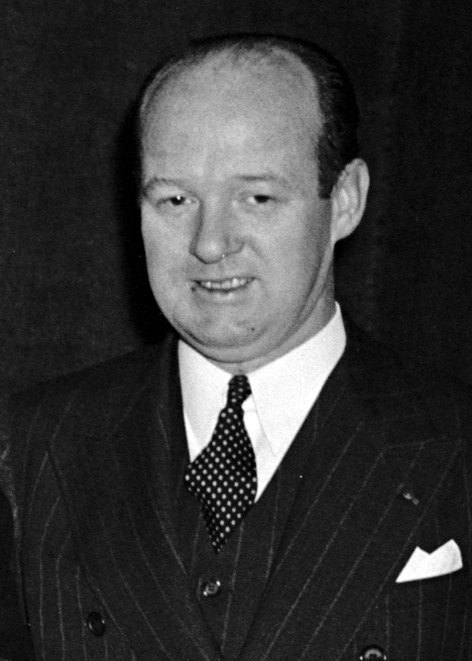
Historical · U.S. House · Illinois · District 20
James Barnes
Former U.S. Representative · Illinois District 20 · 1939–1943 · Democratic
James Barnes represented Illinois's District 20 in the United States House of Representatives (1939–1943) for the Democratic party. The page below collects sourced biographical facts, term history, committee roles, and provenance for Barnes.
Bioguide ID: B000158
Key facts
- Full name
- James Barnes
- State
- Illinois
- District
- District 20
- Party
- Democratic
- House service
- 1939–1943
- First House term
- 1939
- Status
- Left office
- Current term ends
- —
- Born
- 1899
- Bioguide ID
- B000158
- Committee assignments
- —
- Dataset version
- 1.20260605
Biographical narrative
938 words · sourced from the Wikipedia REST extract
James Barnes was a prominent American politician who served as a U.S. Representative from Illinois, representing the 20th congressional district as a member of the Democratic Party. His tenure in the House of Representatives spanned from 1939 until 1943, during which he participated in significant legislative activities and contributed to the political landscape of his time. Following his congressional service, Barnes held a notable position as an administrative assistant to Presidents Franklin D. Roosevelt and Harry S. Truman, further establishing his influence in American politics. His life and career reflect a commitment to public service, law, and governance.
Early life and career
James Martin Barnes was born on January 9, 1899, in Jacksonville, Illinois. His formative years were spent in this Midwestern city, where he attended local schools and developed an early interest in civic engagement and leadership. In pursuit of his education, Barnes enlisted in the United States Marine Corps during World War I, an experience that likely shaped his views on service and duty to the nation. After the war, he returned to civilian life and continued his education, graduating from Illinois College in 1921. He then attended Harvard Law School, where he earned his law degree in 1924.
Upon completing his education, Barnes was admitted to the bar in the same year and began practicing law in Jacksonville. His legal career was complemented by his involvement in various business ventures, where he served on the boards of directors for several companies, including the Ideal Baking Company and the Jacksonville Farm Supply Company. This combination of legal expertise and business acumen provided him with a solid foundation for his future political career.
Barnes's entry into public service began when he was elected as the Morgan County Judge, a position he held from 1926 to 1934. This role allowed him to gain valuable experience in the judicial system and public administration. After his tenure as judge, he returned to private practice in law, further solidifying his reputation in the legal community. His background in law and governance positioned him well for a future in politics.
House tenure
James Barnes's political career took a significant turn when he was elected to the U.S. House of Representatives, beginning his first term on January 3, 1939. He served in the Seventy-sixth and Seventy-seventh Congresses, representing the interests of his constituents in Illinois's 20th congressional district. During his time in Congress, Barnes was involved in various legislative initiatives and discussions that shaped national policy during a critical period in American history, which included the lead-up to World War II and the early years of the conflict.
Barnes's congressional service lasted until January 3, 1943. Throughout his two terms, he worked alongside other lawmakers to address pressing issues of the day, including economic recovery efforts during the Great Depression and the mobilization of resources for the war effort. His work in Congress was marked by a commitment to his constituents and a focus on the broader implications of legislation on American society.
Despite his efforts and contributions, Barnes faced challenges in his political career. In 1942, he ran for re-election but was unsuccessful in securing another term in office. This defeat marked the end of his direct legislative career, but it did not signify the end of his involvement in public service.
Legislative focus and committees
During his time in the House of Representatives, James Barnes was engaged in a variety of legislative issues, reflecting the complex political landscape of the late 1930s and early 1940s. While specific details regarding his committee assignments and legislative achievements are not extensively documented, it is known that his work was influenced by the pressing needs of the nation during a time of economic hardship and impending global conflict.
As a member of the Democratic Party, Barnes aligned with the party's broader goals of social welfare and economic recovery. His legislative focus likely included support for New Deal initiatives aimed at revitalizing the American economy and providing relief to those affected by the Great Depression. Additionally, as the nation prepared for and entered World War II, Barnes would have been involved in discussions related to military preparedness, resource allocation, and the support of war-related industries.
Following his departure from Congress, Barnes transitioned to a significant role in the executive branch of the federal government. In March 1943, he was appointed as an administrative assistant to President Franklin D. Roosevelt. This position allowed him to continue influencing national policy and governance, particularly during a critical period of the war. After Roosevelt's death in April 1945, Barnes continued to serve in this capacity under President Harry S. Truman until July 15, 1945. His work in the White House further demonstrated his commitment to public service and his ability to navigate the complexities of federal governance.
In addition to his roles in Congress and the White House, Barnes was also active in the Democratic National Convention in 1944, where he contributed to the party's platform and strategies during a pivotal election year. After his time in the White House, he returned to the legal profession, practicing law in Washington, D.C., where he continued to apply his expertise in governance and public policy.
James Barnes passed away on June 8, 1958, in Washington, D.C. His contributions to American politics, both as a U.S. Representative and as an administrative assistant to two presidents, reflect a life dedicated to public service and the pursuit of justice. He was laid to rest at Arlington National Cemetery, a testament to his service to the nation. His legacy continues to be remembered as part of the rich tapestry of American political history.
Notable legislation
Sponsored and co-sponsored legislation for James Barnes is pending operator curation. The biographical narrative above carries the same provenance trail until per-bill rows are written.
Sources
- [1]https://en.wikipedia.org/wiki/James_M._Barnes_(politician)Wikipedia · retrieved 2026-06-05
Notable quotes
Sourced quotes for James Barnes are pending operator curation. Narrative-scope provenance remains attached below.
Sources
- [1]https://en.wikipedia.org/wiki/James_M._Barnes_(politician)Wikipedia · retrieved 2026-06-05
Key positions
Curated policy positions for James Barnes are pending operator review. The biographical narrative above carries the same provenance trail until per-topic positions are written.
Sources
- [1]https://en.wikipedia.org/wiki/James_M._Barnes_(politician)Wikipedia · retrieved 2026-06-05
Terms served
- 1939–1941U.S. House · Term 1 · Democratic
- 1941–1943U.S. House · Term 2 · Democratic
Sources & provenance
Every attributable claim above carries a per-section [N] marker that resolves to the corresponding URL below. Each entry records the upstream provider, the canonical URL, and the timestamp at which the source was retrieved by the ingest pipeline.
Key facts
- https://bioguide.congress.gov/search/bio/B000158bioguide · retrieved 2026-06-05
- https://www.govtrack.us/congress/members/401160govtrack · retrieved 2026-06-05
Biographical narrative
- https://en.wikipedia.org/wiki/James_M._Barnes_(politician)wikipedia · retrieved 2026-06-05
Find your representative
Every U.S. state elects representatives by district. Browse Illinois’s delegation, the full former-representative roster, or explore the role and term length.
Related on The Candidate
- Preceded by Henry RaineyEarlier holder of the Illinois District 20 House seat · Democratic.Open
- Succeeded by Sidney SimpsonLater holder of the Illinois District 20 House seat · Republican.Open
- Abner TaylorFormer U.S. Representative · Illinois District 1 · RepublicanOpen
- Adam SnyderFormer U.S. Representative · Illinois District 1 · DemocraticOpen
- Arthur MitchellFormer U.S. Representative · Illinois District 1 · DemocraticOpen
- Bennett StewartFormer U.S. Representative · Illinois District 1 · DemocraticOpen