
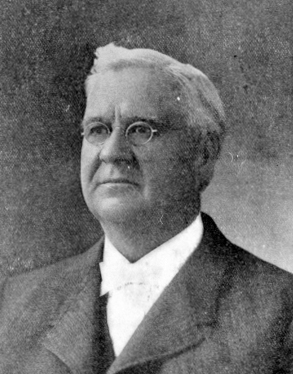
Historical · U.S. House · Illinois · District 20
John Thomas
Former U.S. Representative · Illinois District 20 · 1879–1889 · Republican
John Thomas represented Illinois's District 20 in the United States House of Representatives (1879–1889) for the Republican party. The page below collects sourced biographical facts, term history, committee roles, and provenance for Thomas.
Bioguide ID: T000176
Key facts
- Full name
- John Thomas
- State
- Illinois
- District
- District 20
- Party
- Republican
- House service
- 1879–1889
- First House term
- 1879
- Status
- Left office
- Current term ends
- —
- Born
- 1846
- Bioguide ID
- T000176
- Committee assignments
- —
- Dataset version
- 1.20260606
Biographical narrative
852 words · sourced from the Wikipedia REST extract
John Thomas was a U.S. Representative from Illinois, serving as a member of the Republican Party. His congressional career spanned a decade, during which he was elected to five consecutive terms in the House of Representatives. Following his tenure in Congress, he transitioned to a judicial role, becoming a U.S. district judge in the Indian Territory. His life was marked by significant contributions to both legislative and judicial processes, and he is remembered for his service during a transformative period in American history.
Early life and career
John Thomas was born on October 11, 1846, in Mount Vernon, Illinois. He received his early education in local common schools and furthered his studies at the Hunter Collegiate Institute located in Princeton, Indiana. His formative years were significantly influenced by the tumultuous events of the American Civil War. Thomas enlisted in the Union Army, where he served with distinction, rising from the rank of private to captain in Company D of the One Hundred and Twentieth Regiment of Indiana Volunteer Infantry. His military service included participation in several key battles, notably the Battle of Franklin in Tennessee, where he sustained injuries that would affect him for the rest of his life.
After the Civil War, Thomas pursued a legal career. He studied law and was admitted to the bar in 1869. His early legal career included serving as the city attorney for Metropolis, Illinois, in 1869 and 1870, followed by a term as State's Attorney from 1871 to 1874. These roles provided him with valuable experience in both local governance and the legal system, laying the groundwork for his future political career.
House tenure
John Thomas's political career in the U.S. House of Representatives began when he was elected as a Republican to the Forty-sixth Congress, taking office on March 4, 1879. He successfully secured re-election to four subsequent Congresses, serving until March 3, 1889. Throughout his time in the House, Thomas was involved in various legislative initiatives and held a leadership position as the chairman of the Committee on Levees and Improvements of the Mississippi River during the Forty-seventh Congress. This committee was responsible for overseeing critical infrastructure projects aimed at flood control and navigation improvements along the Mississippi River, an essential waterway for commerce and transportation.
Thomas's legislative record includes notable moments, such as his opposition to the Pendleton Civil Service Reform Act in 1883, where he was one of only seven Republican representatives to vote against the measure. The Pendleton Act aimed to reform the federal government's hiring practices by establishing a merit-based system, moving away from the traditional spoils system. His vote against the act placed him in the minority within his party, reflecting the complex dynamics of Republican politics during this period, particularly among the conservative factions known as "Stalwarts."
Despite his active participation in Congress, Thomas chose not to seek renomination in 1888, concluding his legislative career after five terms. His decision to step away from electoral politics marked the end of a significant chapter in his public service.
Legislative focus and committees
During his tenure in the House of Representatives, John Thomas focused on issues pertinent to his constituents and the broader interests of the nation. His role as chairman of the Committee on Levees and Improvements of the Mississippi River underscored his commitment to addressing infrastructure challenges that affected both local communities and the national economy. The Mississippi River was a vital artery for trade, and improvements to its navigation and flood control were critical to the agricultural and commercial interests of the Midwest.
Thomas's legislative actions and votes reflected the political landscape of the time, particularly the tensions within the Republican Party regarding civil service reform. His opposition to the Pendleton Act illustrated the divisions within the party, as many Republicans were grappling with the implications of reforming the patronage system that had long governed federal employment practices.
After leaving Congress, Thomas continued to engage in public service through his judicial career. He was appointed as a U.S. district judge in the Indian Territory, where he served from 1898 to 1901. His judicial tenure was marked by significant cases, including the first death penalty issued in the territory and high-profile trials involving crimes against Native Americans, which highlighted the complexities of law enforcement and justice in a region undergoing rapid change.
In addition to his judicial responsibilities, Thomas contributed to the development of Oklahoma's legal framework as a member of the Oklahoma State Code Commission from 1908 to 1910. This commission was tasked with reviewing and editing the state's laws, a critical function during Oklahoma's transition to statehood.
John Thomas's life came to a tragic end on January 19, 1914, when he was killed during an attempted prison break at the Oklahoma state prison in McAlester. His legacy includes his contributions to both legislative and judicial processes, as well as his role in shaping the legal landscape of Oklahoma during its formative years. He was interred in Green Hill Cemetery in Muskogee, Oklahoma, and later reinterred at Arlington National Cemetery, reflecting his service to the nation both in military and public office.
Notable legislation
Sponsored and co-sponsored legislation for John Thomas is pending operator curation. The biographical narrative above carries the same provenance trail until per-bill rows are written.
Sources
- [1]https://en.wikipedia.org/wiki/John_R._ThomasWikipedia · retrieved 2026-06-06
Notable quotes
Sourced quotes for John Thomas are pending operator curation. Narrative-scope provenance remains attached below.
Sources
- [1]https://en.wikipedia.org/wiki/John_R._ThomasWikipedia · retrieved 2026-06-06
Key positions
Curated policy positions for John Thomas are pending operator review. The biographical narrative above carries the same provenance trail until per-topic positions are written.
Sources
- [1]https://en.wikipedia.org/wiki/John_R._ThomasWikipedia · retrieved 2026-06-06
Terms served
- 1879–1881U.S. House · Term 1 · Republican
- 1881–1883U.S. House · Term 2 · Republican
- 1883–1885U.S. House · Term 3 · Republican
- 1885–1887U.S. House · Term 4 · Republican
- 1887–1889U.S. House · Term 5 · Republican
Sources & provenance
Every attributable claim above carries a per-section [N] marker that resolves to the corresponding URL below. Each entry records the upstream provider, the canonical URL, and the timestamp at which the source was retrieved by the ingest pipeline.
Key facts
- https://bioguide.congress.gov/search/bio/T000176bioguide · retrieved 2026-06-06
- https://www.govtrack.us/congress/members/410757govtrack · retrieved 2026-06-06
Biographical narrative
- https://en.wikipedia.org/wiki/John_R._Thomaswikipedia · retrieved 2026-06-06
Find your representative
Every U.S. state elects representatives by district. Browse Illinois’s delegation, the full former-representative roster, or explore the role and term length.
Related on The Candidate
- Succeeded by Orlando BurrellLater holder of the Illinois District 20 House seat · Republican.Open
- Abner TaylorFormer U.S. Representative · Illinois District 1 · RepublicanOpen
- Adam SnyderFormer U.S. Representative · Illinois District 1 · DemocraticOpen
- Arthur MitchellFormer U.S. Representative · Illinois District 1 · DemocraticOpen
- Bennett StewartFormer U.S. Representative · Illinois District 1 · DemocraticOpen
- Republican PartyFederal candidates and office holders on the Republican line.Open