
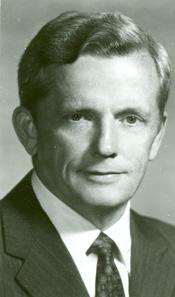
Historical · U.S. House · Illinois · District 20
Paul Findley
Former U.S. Representative · Illinois District 20 · 1961–1983 · Republican
Paul Findley represented Illinois's District 20 in the United States House of Representatives (1961–1983) for the Republican party. The page below collects sourced biographical facts, term history, committee roles, and provenance for Findley.
Bioguide ID: F000123
Key facts
- Full name
- Paul Findley
- State
- Illinois
- District
- District 20
- Party
- Republican
- House service
- 1961–1983
- First House term
- 1961
- Status
- Left office
- Current term ends
- —
- Born
- 1921
- Bioguide ID
- F000123
- Committee assignments
- —
- Dataset version
- 1.20260605
Biographical narrative
882 words · sourced from the Wikipedia REST extract
Paul Findley was an American politician and writer who served as a United States Representative for Illinois's 20th congressional district from 1961 until 1983. A member of the Republican Party, Findley was known for his moderate views, particularly in relation to civil rights and foreign policy. Throughout his eleven terms in Congress, he became recognized for his opposition to the Vietnam War and his advocacy for Palestinian rights. Following his defeat in the 1982 election, Findley continued to engage in public discourse and activism, particularly focusing on U.S. foreign policy in the Middle East.
Early life and career
Paul Findley was born on June 23, 1921, in Jacksonville, Illinois, to parents Joseph S. Findley and Florence Mary Nichols. He received his early education in the public schools of Jacksonville before pursuing higher education at Illinois College, where he earned a bachelor's degree. This institution later established The Paul Findley Congressional Office Museum, which houses manuscripts and artifacts related to his political career, making it one of the few congressional office museums in the United States.
During World War II, Findley served in the United States Navy, where he attained the rank of lieutenant (junior grade). His military service contributed to his understanding of national and international issues, which would later inform his political career. After the war, Findley transitioned into politics, ultimately leading to his election to the U.S. House of Representatives.
House tenure
Findley's congressional career began in 1961 when he was first elected to represent Illinois's 20th congressional district. Over the course of his eleven terms, he became a prominent figure in Congress, particularly known for his advocacy on behalf of farmers and his moderate Republican stance. He was an early opponent of the Vietnam War, aligning himself with the growing peace movement during the 1960s and 1970s.
One of Findley's notable contributions to the peace movement was his initiative to publish the names of American servicemen who had died in the Vietnam War in the Congressional Record. This act, which occurred in 1969, was a significant moment in the anti-war movement, as it provided a tangible acknowledgment of the human cost of the conflict. Following this publication, various peace groups began to read the names aloud at protests and vigils, further amplifying the message against the war.
In addition to his opposition to the Vietnam War, Findley co-authored the War Powers Act of 1973, which aimed to limit the president's ability to engage in military action without congressional approval. This legislation was a response to concerns about executive overreach in matters of war and peace, reflecting Findley's commitment to maintaining a balance of power within the U.S. government.
Throughout his time in Congress, Findley was also recognized for his efforts to promote civil rights. He played a role in the appointment of Frank Mitchell, the first African-American page in the House of Representatives since Reconstruction, highlighting his commitment to increasing diversity within the Republican Party.
Findley's tenure in Congress came to an end in 1983 when he lost his re-election bid to Dick Durbin. Several factors contributed to this defeat, including redistricting, a challenging economic climate, and opposition from pro-Israel groups, which had mobilized against him during the campaign. Despite his loss, Findley's influence and contributions to American politics continued beyond his time in office.
Legislative focus and committees
During his time in the House of Representatives, Findley served on various committees and was involved in numerous legislative initiatives. His focus on agricultural issues reflected the interests of his constituents, many of whom were farmers. He advocated for policies that supported rural communities and aimed to improve the economic conditions of the agricultural sector.
Findley's opposition to the Vietnam War was a defining aspect of his legislative focus. He was part of a broader movement within Congress that sought to challenge U.S. military involvement in Southeast Asia. His efforts to bring attention to the human cost of the war and to promote peace initiatives were significant during a tumultuous period in American history.
In addition to his work on domestic issues, Findley was a vocal critic of U.S. foreign policy, particularly regarding Israel and Palestine. After leaving Congress, he co-founded the Council for the National Interest, an organization dedicated to advocating for Middle East policies that align with American national interests. This organization sought to provide a counter-narrative to the prevailing pro-Israel sentiment in U.S. politics, which Findley believed often stifled dissent and marginalized alternative viewpoints.
Findley's writings, including his book "They Dare to Speak Out: People and Institutions Confront Israel's Lobby," further articulated his views on the influence of the pro-Israel lobby in American politics. He argued that this influence had significant implications for U.S. foreign policy and domestic political dynamics. His critiques of the Israeli lobby and its impact on Congress were controversial and garnered both support and opposition from various political factions.
In summary, Paul Findley's career as a U.S. Representative was marked by his commitment to civil rights, opposition to the Vietnam War, and advocacy for a more balanced approach to U.S. foreign policy in the Middle East. His legislative efforts and public discourse continue to resonate in discussions about American politics and international relations. After his congressional career, Findley remained active in political advocacy and writing until his passing in 2019.
Notable legislation
Sponsored and co-sponsored legislation for Paul Findley is pending operator curation. The biographical narrative above carries the same provenance trail until per-bill rows are written.
Sources
- [1]https://en.wikipedia.org/wiki/Paul_FindleyWikipedia · retrieved 2026-06-05
Notable quotes
Sourced quotes for Paul Findley are pending operator curation. Narrative-scope provenance remains attached below.
Sources
- [1]https://en.wikipedia.org/wiki/Paul_FindleyWikipedia · retrieved 2026-06-05
Key positions
Curated policy positions for Paul Findley are pending operator review. The biographical narrative above carries the same provenance trail until per-topic positions are written.
Sources
- [1]https://en.wikipedia.org/wiki/Paul_FindleyWikipedia · retrieved 2026-06-05
Terms served
- 1961–1963U.S. House · Term 1 · Republican
- 1963–1965U.S. House · Term 2 · Republican
- 1965–1967U.S. House · Term 3 · Republican
- 1967–1969U.S. House · Term 4 · Republican
- 1969–1971U.S. House · Term 5 · Republican
- 1971–1973U.S. House · Term 6 · Republican
- 1973–1975U.S. House · Term 7 · Republican
- 1975–1977U.S. House · Term 8 · Republican
- 1977–1979U.S. House · Term 9 · Republican
- 1979–1981U.S. House · Term 10 · Republican
- 1981–1983U.S. House · Term 11 · Republican
Sources & provenance
Every attributable claim above carries a per-section [N] marker that resolves to the corresponding URL below. Each entry records the upstream provider, the canonical URL, and the timestamp at which the source was retrieved by the ingest pipeline.
Key facts
- https://bioguide.congress.gov/search/bio/F000123bioguide · retrieved 2026-06-05
- https://www.govtrack.us/congress/members/404079govtrack · retrieved 2026-06-05
Biographical narrative
- https://en.wikipedia.org/wiki/Paul_Findleywikipedia · retrieved 2026-06-05
Find your representative
Every U.S. state elects representatives by district. Browse Illinois’s delegation, the full former-representative roster, or explore the role and term length.
Related on The Candidate
- Preceded by Edna SimpsonEarlier holder of the Illinois District 20 House seat · Republican.Open
- Abner TaylorFormer U.S. Representative · Illinois District 1 · RepublicanOpen
- Adam SnyderFormer U.S. Representative · Illinois District 1 · DemocraticOpen
- Arthur MitchellFormer U.S. Representative · Illinois District 1 · DemocraticOpen
- Bennett StewartFormer U.S. Representative · Illinois District 1 · DemocraticOpen
- Republican PartyFederal candidates and office holders on the Republican line.Open