
Historical · U.S. House · Illinois · District 21
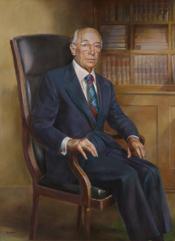
Charles Price
Former U.S. Representative · Illinois District 21 · 1945–1988 · Democratic
Charles Price represented Illinois's District 21 in the United States House of Representatives (1945–1988) for the Democratic party. The page below collects sourced biographical facts, term history, committee roles, and provenance for Price.
Bioguide ID: P000522
Key facts
- Full name
- Charles Price
- State
- Illinois
- District
- District 21
- Party
- Democratic
- House service
- 1945–1988
- First House term
- 1945
- Status
- Left office
- Current term ends
- —
- Born
- 1905
- Bioguide ID
- P000522
- Committee assignments
- —
- Dataset version
- 1.20260605
Biographical narrative
1,026 words · sourced from the Wikipedia REST extract
Charles Melvin Price was a prominent American politician who served as a U.S. Representative for Illinois's 21st congressional district from 1945 until his death in 1988. A member of the Democratic Party, Price's lengthy tenure in Congress spanned over four decades, during which he held significant leadership roles and contributed to various legislative initiatives. His career was marked by a commitment to both domestic and defense issues, reflecting the complexities of American politics during the mid-20th century.
Early life and career
Charles Melvin Price was born on January 1, 1905, in East St. Louis, Illinois. He received his early education at a parochial school before graduating from St. Louis University High School. Following high school, Price pursued two years of pre-law studies at Saint Louis University. His early career included work as a sports correspondent, where he contributed to local publications such as the East St. Louis Journal and the St. Louis Globe-Democrat. This experience in journalism likely honed his communication skills, which would later serve him well in his political career.
In addition to his work in journalism, Price entered public service as a member of the St. Clair County Board of Supervisors, serving from 1929 to 1931. This role provided him with foundational experience in governance and local politics. Subsequently, he served as secretary to U.S. Representative Edwin M. Schaefer from 1933 to 1943, further deepening his understanding of the legislative process and the workings of Congress.
During World War II, Price enlisted in the United States Army in October 1943. At the time of his election to the House of Representatives, he was stationed at Fort Lee. His military service during a pivotal time in history likely influenced his later legislative priorities, particularly in defense matters.
House tenure
Price was elected to the United States House of Representatives in 1944, marking the beginning of a lengthy and impactful congressional career. Throughout his time in office, he represented the Metro East region of Illinois, which encompasses the eastern portion of the St. Louis metropolitan area. His tenure in Congress lasted until April 23, 1988, when he passed away while still in office.
During his congressional career, Price held several significant leadership positions. Notably, he served as the chairman of the House Armed Services Committee from 1975 to 1985. This role placed him at the forefront of defense policy discussions during a time of considerable change in the U.S. military landscape. His leadership in this committee was characterized by a focus on defense spending, which, while aligning with his personal beliefs, sometimes set him apart from the broader Democratic Caucus, which tended to lean more liberal on domestic issues.
In 1985, Price lost his position as chairman of the Armed Services Committee at the beginning of the 99th Congress. This change was notable, as it was uncommon for a committee chairman to be replaced in such a manner. The decision reflected a shift within the Democratic Caucus, which sought a leader who could more closely align with the majority's views on defense policy. Les Aspin, a younger member with different perspectives on defense spending, was chosen to succeed Price.
In addition to his role on the Armed Services Committee, Price also chaired the Ethics Committee from 1967 to 1976 and the Joint Committee on Atomic Energy from 1973 to 1974. His involvement in these committees underscored his influence on both ethical standards in Congress and energy policy, particularly in the context of nuclear energy and safety.
Throughout his career, Price played a role in several significant legislative initiatives, including the enactment of the Price-Anderson Nuclear Industries Indemnity Act, which addressed liability issues related to nuclear power plants. His legislative work often reflected the pressing issues of the time, balancing the needs of his constituents with national interests.
Price's long service in Congress came to an end with his death on April 22, 1988, due to pancreatic cancer. His passing marked the end of an era for his constituents and the Democratic Party in Illinois.
Legislative focus and committees
Throughout his extensive tenure in the House of Representatives, Price's legislative focus encompassed a range of issues, with a notable emphasis on defense and military matters. As chairman of the House Armed Services Committee, he was instrumental in shaping defense policy during a critical period that included the Cold War and the evolving landscape of U.S. military engagement. His support for defense spending often placed him at odds with more liberal factions within his party, reflecting the complexities of political alignment during his time in office.
In addition to defense issues, Price's leadership roles in other committees, such as the Ethics Committee and the Joint Committee on Atomic Energy, allowed him to influence a broader array of legislative matters. His work on the Ethics Committee was particularly significant during a time when public trust in government was increasingly scrutinized. By chairing this committee, Price contributed to the development of ethical standards and practices within Congress.
The Price-Anderson Nuclear Industries Indemnity Act, which he helped enact, exemplifies his involvement in critical legislation related to energy policy. This act was designed to address liability concerns associated with nuclear power, reflecting the growing importance of energy issues in American politics.
In recognition of his contributions to public service and the community, several landmarks have been named in his honor. The Melvin Price Locks and Dam, located near Alton, Illinois, serves as a vital infrastructure component on the upper Mississippi River. Additionally, the Melvin Price Federal Building and United States Courthouse in East St. Louis stands as a testament to his legacy in the region.
Following Price's death, a special election was held to fill his congressional seat, resulting in the election of fellow Democrat Jerry Costello. Costello's victory marked a continuation of Democratic representation in the district, reflecting Price's enduring influence on the political landscape of Illinois.
Overall, Charles Melvin Price's long and varied career in the U.S. House of Representatives highlights the significant role he played in shaping policy and governance during a transformative period in American history. His contributions to defense, ethics, and energy policy remain a part of his legacy as a public servant.
Notable legislation
Sponsored and co-sponsored legislation for Charles Price is pending operator curation. The biographical narrative above carries the same provenance trail until per-bill rows are written.
Sources
- [1]https://en.wikipedia.org/wiki/Melvin_PriceWikipedia · retrieved 2026-06-05
Notable quotes
Sourced quotes for Charles Price are pending operator curation. Narrative-scope provenance remains attached below.
Sources
- [1]https://en.wikipedia.org/wiki/Melvin_PriceWikipedia · retrieved 2026-06-05
Key positions
Curated policy positions for Charles Price are pending operator review. The biographical narrative above carries the same provenance trail until per-topic positions are written.
Sources
- [1]https://en.wikipedia.org/wiki/Melvin_PriceWikipedia · retrieved 2026-06-05
Terms served
- 1945–1947U.S. House · Term 1 · Democratic
- 1947–1949U.S. House · Term 2 · Democratic
- 1949–1951U.S. House · Term 3 · Democratic
- 1951–1953U.S. House · Term 4 · Democratic
- 1953–1955U.S. House · Term 5 · Democratic
- 1955–1957U.S. House · Term 6 · Democratic
- 1957–1959U.S. House · Term 7 · Democratic
- 1959–1961U.S. House · Term 8 · Democratic
- 1961–1963U.S. House · Term 9 · Democratic
- 1963–1965U.S. House · Term 10 · Democratic
- 1965–1967U.S. House · Term 11 · Democratic
- 1967–1969U.S. House · Term 12 · Democratic
- 1969–1971U.S. House · Term 13 · Democratic
- 1971–1973U.S. House · Term 14 · Democratic
- 1973–1975U.S. House · Term 15 · Democratic
- 1975–1977U.S. House · Term 16 · Democratic
- 1977–1979U.S. House · Term 17 · Democratic
- 1979–1981U.S. House · Term 18 · Democratic
- 1981–1983U.S. House · Term 19 · Democratic
- 1983–1985U.S. House · Term 20 · Democratic
- 1985–1987U.S. House · Term 21 · Democratic
- 1987–1988U.S. House · Term 22 · Democratic
Sources & provenance
Every attributable claim above carries a per-section [N] marker that resolves to the corresponding URL below. Each entry records the upstream provider, the canonical URL, and the timestamp at which the source was retrieved by the ingest pipeline.
Key facts
- https://bioguide.congress.gov/search/bio/P000522bioguide · retrieved 2026-06-05
- https://www.govtrack.us/congress/members/408907govtrack · retrieved 2026-06-05
Biographical narrative
- https://en.wikipedia.org/wiki/Melvin_Pricewikipedia · retrieved 2026-06-05
Find your representative
Every U.S. state elects representatives by district. Browse Illinois’s delegation, the full former-representative roster, or explore the role and term length.
Related on The Candidate
- Preceded by Frank FriesEarlier holder of the Illinois District 21 House seat · Democratic.Open
- Abner TaylorFormer U.S. Representative · Illinois District 1 · RepublicanOpen
- Adam SnyderFormer U.S. Representative · Illinois District 1 · DemocraticOpen
- Arthur MitchellFormer U.S. Representative · Illinois District 1 · DemocraticOpen
- Bennett StewartFormer U.S. Representative · Illinois District 1 · DemocraticOpen
- Democratic PartyFederal candidates and office holders on the Democratic line.Open