
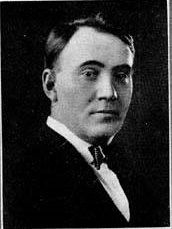
Historical · U.S. House · Illinois · District 21
James Major
Former U.S. Representative · Illinois District 21 · 1923–1935 · Democratic
James Major represented Illinois's District 21 in the United States House of Representatives (1923–1935) for the Democratic party. The page below collects sourced biographical facts, term history, committee roles, and provenance for Major.
Bioguide ID: M000073
Key facts
- Full name
- James Major
- State
- Illinois
- District
- District 21
- Party
- Democratic
- House service
- 1923–1935
- First House term
- 1923
- Status
- Left office
- Current term ends
- —
- Born
- 1887
- Bioguide ID
- M000073
- Committee assignments
- —
- Dataset version
- 1.20260606
Biographical narrative
891 words · sourced from the Wikipedia REST extract
James Major was an American lawyer and politician who served as a U.S. Representative for Illinois's 21st congressional district. A member of the Democratic Party, Major's congressional career spanned over a decade, during which he was elected to four terms in the House of Representatives. His tenure in Congress was marked by his involvement in significant legislative matters and his later appointment to the federal judiciary, where he continued to influence American law and governance.
Early life and career
James Major was born on January 5, 1887, in Donnellson, Illinois. Growing up in a small town, he attended local schools, which provided him with a foundational education. After completing his high school education, he pursued further studies at Brown's Business College, graduating in 1907. Major's academic journey continued at the Illinois College of Law, located in Chicago, where he earned his law degree in 1909. This educational background laid the groundwork for his future career in law and politics.
In 1910, Major was admitted to the bar, allowing him to practice law professionally. He began his legal career in Hillsboro, Illinois, in 1912, where he established a law practice that would serve the local community. His legal expertise and commitment to public service led him to serve as the prosecuting attorney for Montgomery County, Illinois, from 1912 to 1920. This role provided him with valuable experience in the legal system and helped him build a reputation as a dedicated public servant.
House tenure
James Major's political career began when he was elected as a Democrat to the 68th United States Congress, representing Illinois's 21st congressional district. His first term in the House of Representatives commenced on March 4, 1923, and concluded on March 3, 1925. Following this initial term, Major sought reelection but was unsuccessful in his bid for the 69th Congress in 1924. After his defeat, he returned to his law practice in Hillsboro, where he continued to serve his community.
Major's political aspirations did not wane, and he successfully ran for a seat in the 70th Congress, serving from March 4, 1927, to March 3, 1929. However, he faced another setback in 1928 when he was not reelected to the 71st Congress. Despite these challenges, Major persevered and was elected to the 72nd and 73rd Congresses, serving from March 4, 1931, until his resignation on October 6, 1933. His resignation was prompted by his appointment to the federal judiciary.
During his time in the House, Major was involved in various legislative matters, including significant issues pertinent to his constituents and the nation. Notably, in 1933, he was appointed as one of the managers by the House of Representatives to conduct impeachment proceedings against Harold Louderback, a judge of the United States District Court for the Northern District of California. This role highlighted Major's engagement with judicial accountability and his commitment to upholding the rule of law.
Legislative focus and committees
Throughout his congressional tenure, James Major focused on a range of legislative issues that reflected the needs and concerns of his constituents. While specific details about the bills he sponsored or supported are not provided, it can be inferred that his background in law and his experience as a prosecuting attorney influenced his legislative priorities. Major's legal expertise likely guided his approach to issues related to justice, governance, and public policy.
In addition to his legislative responsibilities, Major's participation in the impeachment proceedings against Judge Louderback demonstrated his involvement in matters of judicial integrity. This experience not only underscored his commitment to the legal system but also positioned him as a figure engaged in the broader discussions about the balance of power within the government.
After his resignation from Congress in 1933, Major transitioned to a significant role in the federal judiciary. He received a recess appointment from President Franklin D. Roosevelt to serve as a judge on the United States District Court for the Southern District of Illinois. This appointment marked a new chapter in his career, allowing him to continue his public service in a different capacity.
Major was officially nominated to the same judicial position by President Roosevelt on January 8, 1934, and he was confirmed by the United States Senate shortly thereafter. His judicial career further expanded when he was nominated to the United States Court of Appeals for the Seventh Circuit in 1937, where he served until 1956. During his time on the appellate court, Major held the position of Chief Judge from 1948 to 1954 and was a member of the Judicial Conference of the United States from 1949 to 1954.
James Major's contributions to the legal field and his service in Congress reflect a commitment to public service that spanned several decades. He navigated the complexities of both legislative and judicial roles, influencing the legal landscape of his time. His career is characterized by a dedication to the principles of justice and governance, which he upheld throughout his life.
James Major passed away on January 4, 1972, in Hillsboro, Illinois, where he had spent much of his life. He was laid to rest in Oak Grove Cemetery, leaving behind a legacy of public service that encompassed both legislative and judicial achievements. His life and career serve as a testament to the impact that dedicated individuals can have on their communities and the broader legal system in the United States.
Notable legislation
Sponsored and co-sponsored legislation for James Major is pending operator curation. The biographical narrative above carries the same provenance trail until per-bill rows are written.
Sources
- [1]https://en.wikipedia.org/wiki/James_Earl_MajorWikipedia · retrieved 2026-06-06
Notable quotes
Sourced quotes for James Major are pending operator curation. Narrative-scope provenance remains attached below.
Sources
- [1]https://en.wikipedia.org/wiki/James_Earl_MajorWikipedia · retrieved 2026-06-06
Key positions
Curated policy positions for James Major are pending operator review. The biographical narrative above carries the same provenance trail until per-topic positions are written.
Sources
- [1]https://en.wikipedia.org/wiki/James_Earl_MajorWikipedia · retrieved 2026-06-06
Terms served
- 1923–1925U.S. House · Term 1 · Democratic
- 1927–1929U.S. House · Term 2 · Democratic
- 1931–1933U.S. House · Term 3 · Democratic
- 1933–1935U.S. House · Term 4 · Democratic
Sources & provenance
Every attributable claim above carries a per-section [N] marker that resolves to the corresponding URL below. Each entry records the upstream provider, the canonical URL, and the timestamp at which the source was retrieved by the ingest pipeline.
Key facts
- https://bioguide.congress.gov/search/bio/M000073bioguide · retrieved 2026-06-06
- https://www.govtrack.us/congress/members/407101govtrack · retrieved 2026-06-06
Biographical narrative
- https://en.wikipedia.org/wiki/James_Earl_Majorwikipedia · retrieved 2026-06-06
Find your representative
Every U.S. state elects representatives by district. Browse Illinois’s delegation, the full former-representative roster, or explore the role and term length.
Related on The Candidate
- Preceded by James GrahamEarlier holder of the Illinois District 21 House seat · Democratic.Open
- Succeeded by Harry MasonLater holder of the Illinois District 21 House seat · Democratic.Open
- Abner TaylorFormer U.S. Representative · Illinois District 1 · RepublicanOpen
- Adam SnyderFormer U.S. Representative · Illinois District 1 · DemocraticOpen
- Arthur MitchellFormer U.S. Representative · Illinois District 1 · DemocraticOpen
- Bennett StewartFormer U.S. Representative · Illinois District 1 · DemocraticOpen